Title: Breaking the Course of the European Boomerang
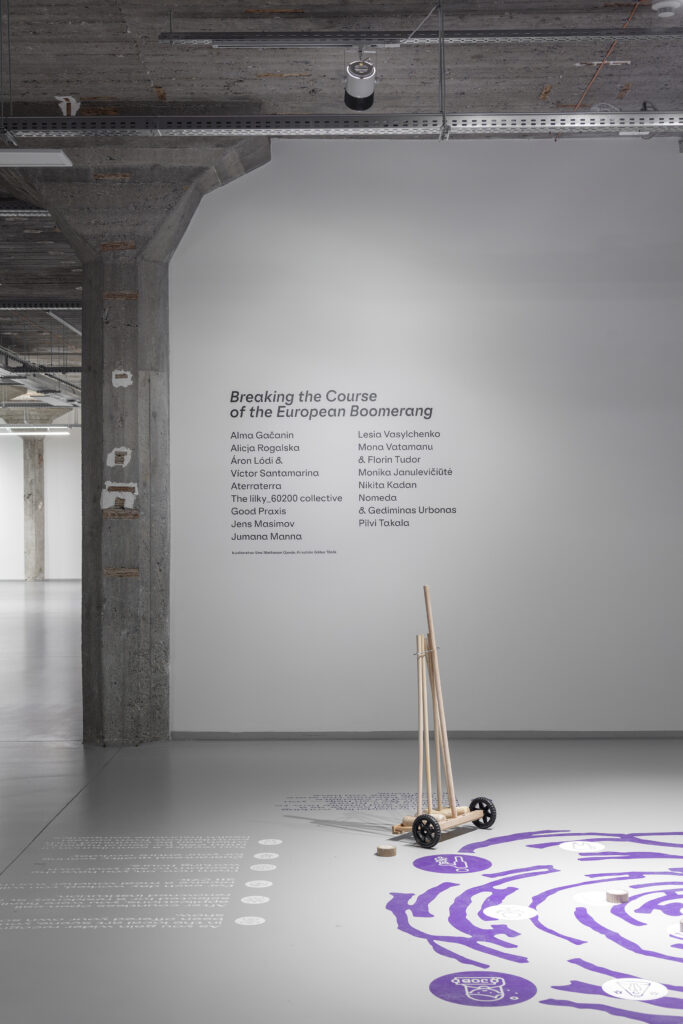
Artists: Alma Gačanin, Alicja Rogalska, Áron Lődi & Víctor Santamarina, Aterraterra, The lilky_60200 collective, Good Praxis, Jens Masimov, Jumana Manna, Lesia Vasylchenko, Mona Vatamanu & Florin Tudor, Monika Janulevičiūtė, Nikita Kadan, Nomeda & Gediminas Urbonas, Pilvi Takala
Curators: Una Mathiesen Gjerde, Krisztián Gábor Török
Venue: Pragovka Gallery, Prague
Funded by the complex social, economic, and structural challenges of global neoliberalism, Breaking the Course of the European Boomerang looks at how we can counteract the current rise in inequality within Europe without reverting to imperialism. Inspired by the historical solidarity between workers’ unions across Europe and the world at large, the exhibition unfolds through various artistic actions developed by the artists involved who explore strategies and ideas relating to labor, education, and the use of social and natural resources.
Europe has never been resourceful. The fact that it overran its resource capacity at the end of the 15th century is, in part, what motivated its colonization of other parts of the world. In our present time, formal imperial relationships have been transformed into more hidden ways of economic exploitation and resource grabbing. Amidst the decolonization following the Second World War, Europe, and the West of it in particular, secured the survival of their imperialism through the establishment of various global neoliberal projects, such as the International Monetary Fund, the World Trade Organization, and the World Bank Group. Framed as neutral, in part even charitable, structures, these institutions maintain a status quo: where the poorer (but often more resourceful) nations of the world remain under the control of the richer, through debt and trade arrangements.
In line with these regulations of the relationship between Europe and the world, the continent has also implemented similar structures to hierarchies internally. Mimicking the imperialist boomerang, applied by Hannah Arendt, Aimé Césaire and Michel Foucault, the entry of the Euro and the European Bank has ensured the indebtedness of many of the traditionally less well-off European states, and in so doing enabled the continuation of North-Western dominance of the continent. In contrast to what was promised to these aspiring countries within Europe, predominantly located in the East and South, upon entering the union, the EU has not made them equal to their North-Western counterparts. Rather, it has recreated and reinforced the old power dynamics. The result is an increasing wealth gap among the members of the European Union, which fuels destabilization.
The rise of inequality between nations further mirrors the general rise of class divisions within the respective countries. As proven by the French economist Thomas Piketty, inequality is on the rise worldwide. For the citizens of Europe, there’s no comfort in the fact that they are “better off” than the people of Brazil or Congo. They, as 90 percent of the world population in general, are experiencing precarity and a rapid decrease in the standard of living. In turn, this has led to a rise in populist and fascist ideologies across the continent and a shift in the political climate: after decades of mending bonds between European nations, we are now experiencing a decline in trust between nations and people at large. Through artistic and curatorial gestures, Breaking the Course of the European Boomerang is dedicated to question how we can counteract this destructive spiral. It is within this context that the participating artists intervene, each articulating through their practice how these global and local inequalities are felt, contested, and potentially transformed.
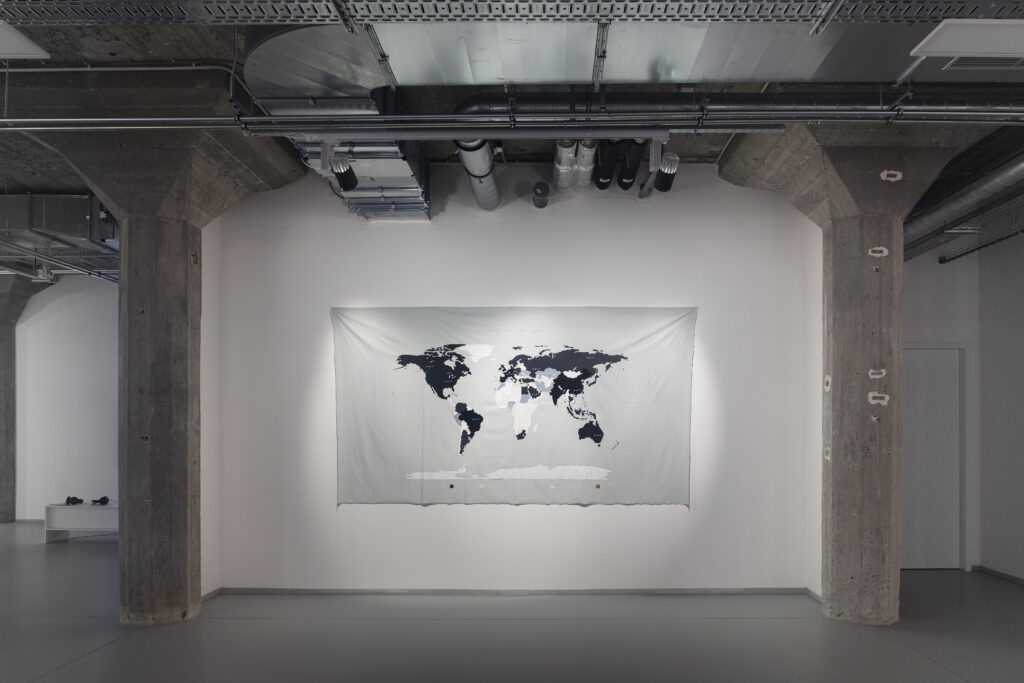
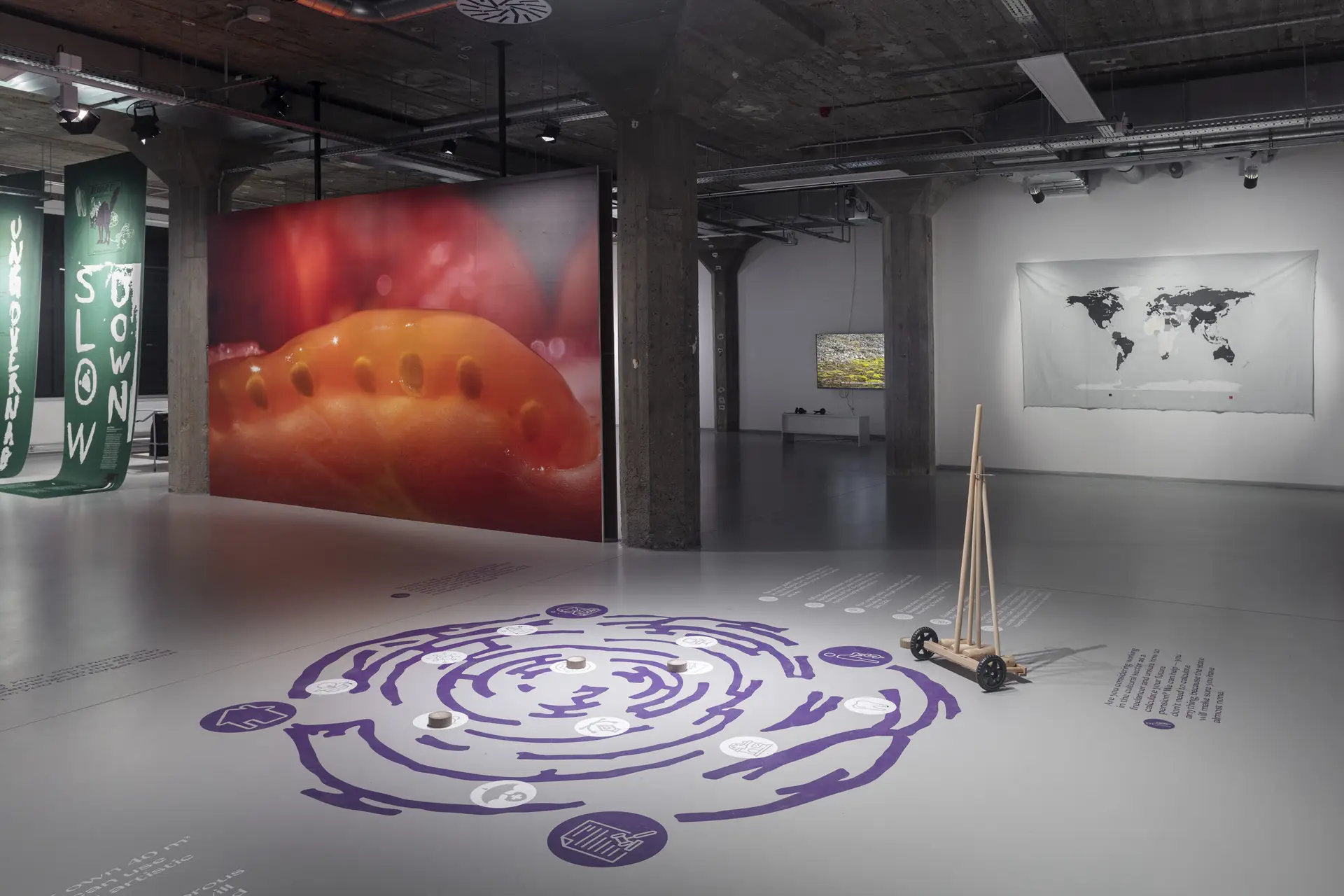
The different artistic positions in the exhibition explore how bodies, resources, and histories are caught in uneven systems of extraction, debt, and precarity. Mona Vatamanu & Florin Tudor set the stage with a hand-sewn map of world debt, exposing how prosperity is often built on speculation and hidden hierarchies of power. Nikita Kadan’s coal drawings, Jumana Manna’s tracing of displaced seeds, and Nomeda & Gediminas Urbonas’ parody of post-socialist privatization point to the ways war, agriculture, and ideology sustain unequal access to resources.
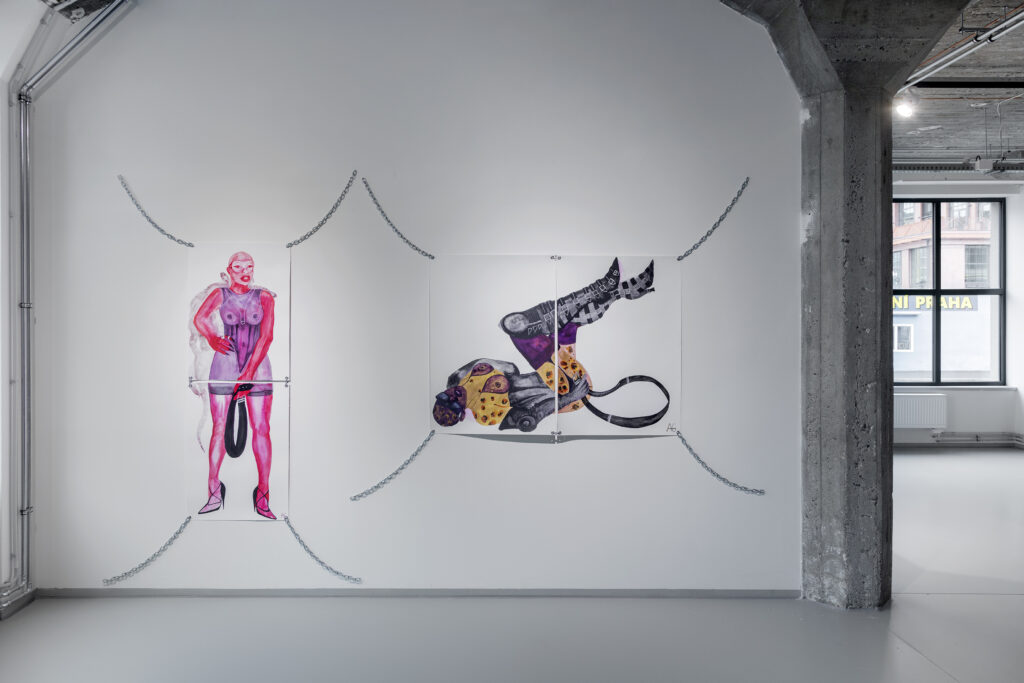
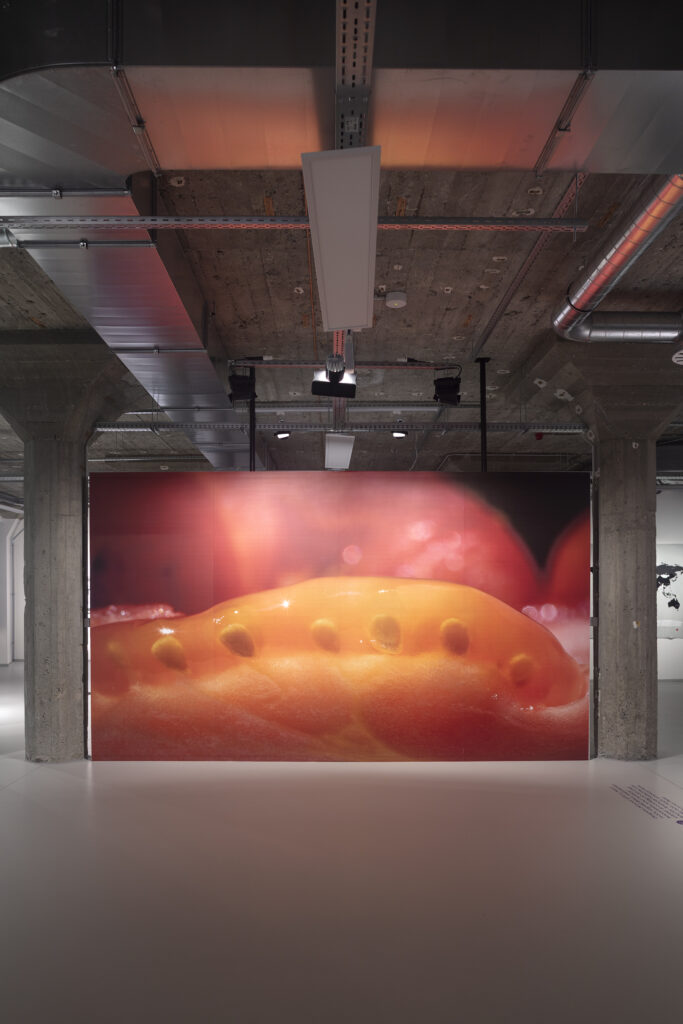
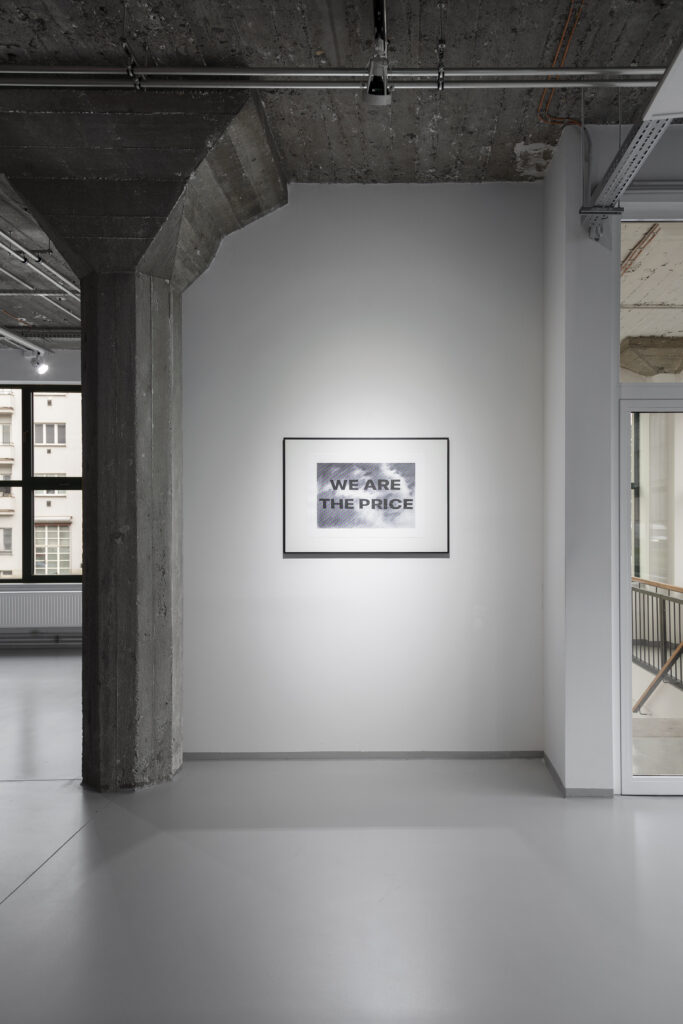
Other works bring the focus to the lived and emotional dimensions of exploitation. Lesia Vasylchenko compresses a century of nights and decades of dawns into temporal assemblages where trauma and memory carry across generations. Alma Gačanin’s drawings confront the language of corporate power, exposing how domination and submission shape emotional and typically female forms of labor. Aterraterra dismantles agricultural myths of purity, showing how even the tomato – a supposedly “natural” fruit – is the result of political and economic control.
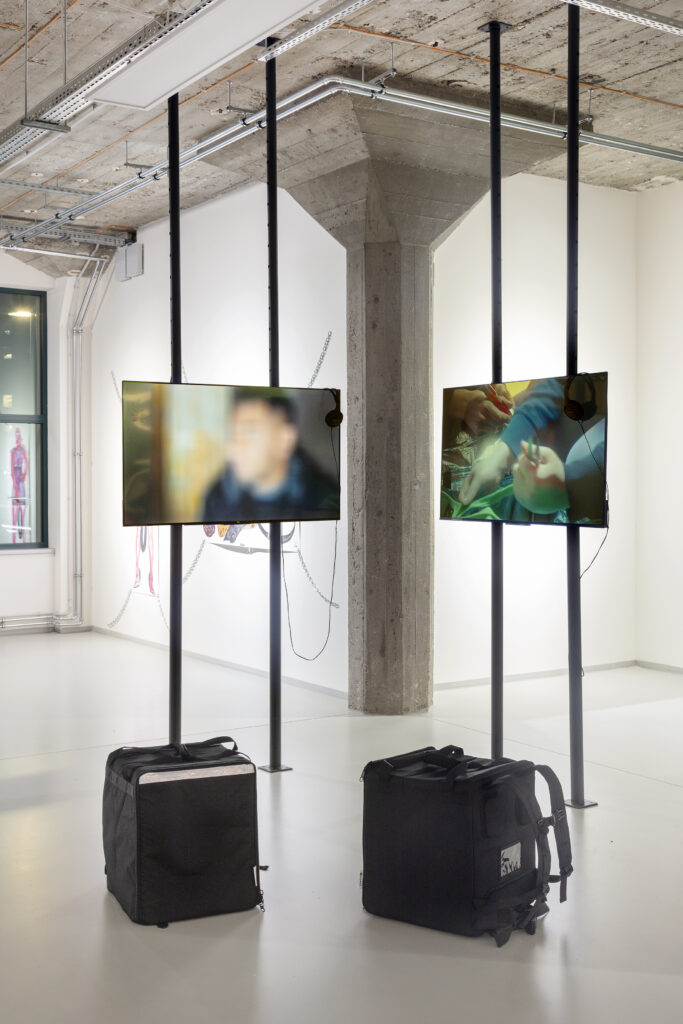
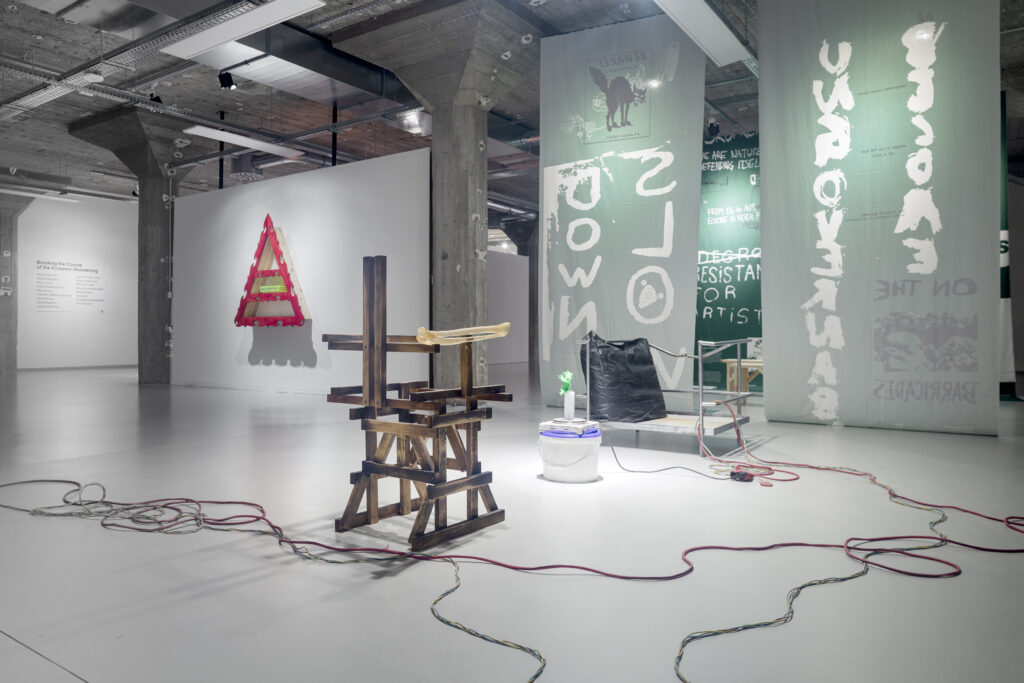
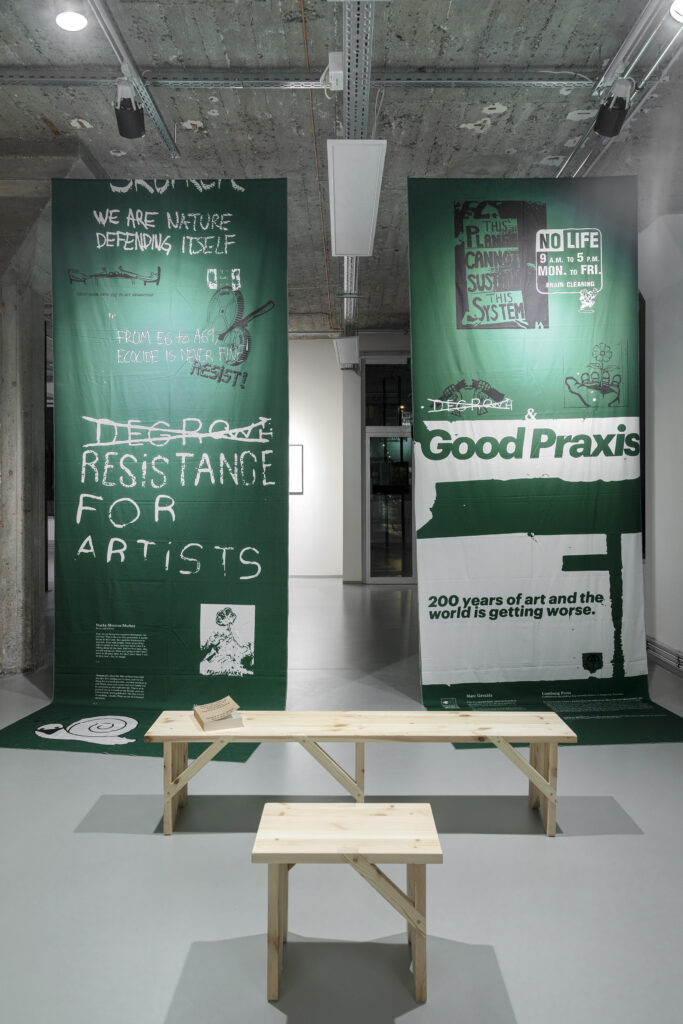
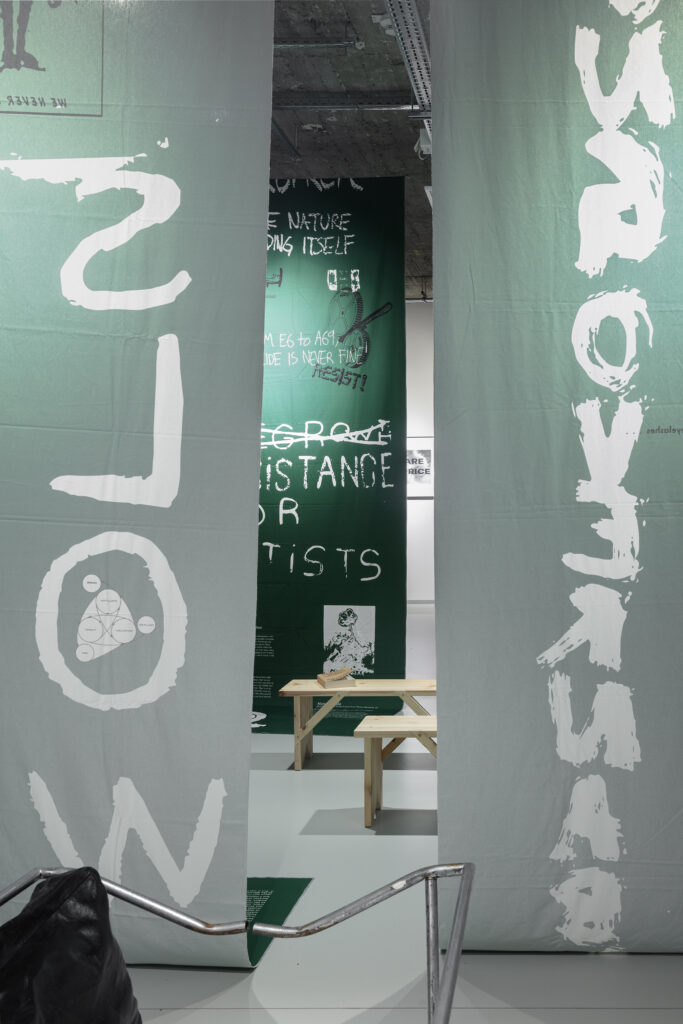
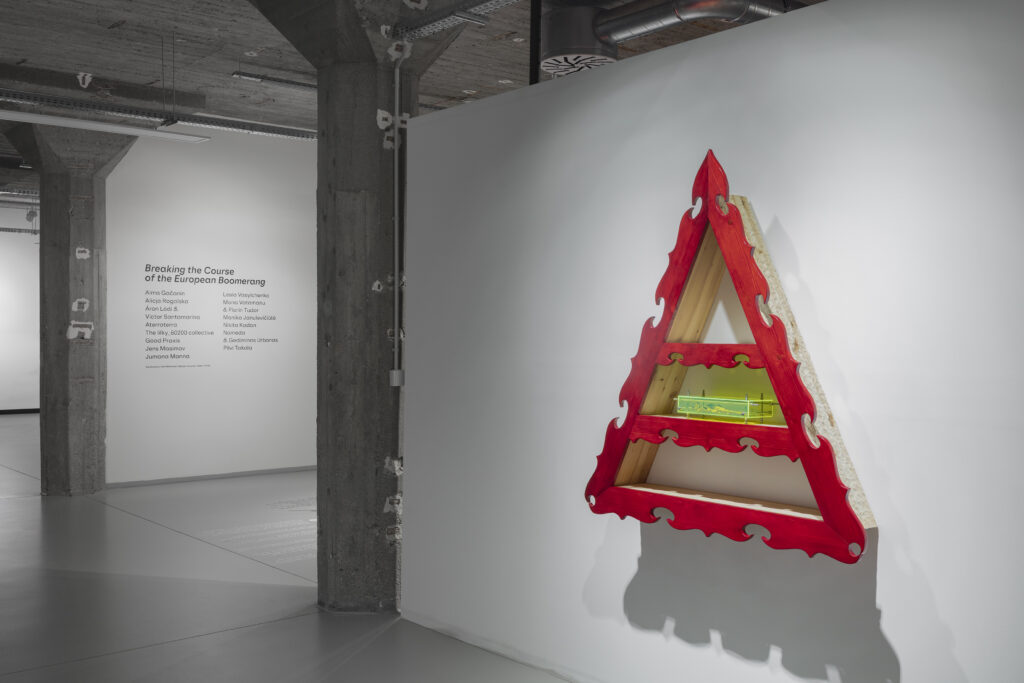
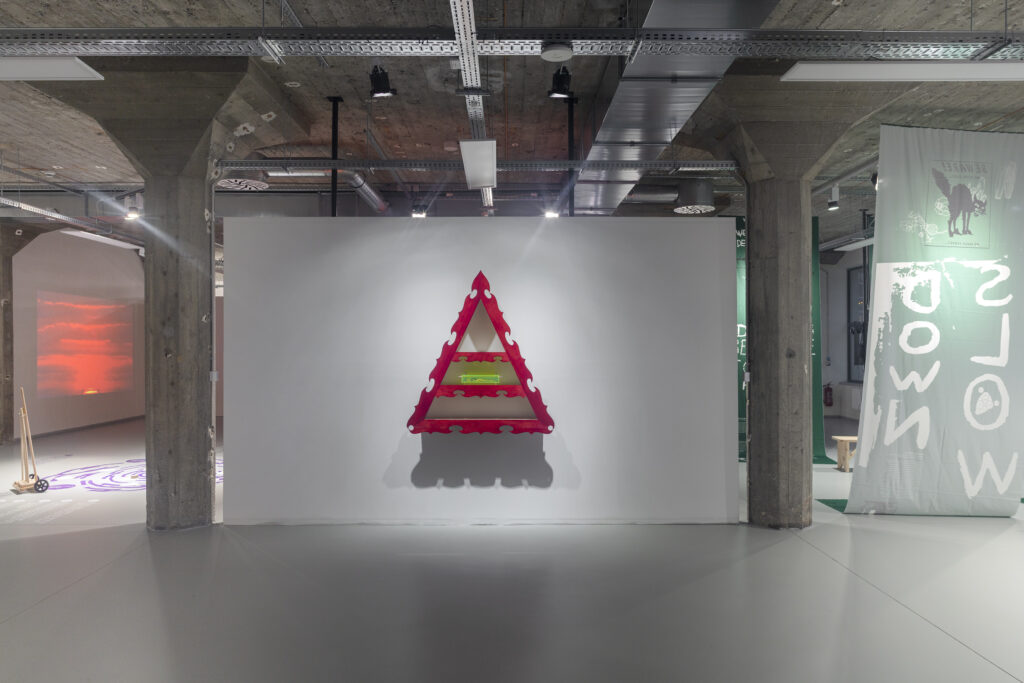
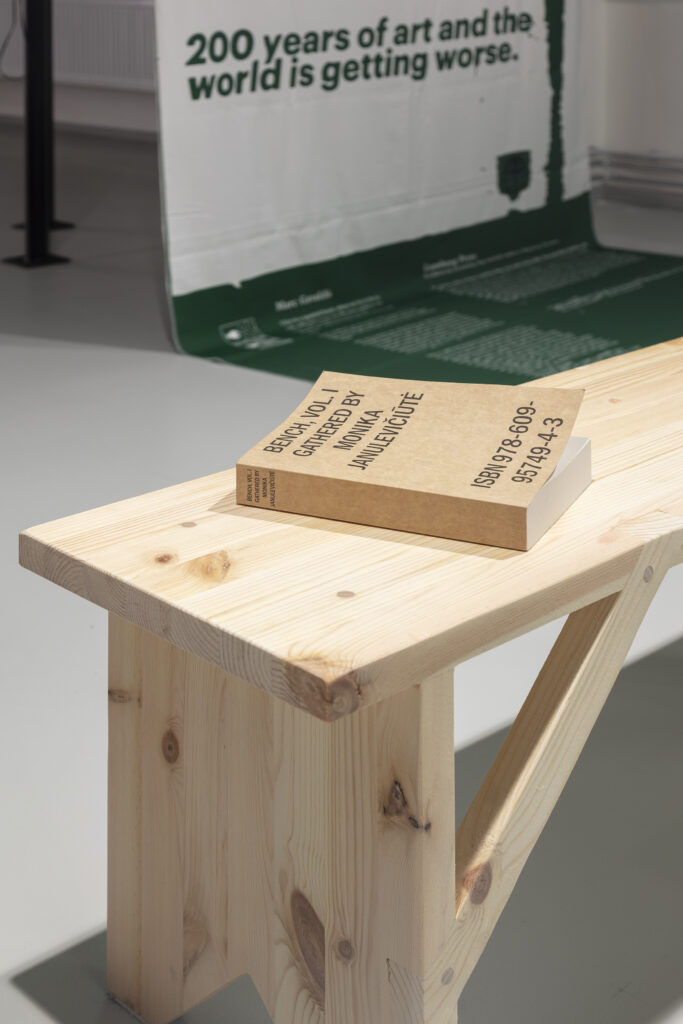
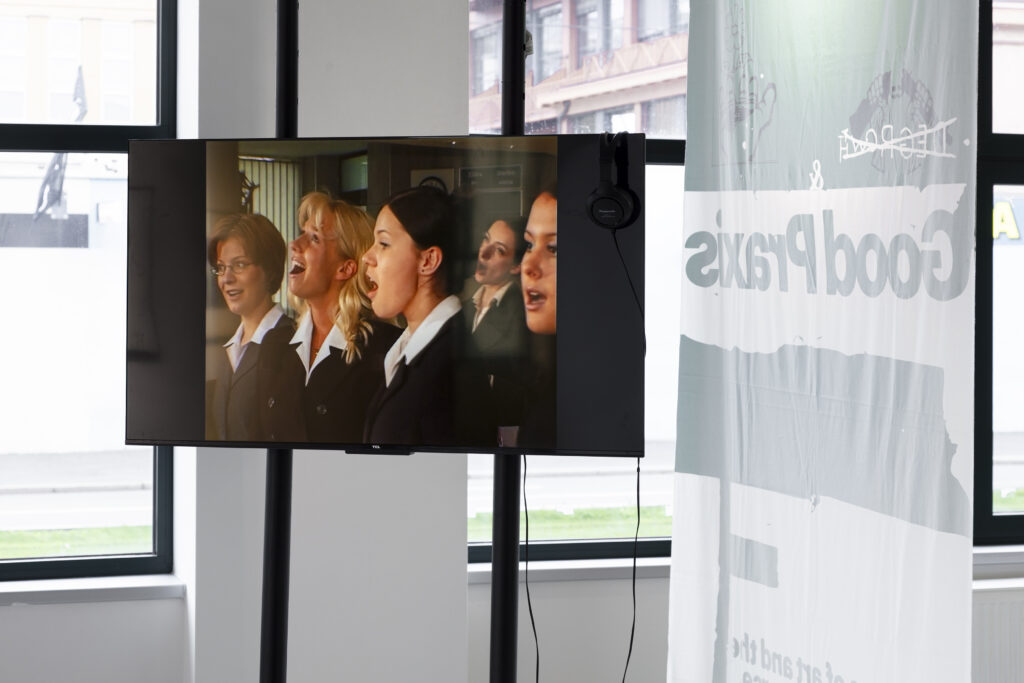
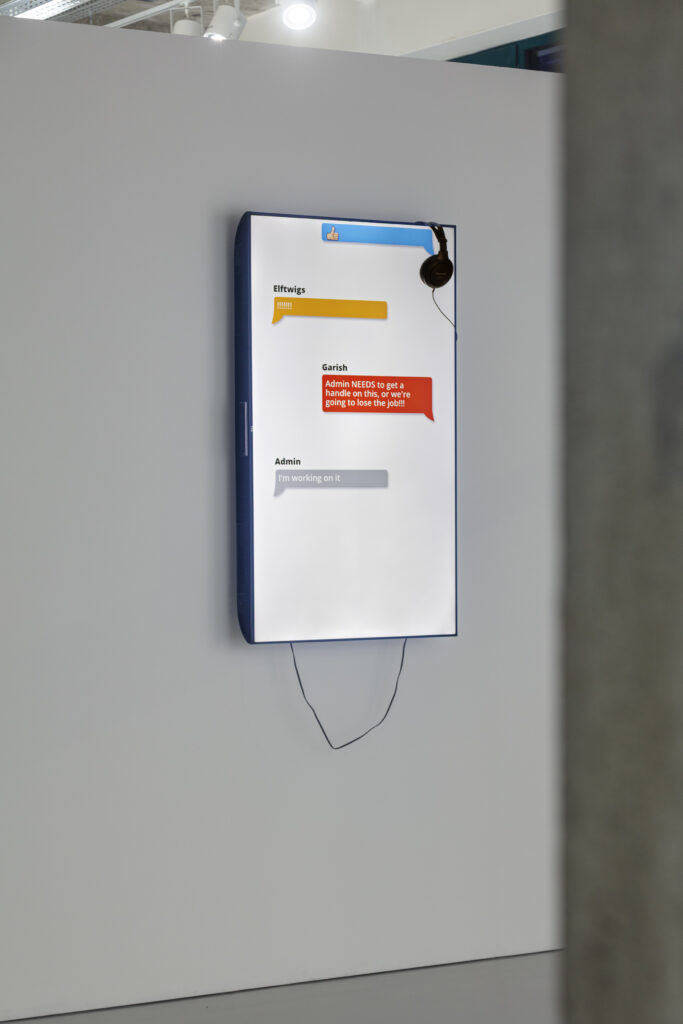
A further set of works addresses contemporary forms of labor and survival. Pilvi Takala and Alicja Rogalska highlight the human cost of the gig economy where workers remain unseen yet keep digital platforms and cities running. Víctor Santamarina and Áron Lődi’s collaborative installation, alongside Jens Masimov’s sculptural reworking of domestic furniture and Monika Janulevičiūtė’s benches, reflect on exhaustion, rest, and the fragile balance between survival and dignity. Meanwhile, the lilky_60200 collective and Good Praxis turn their critique to the art world itself: one through irony, transforming precarity into a playable maze; the other through strategies for post-growth, climate-conscious practice.
When seen together in the context of this exhibition, the works do not offer any single solution. Instead, they present a chaotic and multilayer reality, where: global and local, historical and contemporary, personal and systemic interconnect. This polyphony portrays inequality as it is in all its complexity. In so doing and without simplifying matters, the artists of the exhibition also suggest a number of imagined alternatives. What emerges is not a unified solution but a set of counter-models – provisional, situated, and interdependent – that resist the destructive spiral of inequality and sketch possible futures beyond the recurring arc of the imperial boomerang.