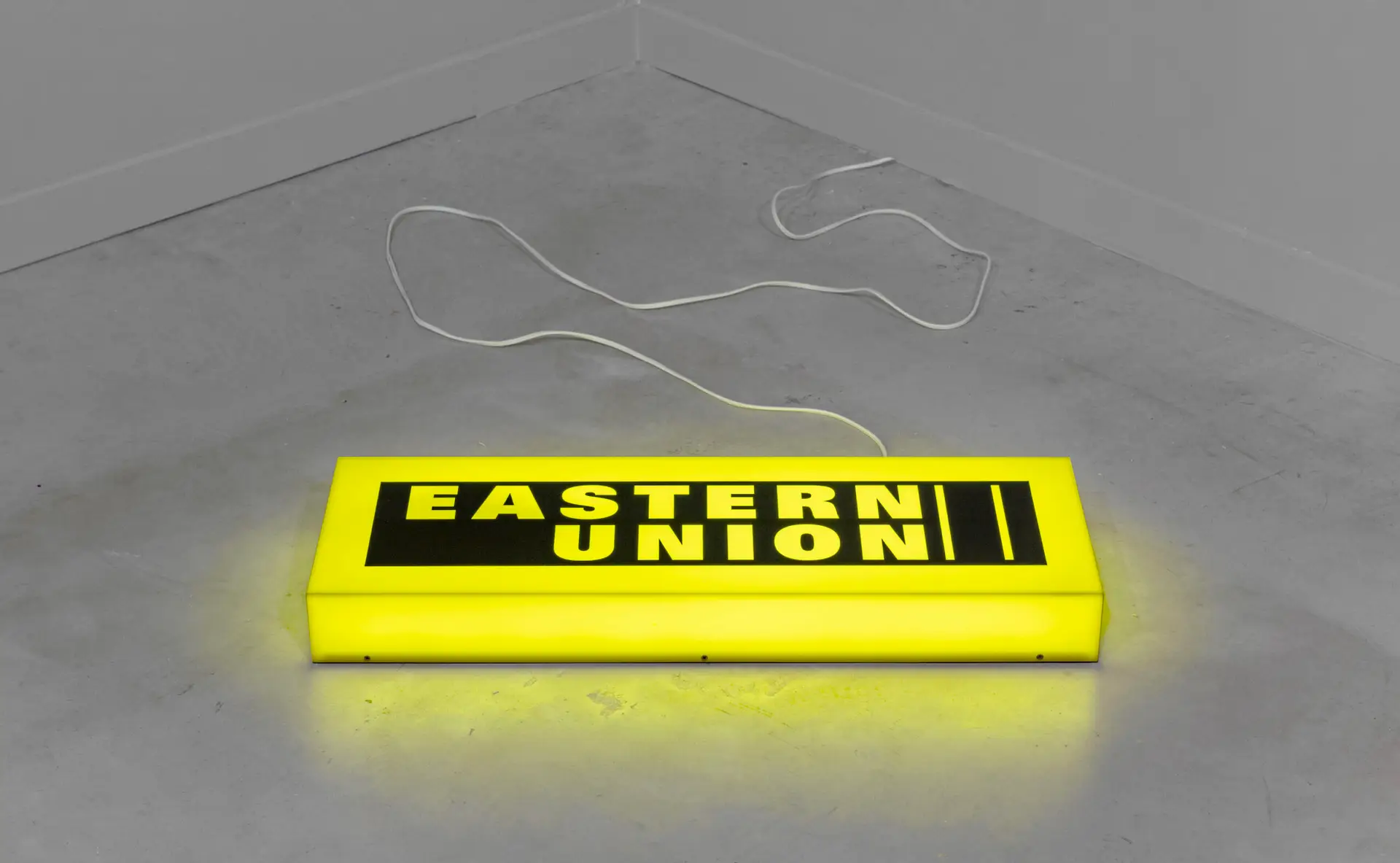
Artist: Andreea Anghel
Title: The Blind Man
Venue: 66P Subjective Institution of Culture, Księcia Witolda 66, Wrocław
Curator: Paulina Brelińska-Garsztka
Photos: Małgorzata Kujda
Postproduction of photography: Andreea Anghel
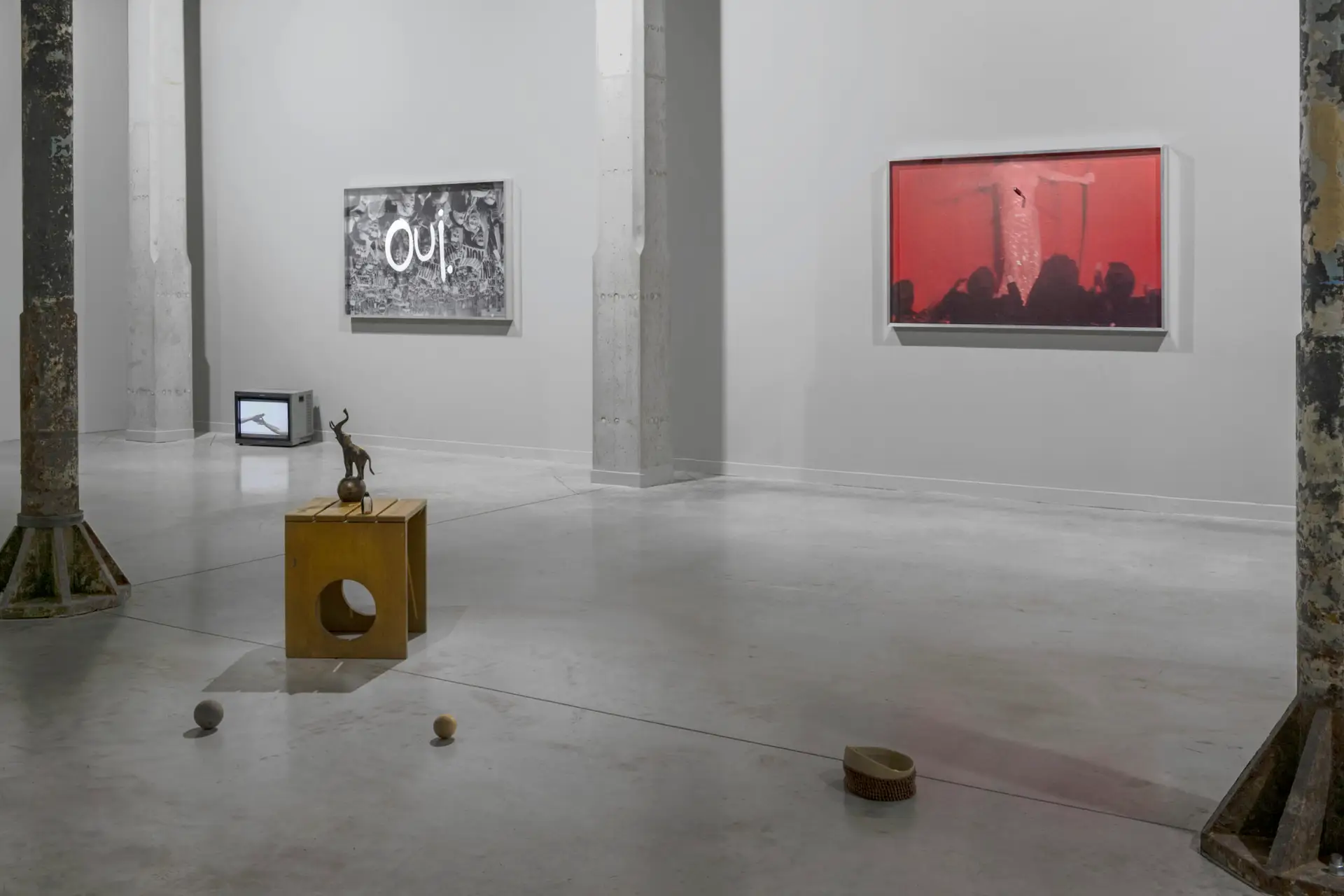
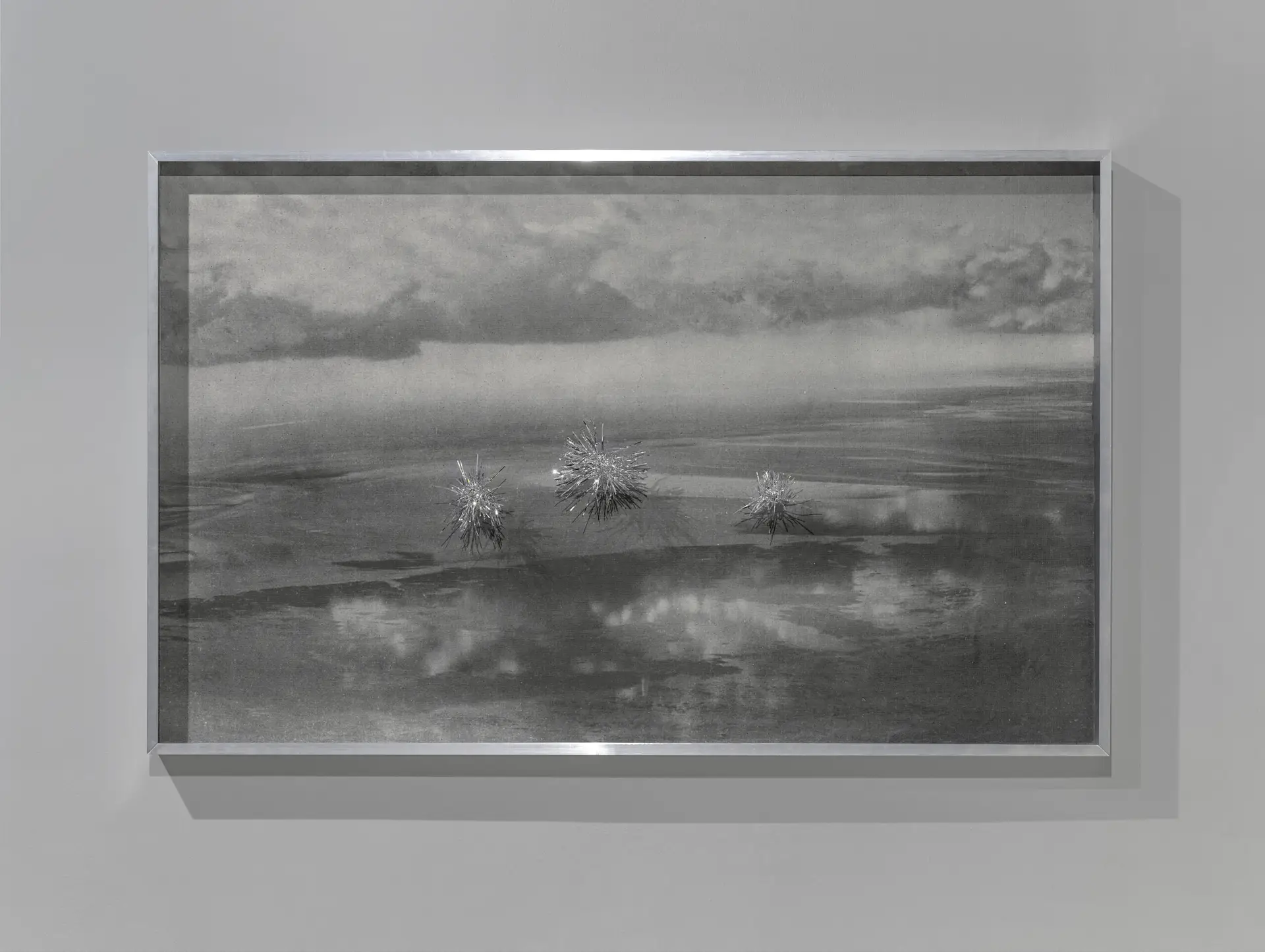
Andreea Anghel’s exhibition “The Blind Man” treats the archive as a living, creative process. Its title alludes to the 1917 Dadaist magazine “The Blind Man”, founded in New York by Marcel Duchamp, Henri-Pierre Roché and Beatrice Wood. Yet the exhibition is not a continuation of Dadaism. Anghel does not quote history; instead, she draws on her long-standing practice of reading and interpreting the images and objects she has gathered. At 66P she updates the magazine’s symbolic title, infusing it with her own interpretation.
The central theme is ideological blindness – an inner mechanism that enables one to see only what is convenient. It bears no relation to sensory impairment. In Anghel’s narrative, the deliberately blind person may provoke contempt in relation to their surroundings or rise to become a powerful political figure. The works seek to capture this internal contradiction and reveal its impact on social situations.
The exhibition leads us into two intertwined narratives about Anghel’s practice.
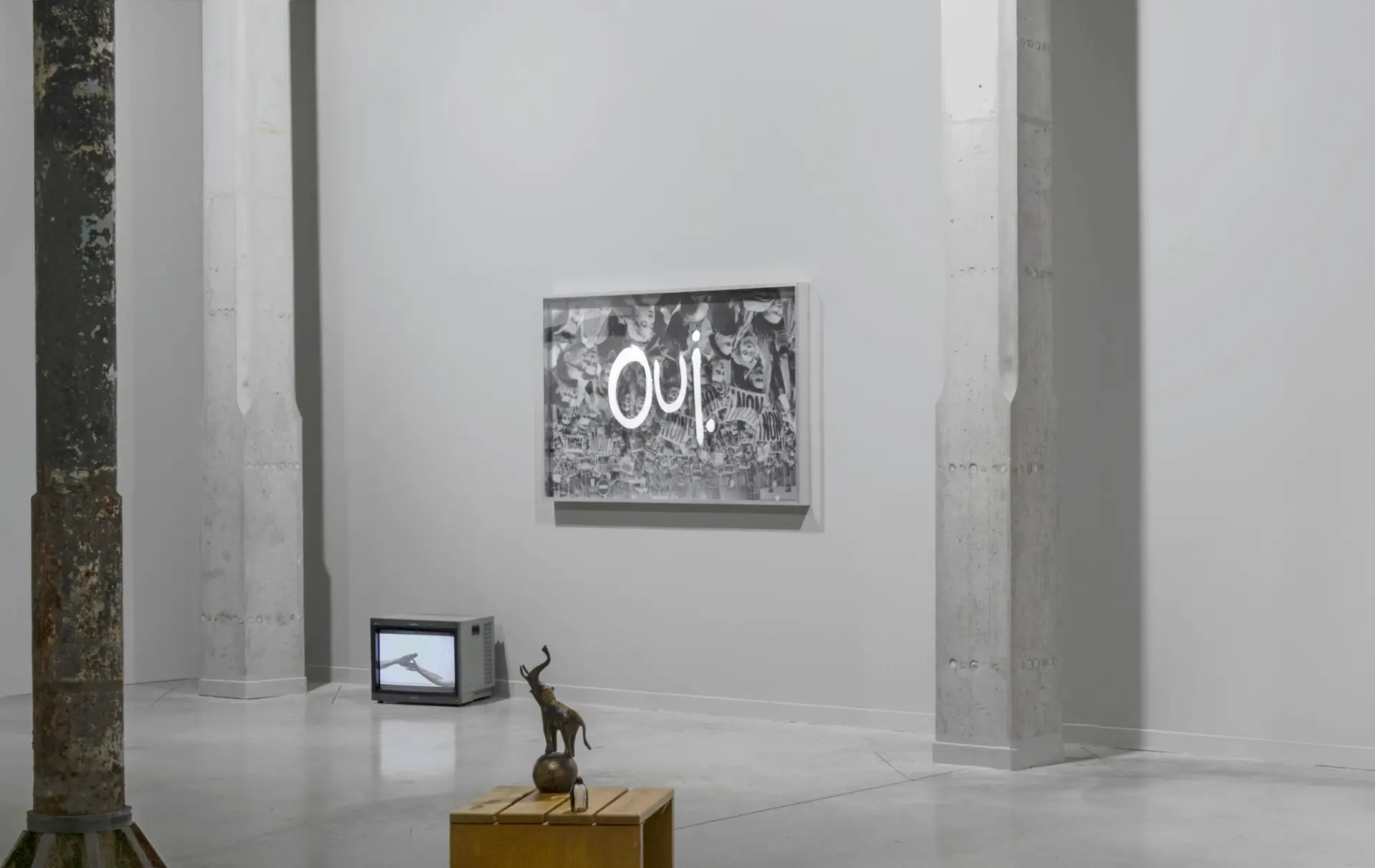
The first is a presentation of scans collected over many years. Removed from their original contexts and incorporated into the works, they include images from books on various subjects, originating from different countries and found at different moments. The Romanian artist draws inspiration from Aby Warburg’s Mnemosyne Atlas, which traced the migration of images and metaphors through time and space, and examined how gestures and emotions reflect the underlying psychology of an era. Warburg bridged high and popular culture – from Albrecht Dürer’s paintings to golf advertisements – challenging purely stylistic analysis. Anghel works differently. Her archive is multilingual and multi-contextual, yet free of hierarchy. She gives form but does not impose meaning. Any object may become a symbol, bound only by imagination and association.
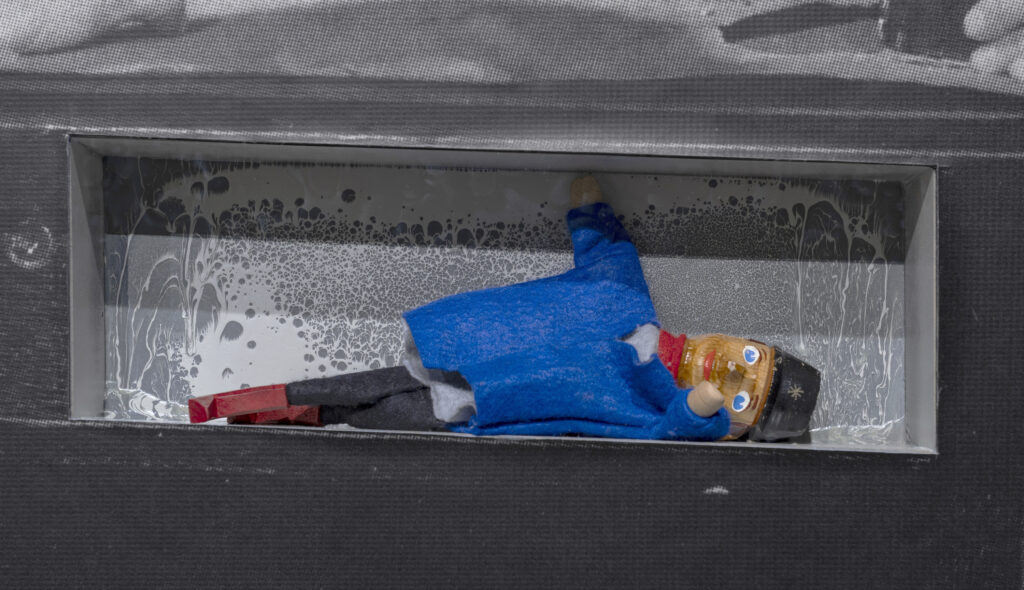
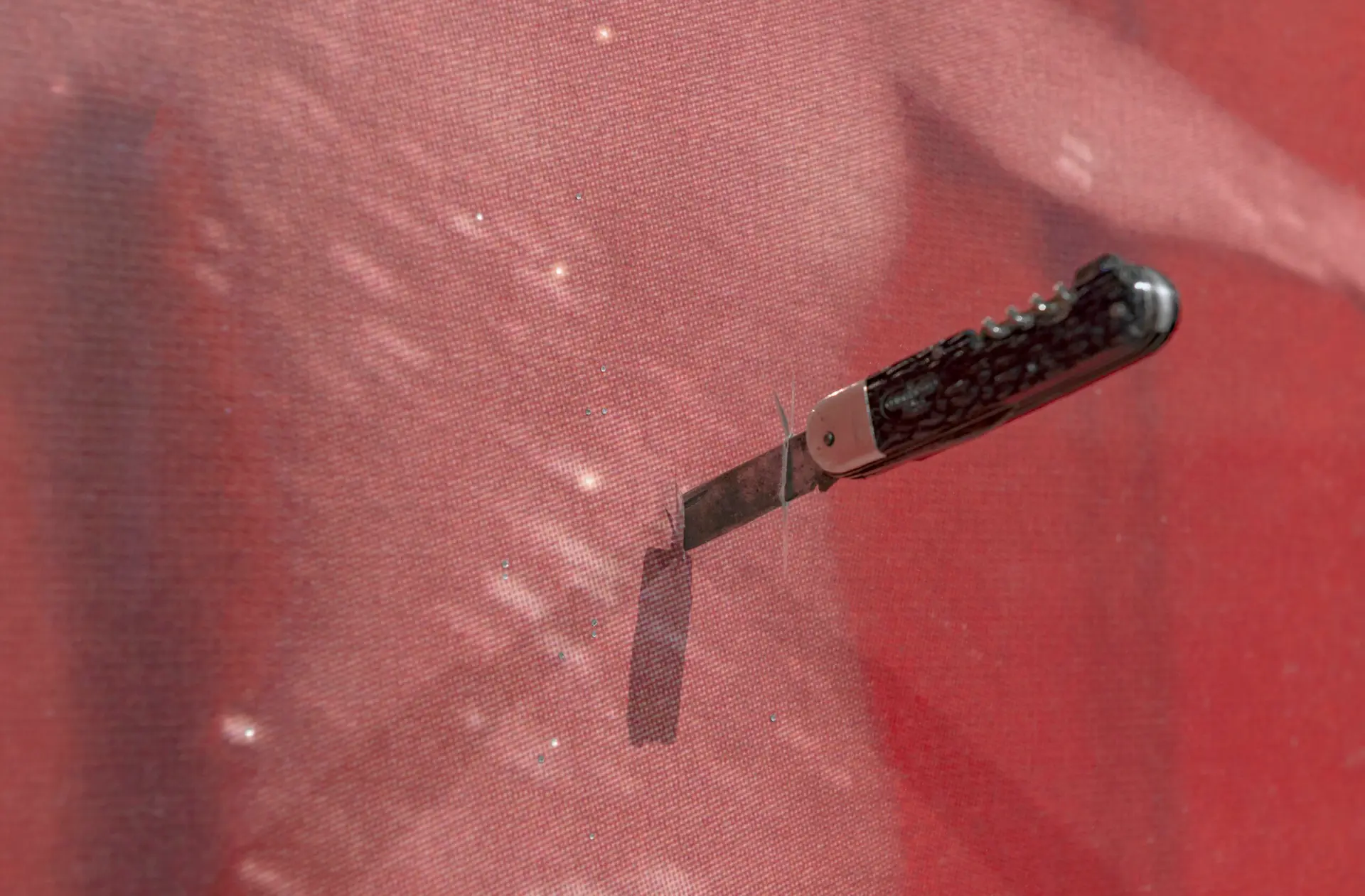
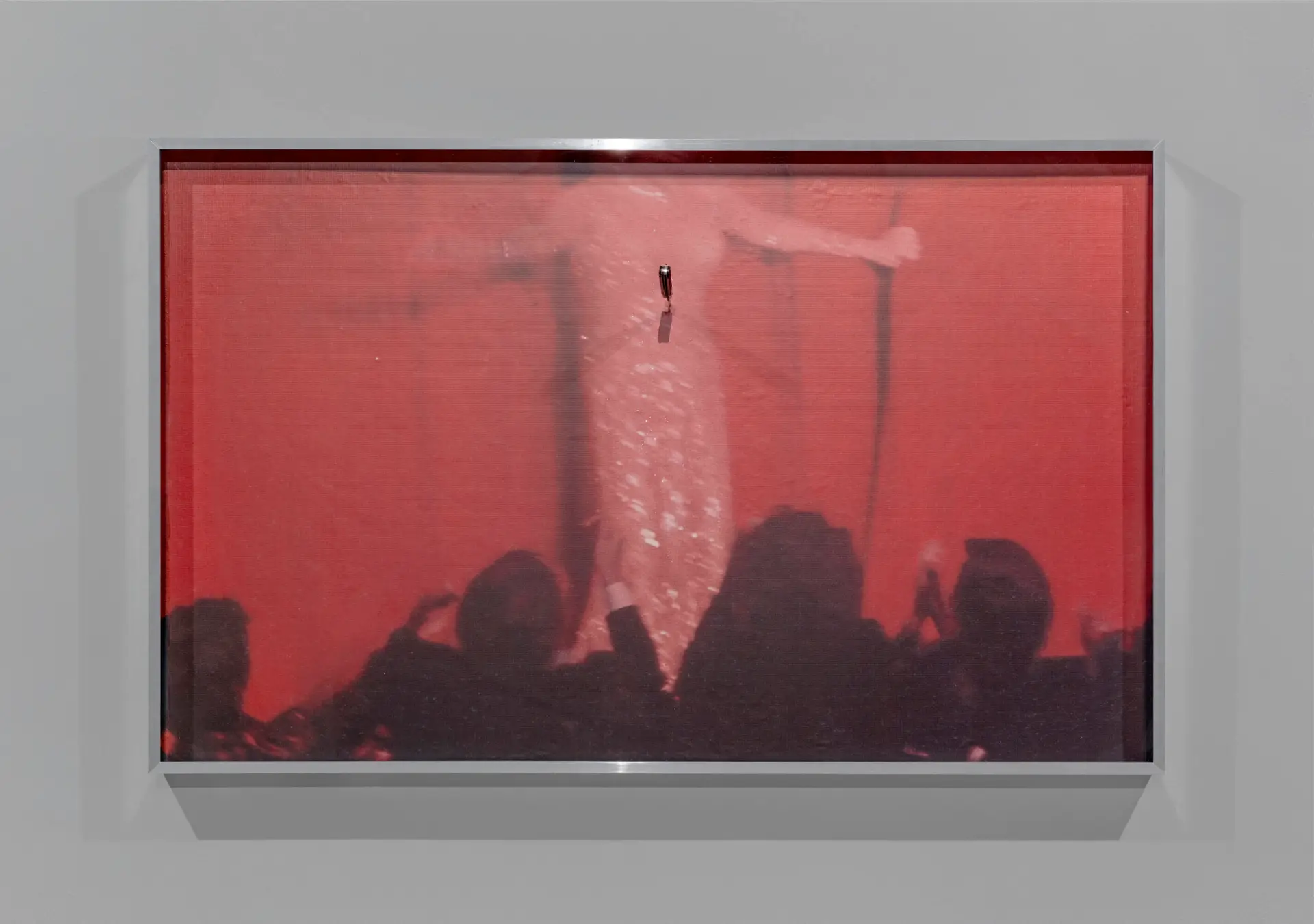
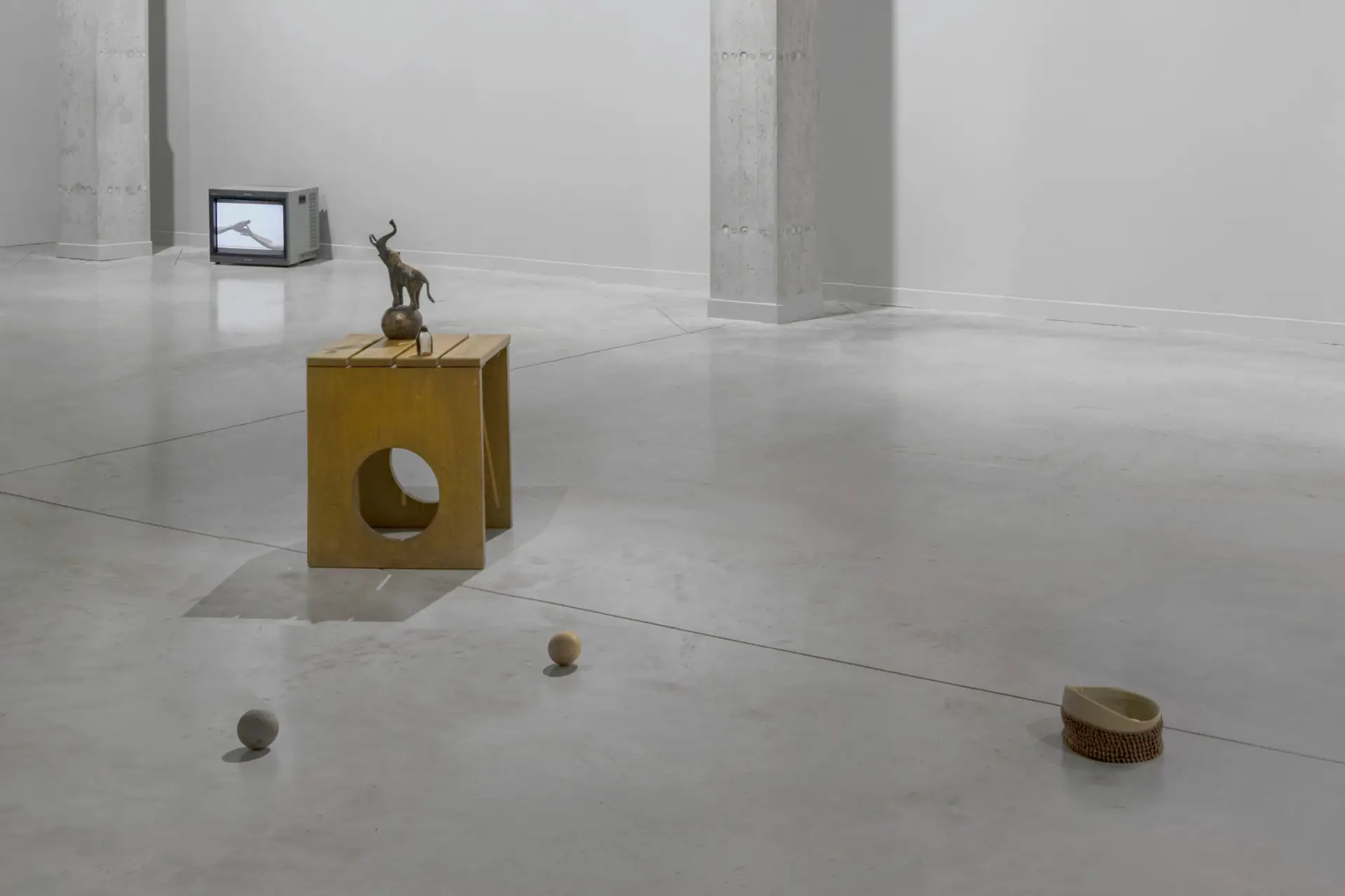
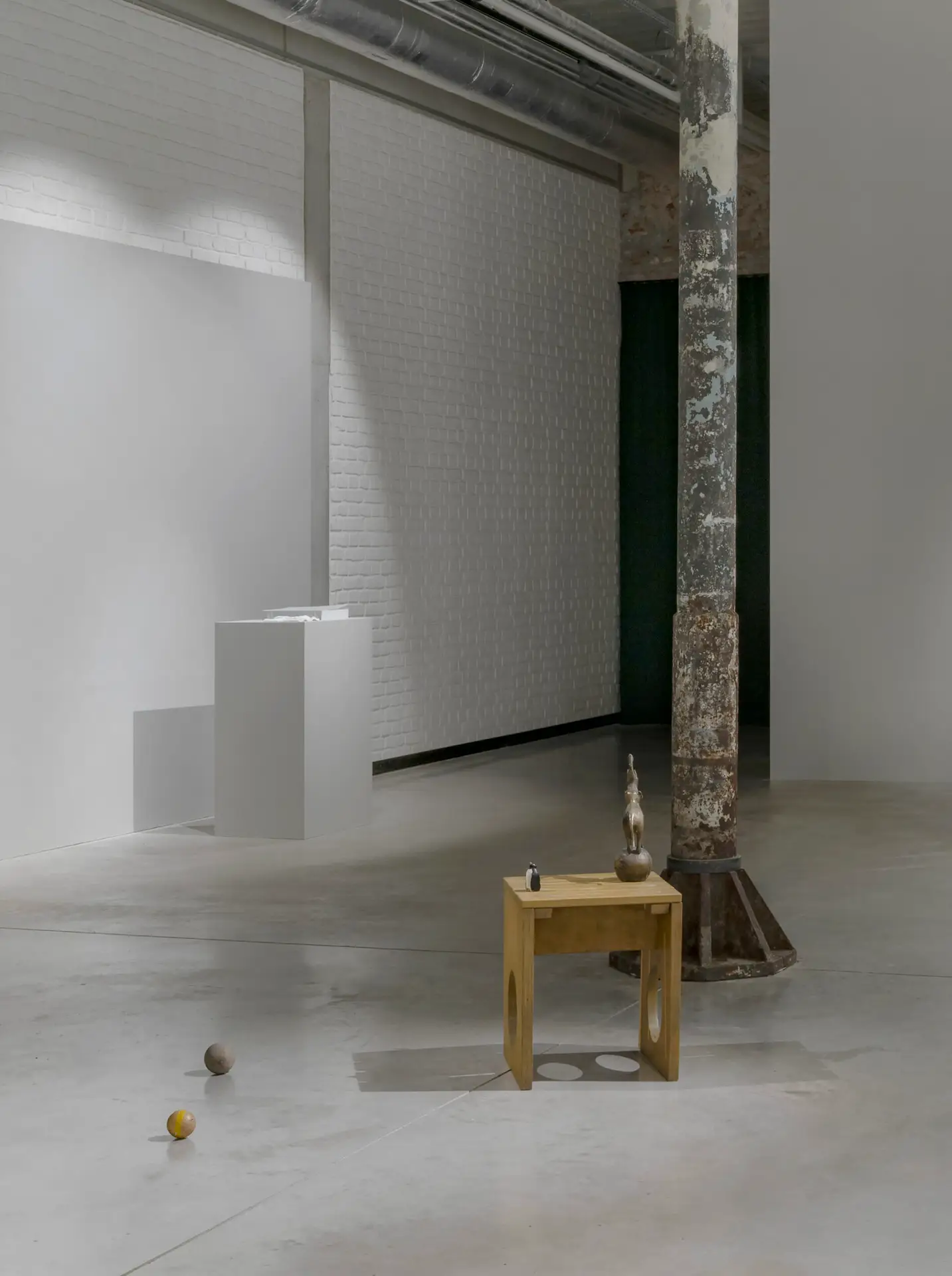
The second narrative unfolds through the choreography of the exposition: through newly created display cases and previously made installation objects that Anghel arranges in a deliberate constellation. Together, these elements offer insight into her thinking process. It is worth noting that every element of The Blind Man operates simultaneously as a commentary on the private and the public. Two neighbouring display cases illustrate this duality. The artwork entitled Vessel addresses the fear circulating within the public sphere – how political and social power structures employ images to shape collective imagination, and how moral blindness becomes one of the fundamental mechanisms of authority. Those who construct dominant narratives often choose to look away from suffering. Women who occupy public roles are particularly exposed: their bodies and images become targets of judgement. The knife piercing the display, lodged in the chest of an enigmatic figure, symbolises this exposure. Cold, sharp, situated at eye level, it appears as a trophy, as evidence, as an instrument – and fetish of power. It becomes a metaphor for both symbolic and physical male violence directed towards women in public life. By contrast, Love transports us into the domestic sphere, where violence remains largely unseen. The bed – associated with intimacy and affection – conceals a baseball bat beneath its hollowed-out frame, a symbol rooted in control, territoriality and a sense of ownership. Anghel does not accuse; she has no expectations. Instead, she asks how we perceive and interpret anomalies.
The viewer is not a passive observer but an active participant: entering the constellation, shifting elements, composing their own sequences. In this way The Blind Man extends beyond the gallery space, as evidenced by additional conceptual notes.
PS.
The second issue of “The Blind Man” will appear as soon as YOU have sent sufficient material for it – this functions as the exhibition’s subtitle. We, the viewers who make the pictures, we are and remain The Blind Man. – a quotation from Kant After Duchamp (MIT Press, 1996), serving as an invitation to active participation in a “game”.
PPS.
The curatorial statement is accompanied by Andreea Anghel’s original notes and stream-of-consciousness jottings. These function as a commentary on the works, adding yet another layer to the dialogue between the public and the private within the context of artistic practice. For the artist, they are a way of constructing an immersive world.
PPPS.
The exhibition acquires an additional dimension through an experimental dialogue between artists. Anghel was invited by the curator to respond to the research archive of another artist, Bethan Huws, who herself undertook extensive artistic research on Marcel Duchamp. This unusual correspondence forms an open experiment in which two perspectives on archival practice intertwine to create a new narrative. It echoes the invitation to send materials to the second issue of The Blind Man. The book, together with its commentary, becomes an integral part of the exhibition.