Artist: Gala Alica
Title: The Cabinet
Curator: Tevž Logar
Venue: UGM Kabinet, Kabinet
Gala Alica’s artistic practice is rooted in precise, almost archaeological observation of the built environment. Through this approach, she examines how individuals navigate the shifting boundaries between private and public space, and how these boundaries shape experiences of belonging, safety, and identity. She is interested in the historical layering of spaces, traces of use and abandonment, and the ways in which architecture structures everyday bodily and social experience. In this sense, her work aligns with perspectives that conceive of space as a field of practice, conflict, and continual rewriting of meaning. Her works often create subtle situations in which the viewer becomes both observer and participant, prompting questions of gaze, presence, and responsibility.
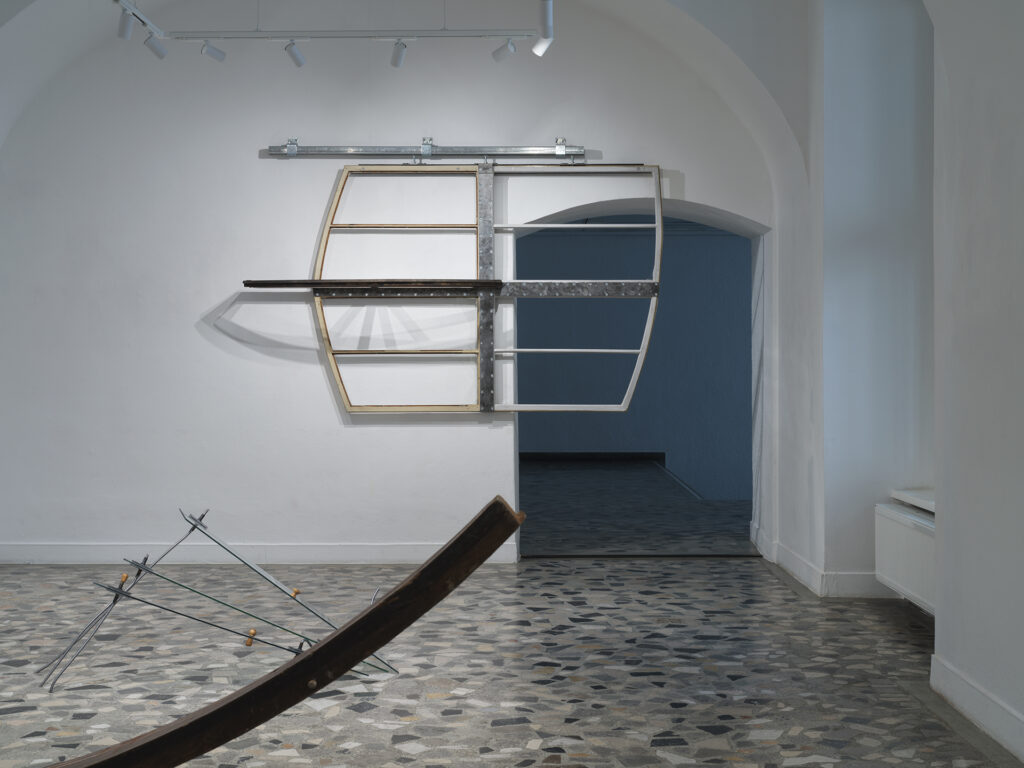
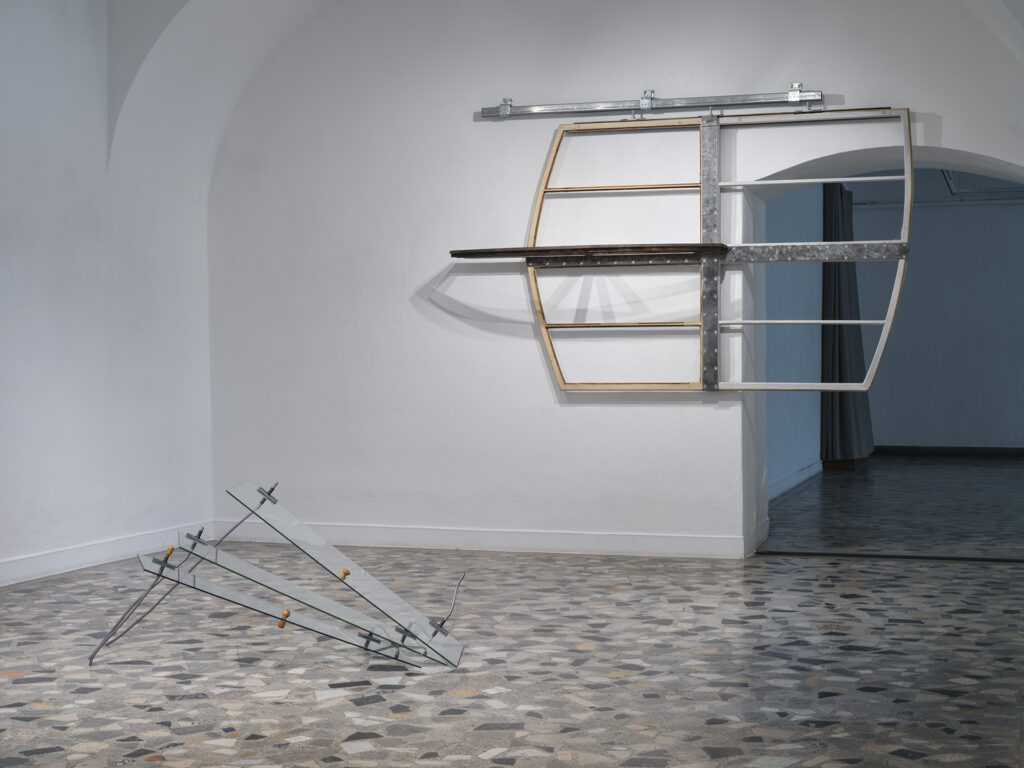
These long-standing concerns are directly reflected in the project realised in the UGM Kabinet, which focuses on the history of the building and its multi-layered semantic past – from the religious, through the secular and the intimately private, to the working and the public. The space is revealed as a palimpsest, marked by successive uses, ideologies, and forms of inhabitation, none of which are ever fully erased but remain present as traces, sediments of the building’s past lives. The starting point for the new intervention is the appropriation of selected objects and architectural remnants that have survived multiple phases of partitioning, renovation, and transformation of the Maribor Art Gallery over the past seventy-five years.
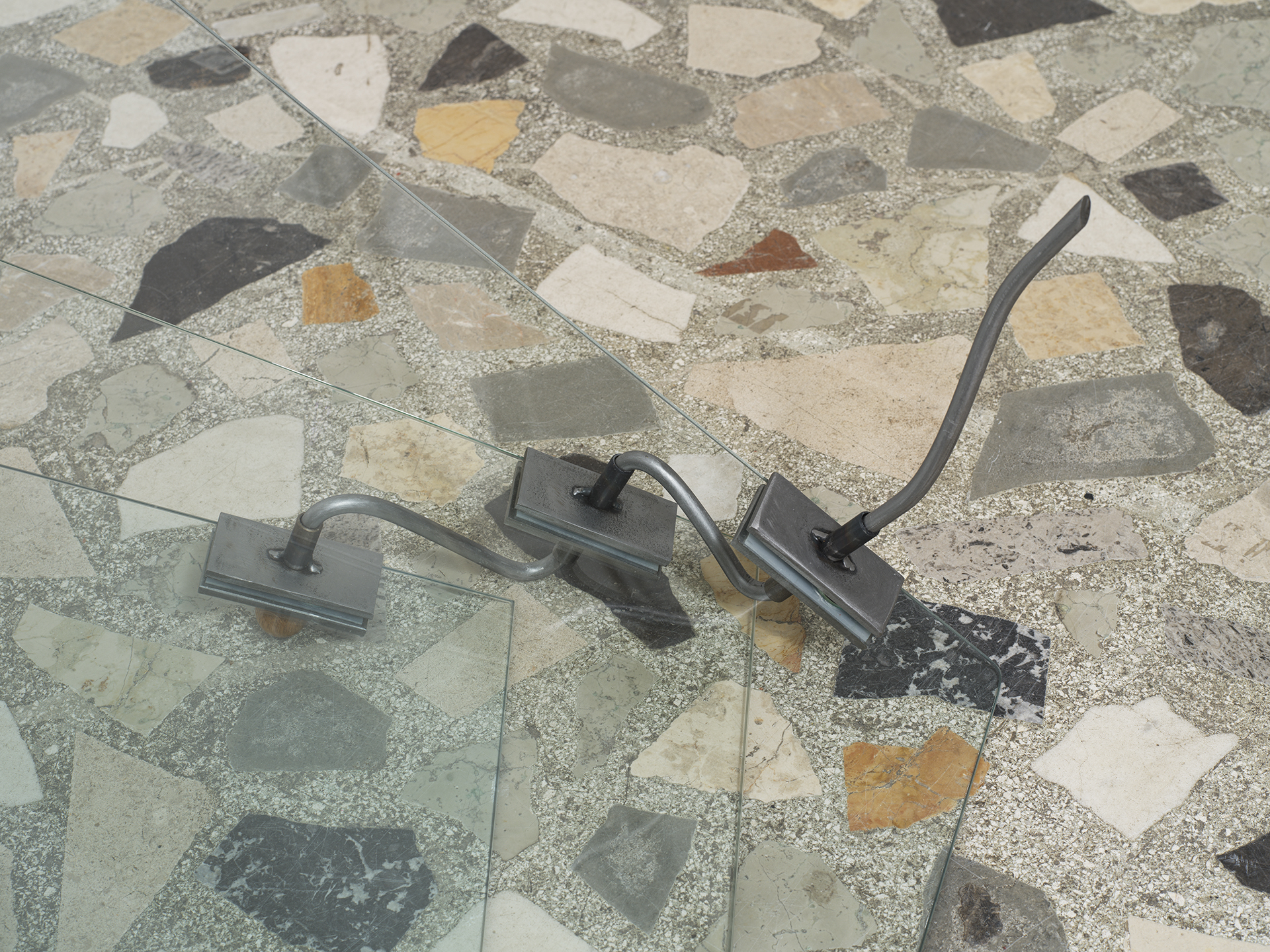
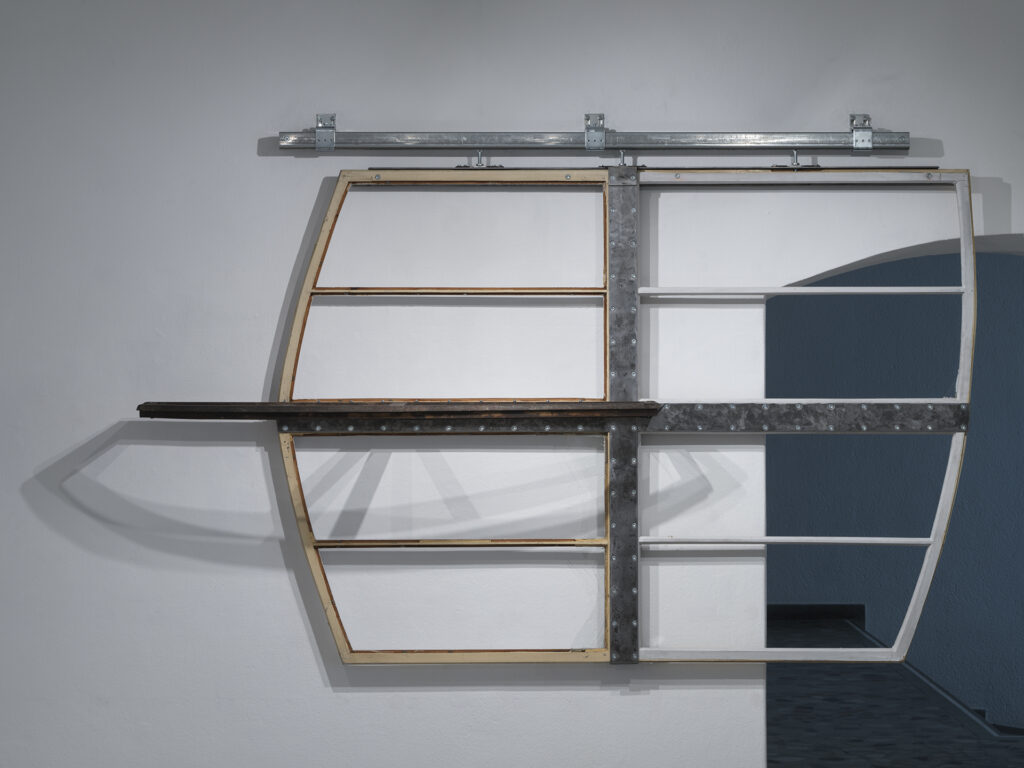
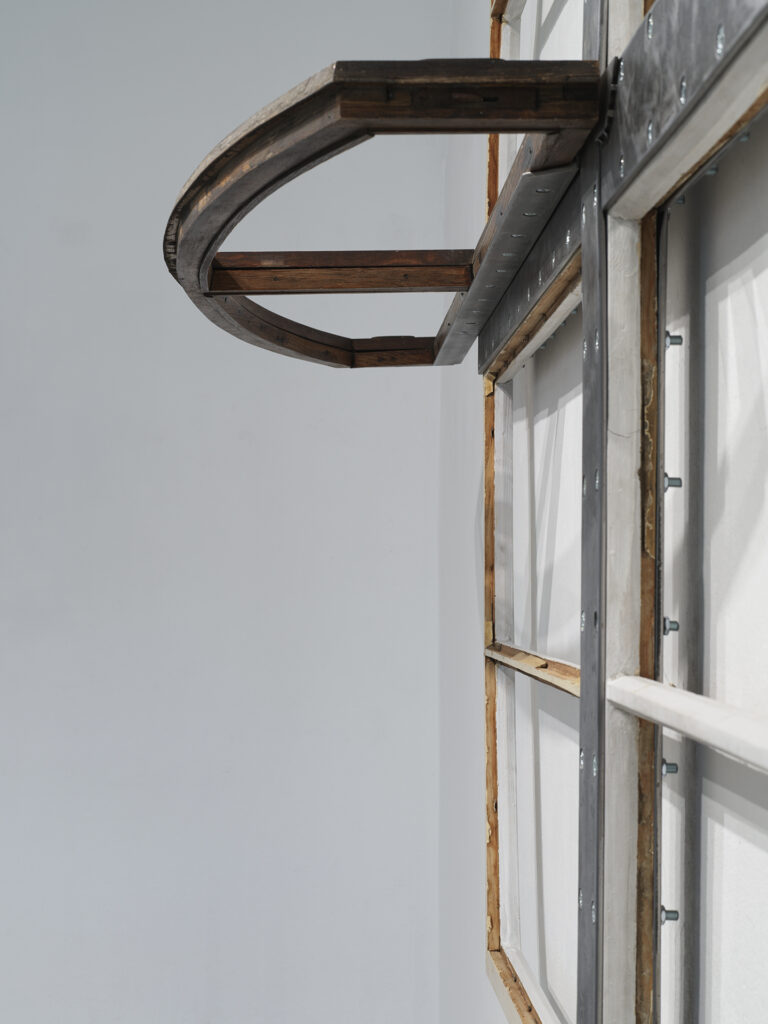
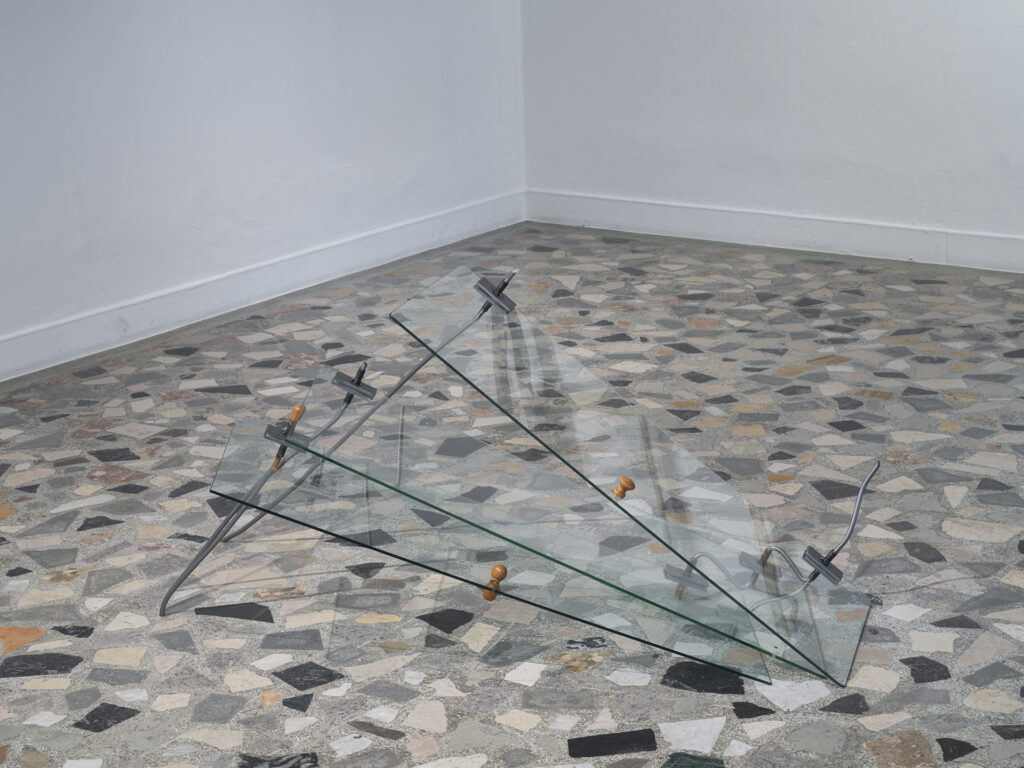
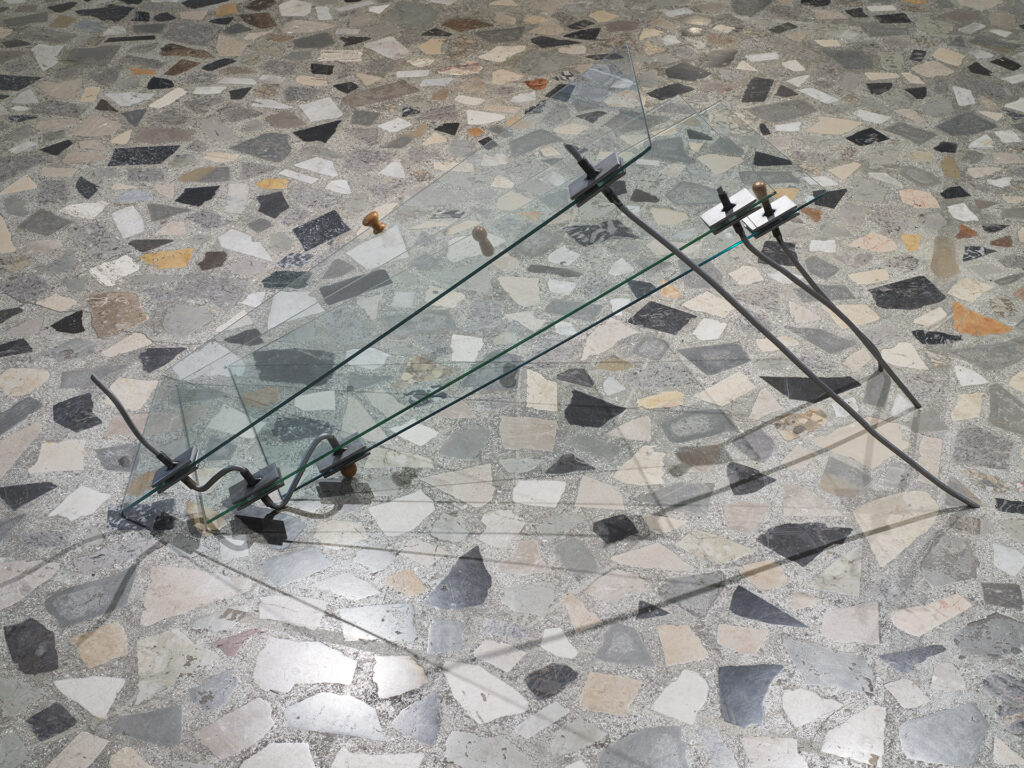
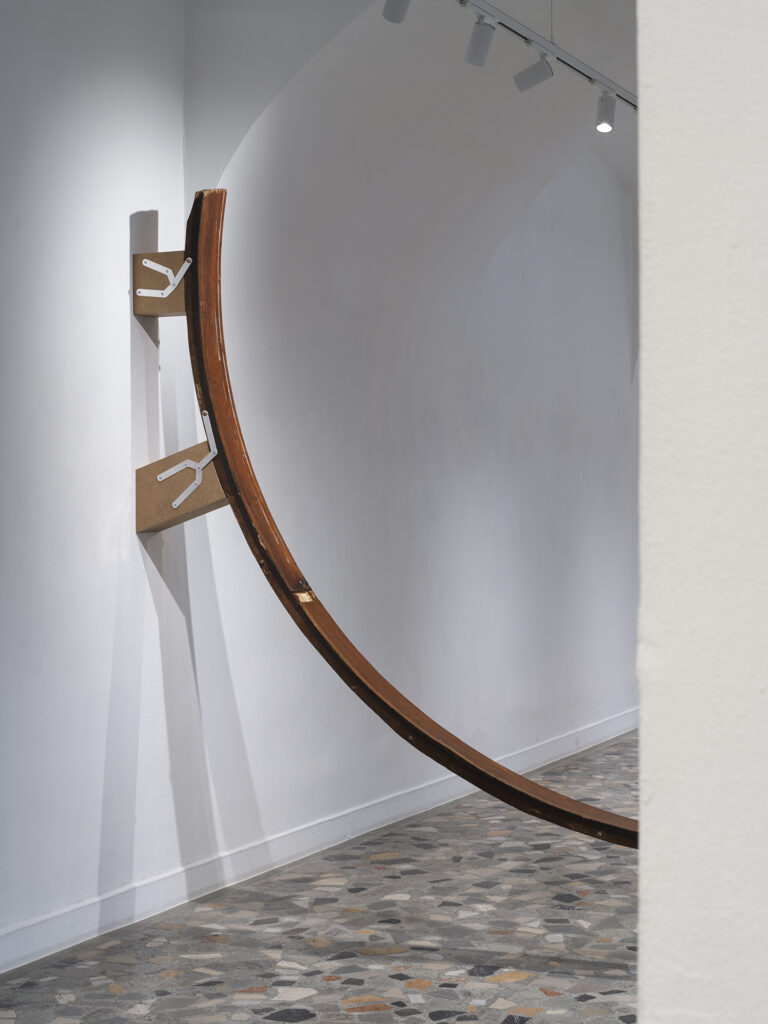
These fragments carry the material memory of former functions and activities, forming an archive of the building organised not by historiographical logic, but through affect, association, and spatial resonance. The appropriation of found objects is complemented by the artist’s material intervention, which takes place not in the exhibition space but in her studio. This process draws new meanings from existing traces, shifts them into new relationships, and opens them to contemporary interpretations, in which the past appears not as a closed narrative but as an open-ended process. The use of material in the studio is crucial, as it demonstrates that Gala Alica defines objects not only conceptually but also through their material articulation. By employing contemporary, readily available materials such as MDF and steel – typical of everyday urban architecture – she establishes a dialogue with the found objects, whose material carries the traces of time and prior use. The added materials serve as quiet structural supports that, through points of contact, joints, and seams, allow selected fragments of the past to be reinserted into a contemporary spatial flow without losing their historical presence.
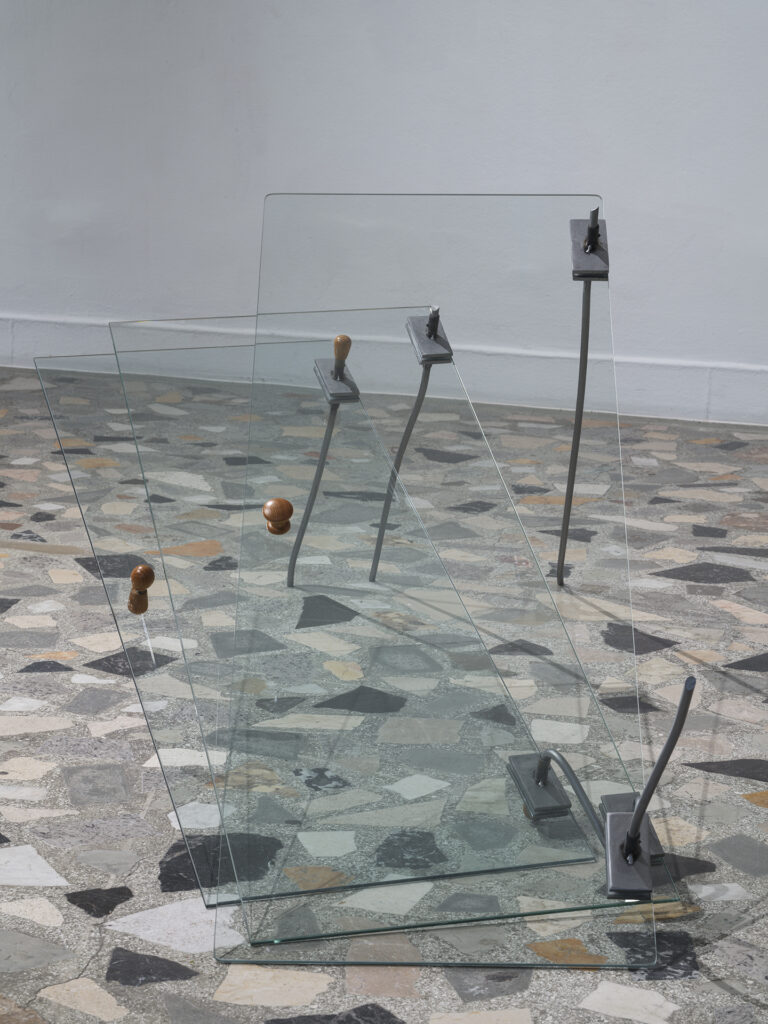
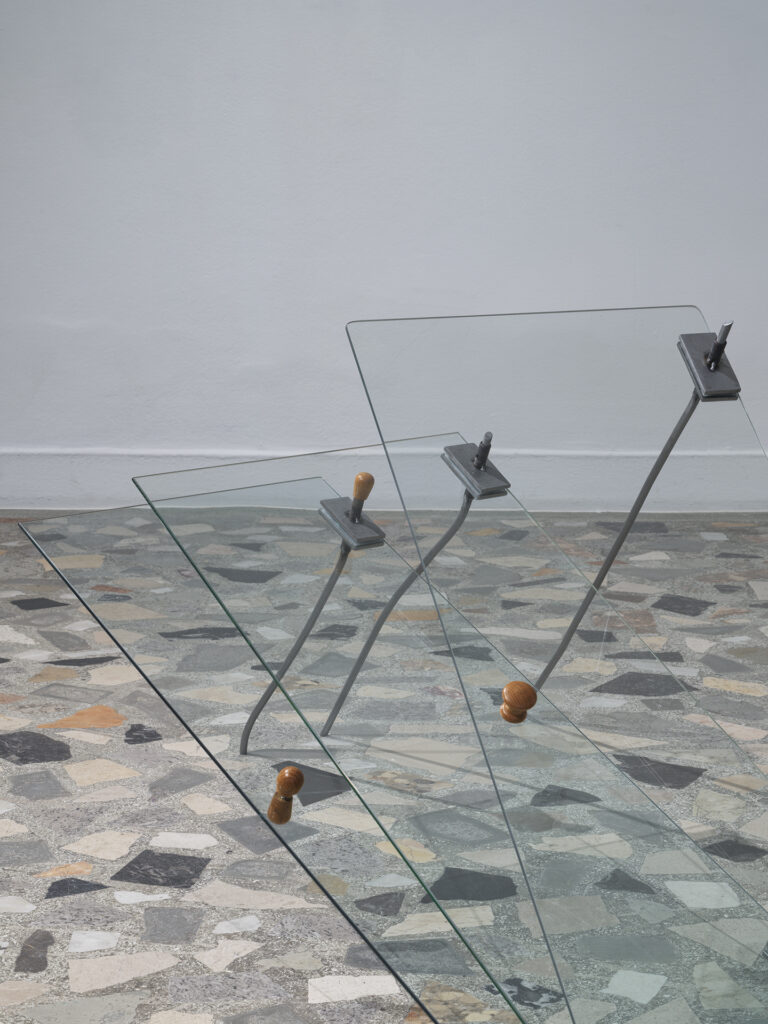
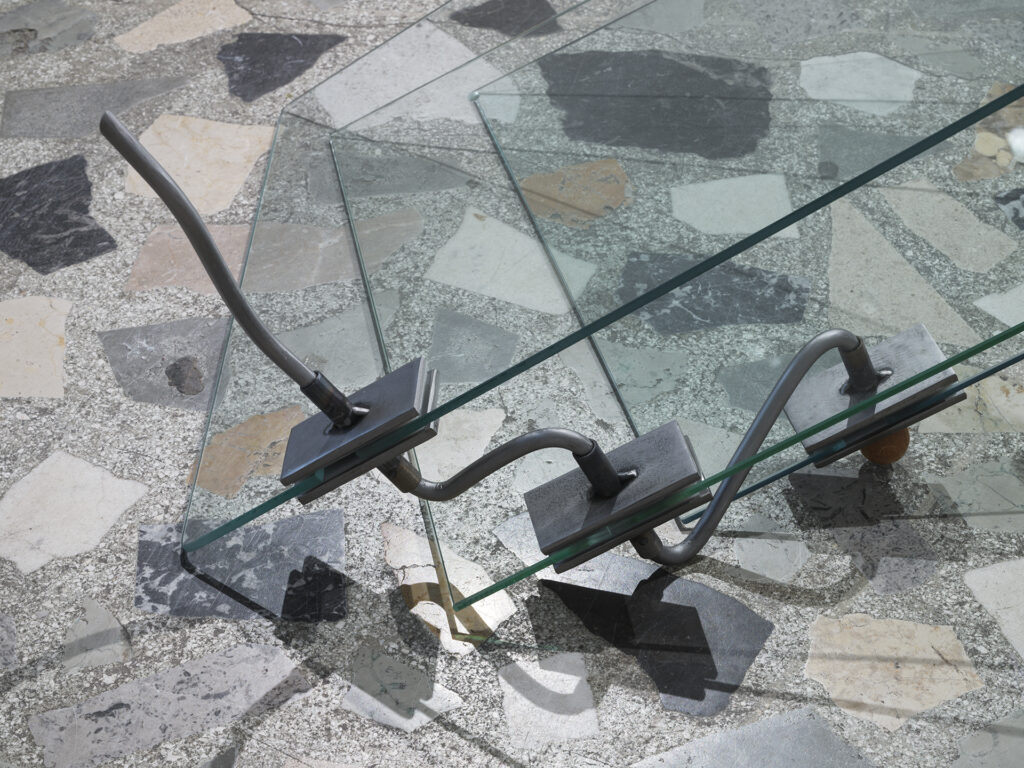
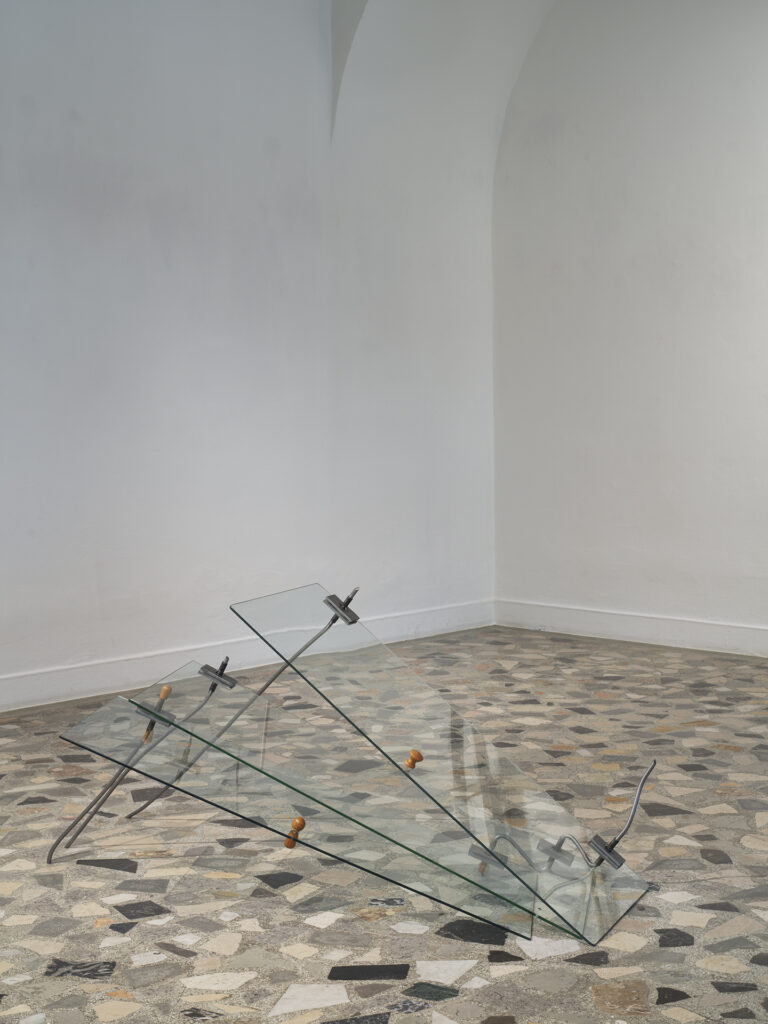
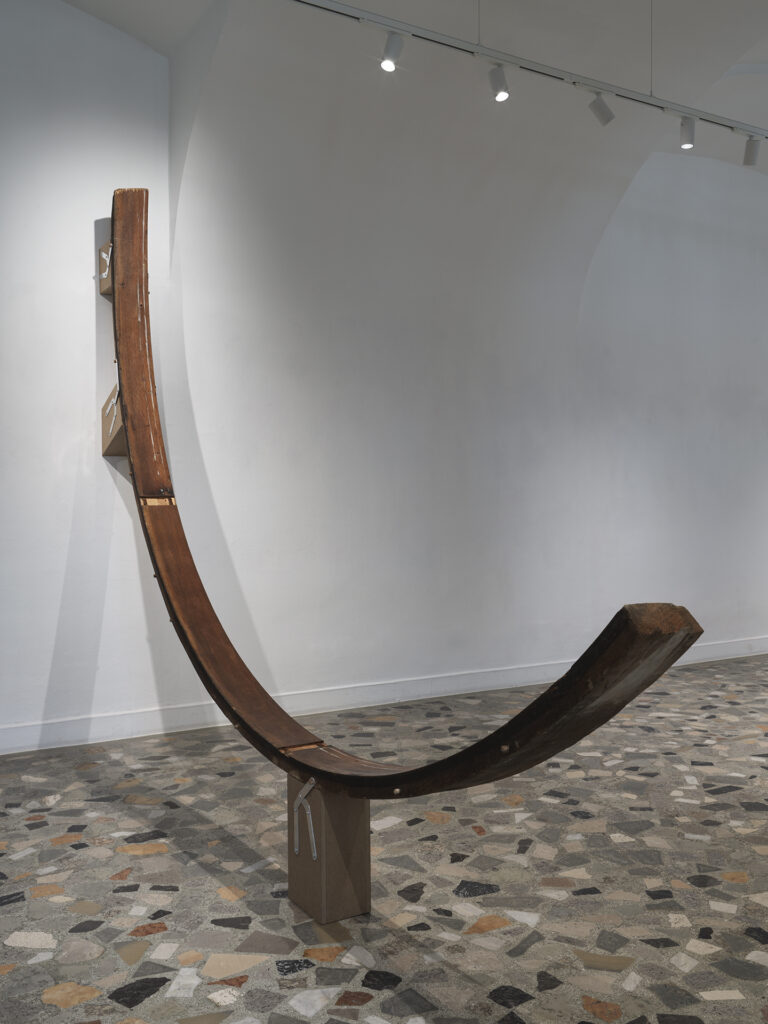
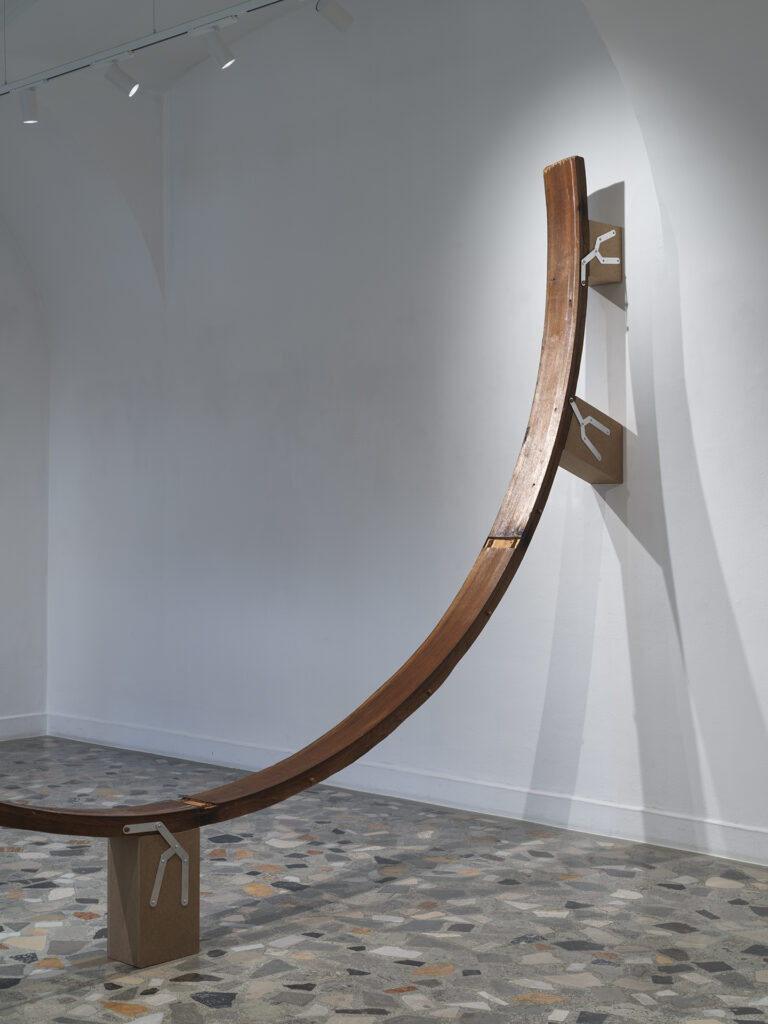
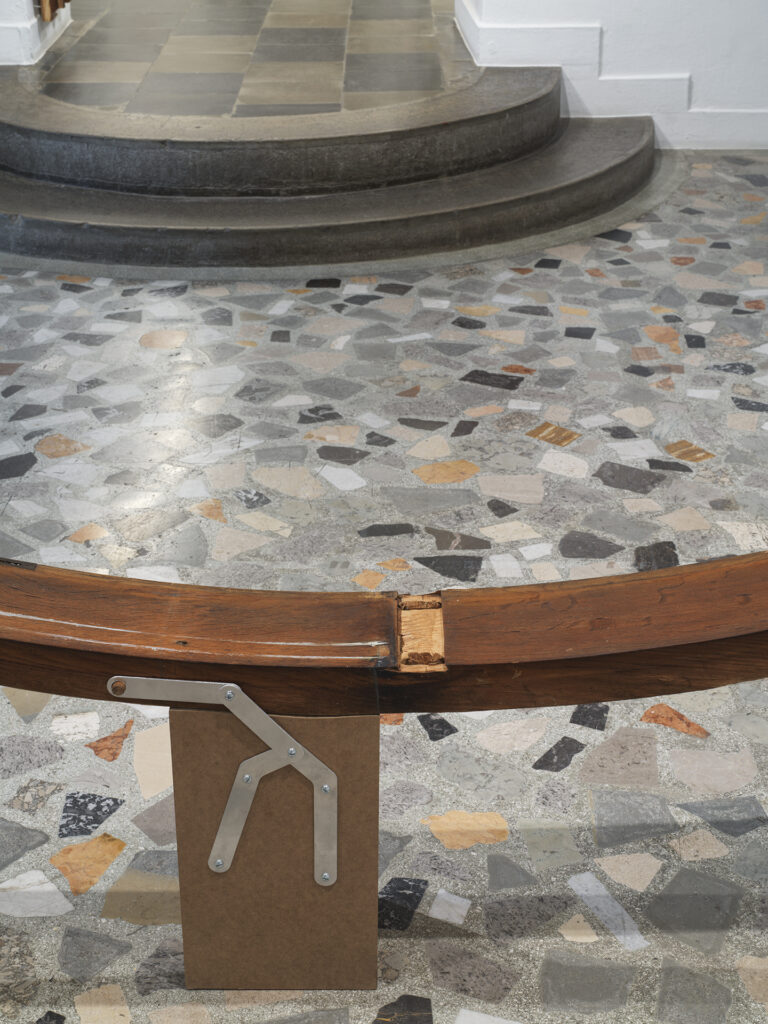
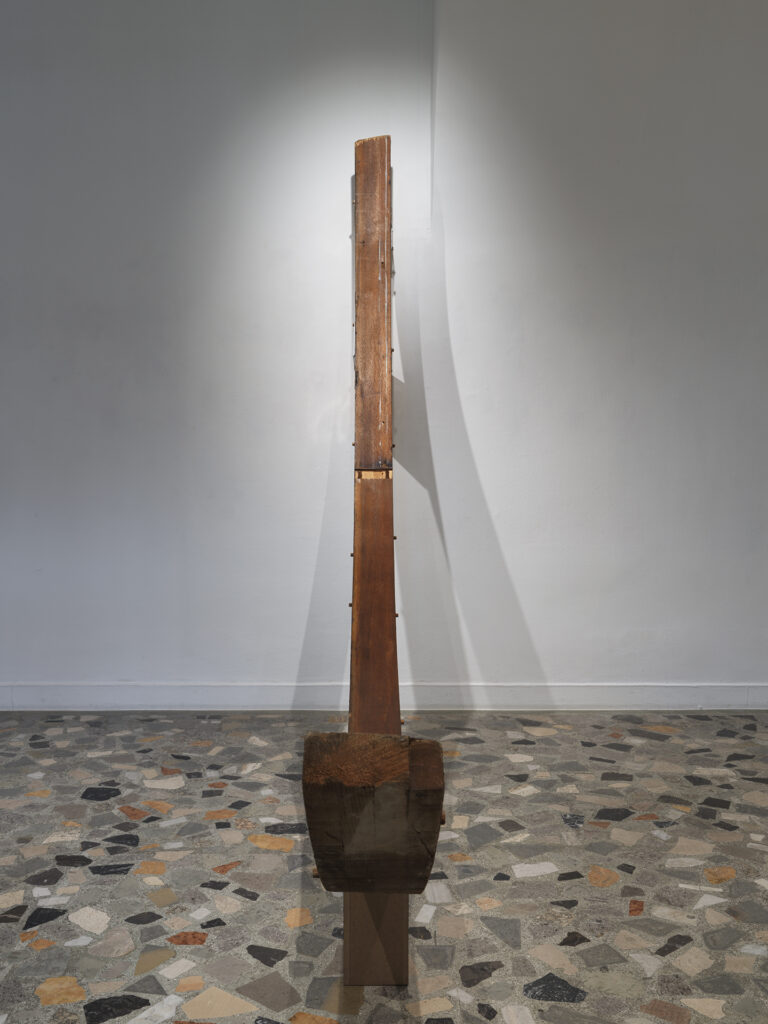
This approach is subtly reflected in the exhibition’s title, which refers to the exhibition space while also mirroring the artist’s strong interest in space as a process and in material as a mode of inquiry. The title also holds a quiet provocation, evoking the cabinet of curiosities without directly referencing its role as a historical precursor to the modern museum, once intended to display the world’s diversity and mystery through the admiration of unusual and exotic objects. Rather, it proposes a critical examination of the relationship between past and present, between material and meaning, and a reflection on how history is constituted through concrete things, their displacement, and their recontextualization.
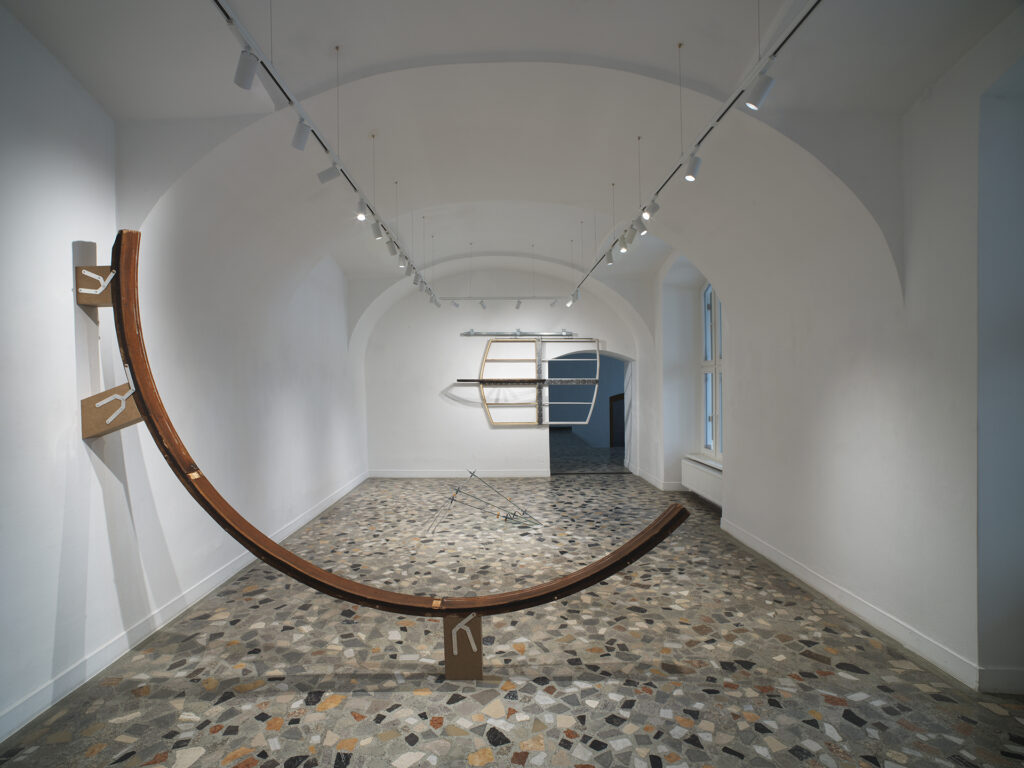
The Cabinet is inhabited by four objects – more precisely, a set of anti-objects – each of which, in its own way, “undermines” specific architectural elements of the exhibition space: the passage, the vault, the floor, and the walls. These anti-objects do not function as autonomous sculptures, but as situations that both reveal and destabilise spatial conventions. In this sense, their approach may be compared to Sartre’s notion of the “anti-novel” – works that assume the form of the novel only to dismantle and question it from within. Similarly, these anti-objects challenge the idea of the object as a stable, self-contained entity and, in doing so, also unsettle our assumptions about space, the exhibition, and the institution.
The exhibition does not present itself as a space of representation, but as a field of tension where material remains, historical echoes, and contemporary interventions intersect. It offers neither a linear narrative nor a single, fixed reading, but instead creates an open structure in which meaning continually eludes capture and is reassembled through the relationship between body, space, and objects, prompting reflections on rhizomatic structures that lack a centre and consist only of a network of connections. Within this intermediate space, a poetics of gentle unveiling emerges – a poetics that does not create spectacle, but enables slow perception, doubt, and a renewed consideration of how we read, inhabit, and appropriate space. The exhibition thus appears as a temporary architecture of questions, inviting the viewer not to intellectual understanding, but to experience.