Title: The Cake is a Lie
Venue: Galerie AVU, Prague
Artists: Anna-Marie Berdychová, Valentýna Janů, Tereza Kalousová, Bety Krňanská, Markéta Slaná, Nik Timková
Curators: Lamija Čehajić and Jirka Skála
Photo documentation: František Svatoš
The exhibition The Cake is a Lie presents works by six Czech and Slovak artists: Anna-Marie Berdychová, Valentýna Janů, Tereza Kalousová, Bety Krňanská, Markéta Slaná, and Nik Timková. It emerges from an environment that speaks the language of growth, flexibility, and individual responsibility. The promise of mobility and personal success has become a horizon quietly organizing expectations and everyday decisions—like a reward that supposedly arrives if we persevere. The curatorial selection by Lamija Čehajić and Jirka Skála brings together two generations of artists whose works engage with the tension between aspiration and its social limits: between the pressure to respond and adapt, and the need to construct a coherent, legible identity capable of sustaining itself in public space. To what extent is this expectation shaped by social conditions, gendered self-definition, or class affiliation? The exhibited works share an interest in rituals of self-discipline, consumption, and everyday aesthetics, in which this tension is continuously rehearsed.
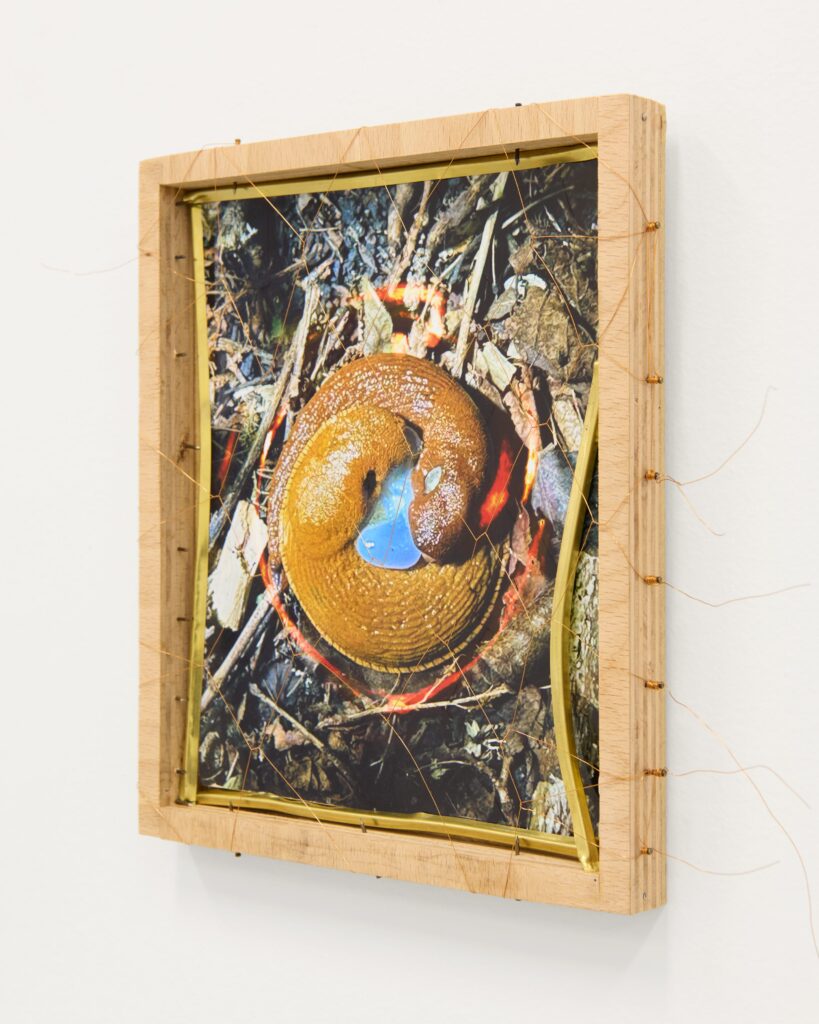
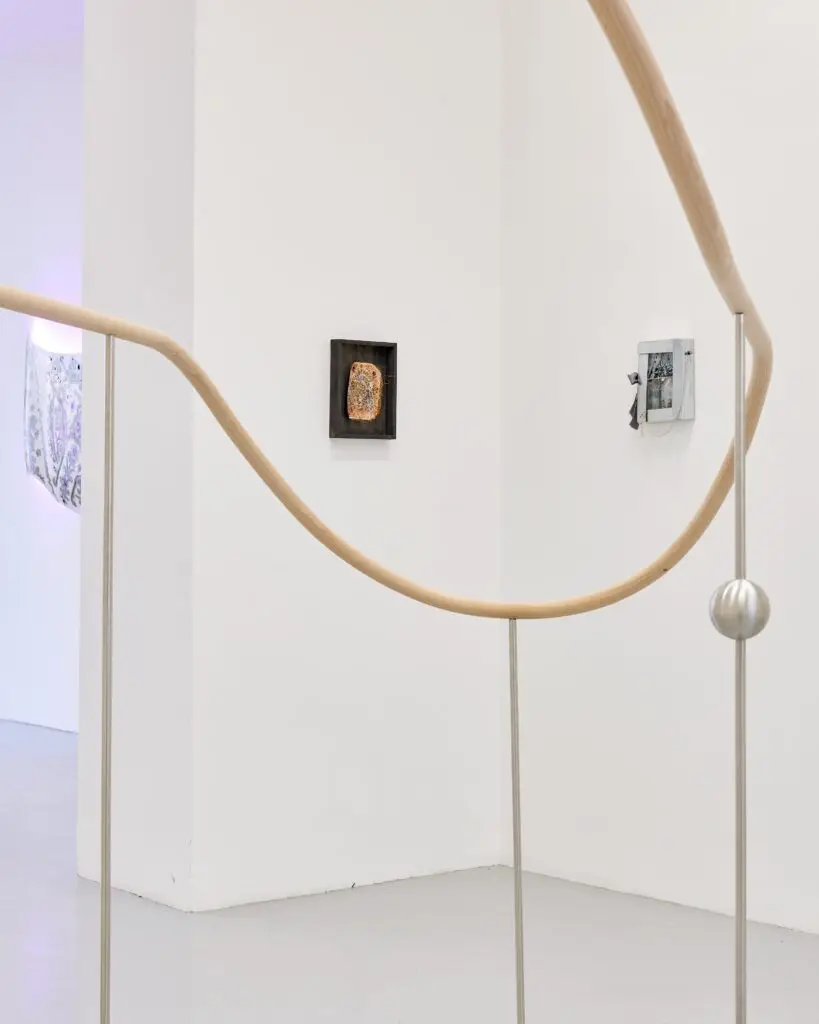
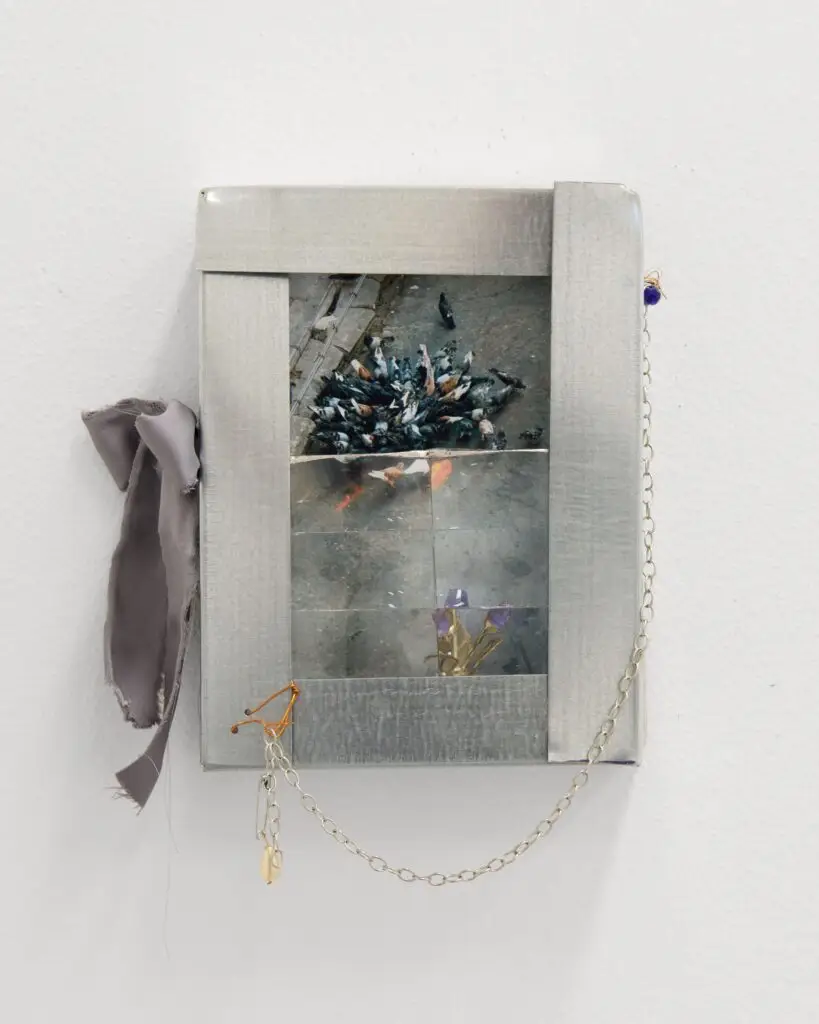
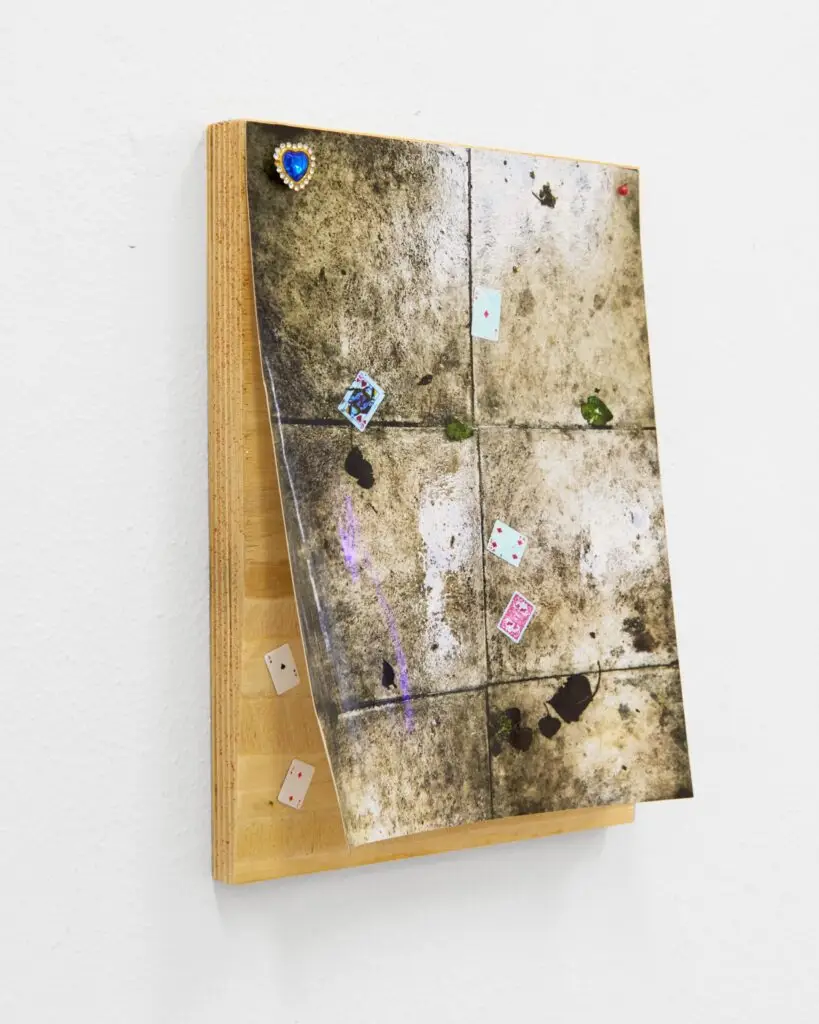
Anna-Marie Berdychová creates photographic images rich in symbolic coding and narrative through both digital and physical manipulation. These are completed with an authorial DIY framing that partially obscures, fixes, and places the images into a state of subtle tension.
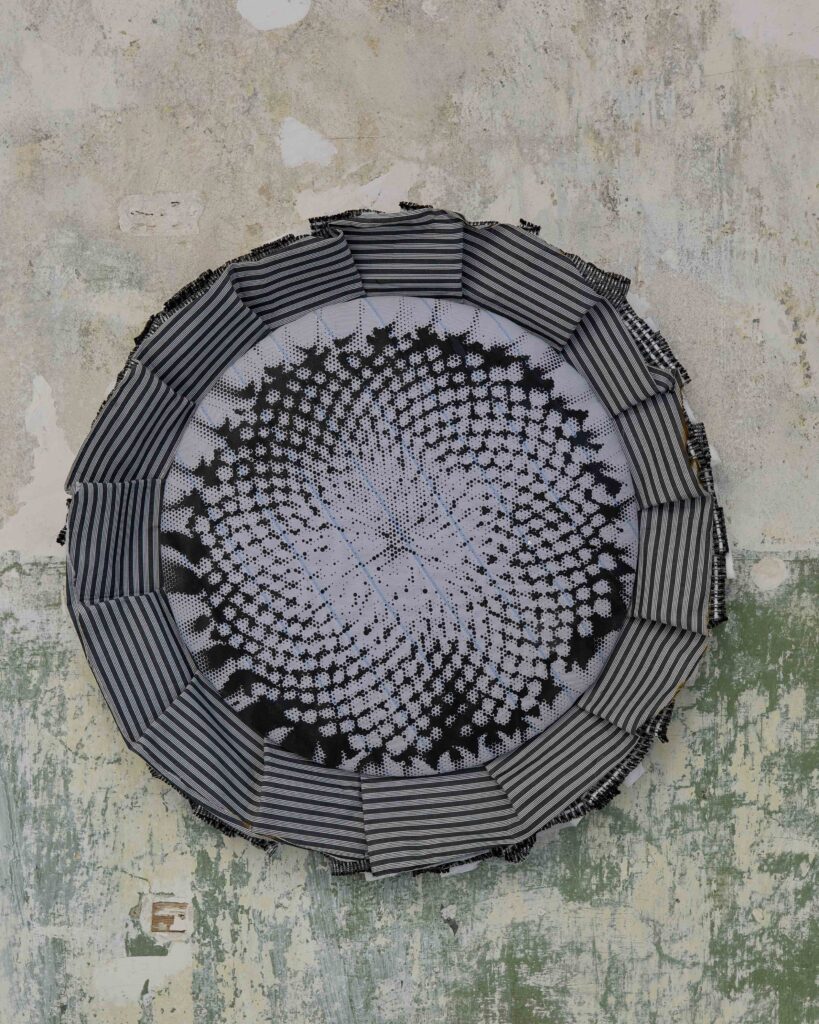
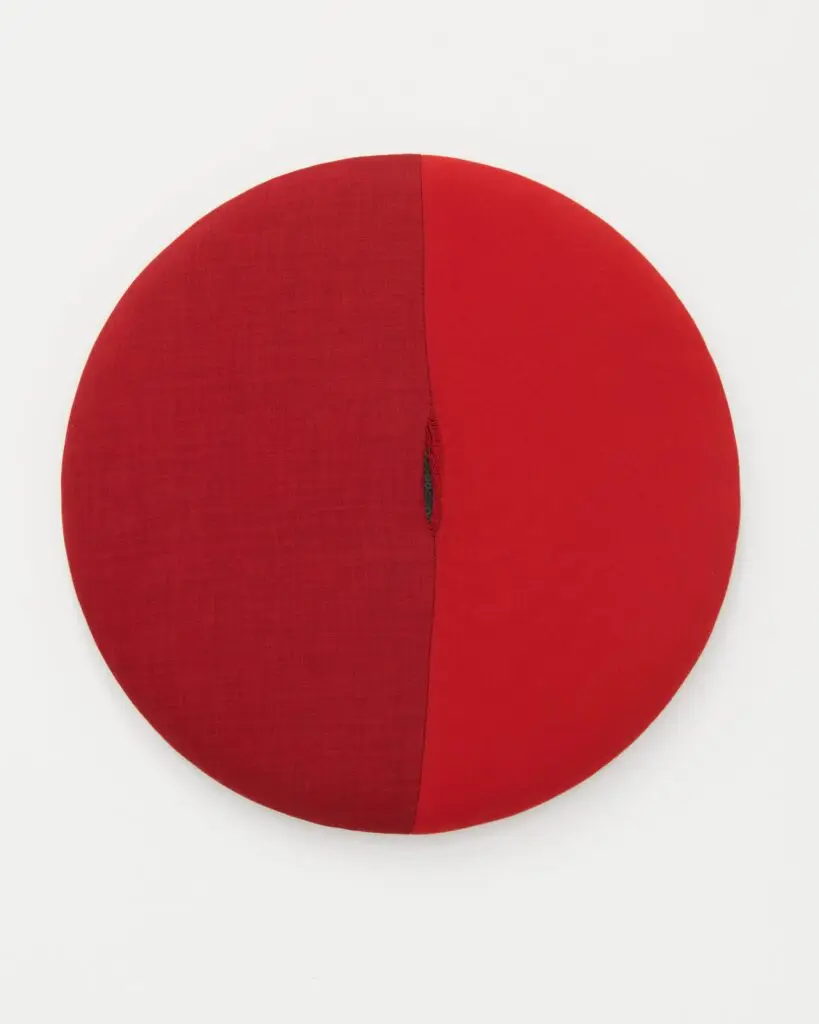
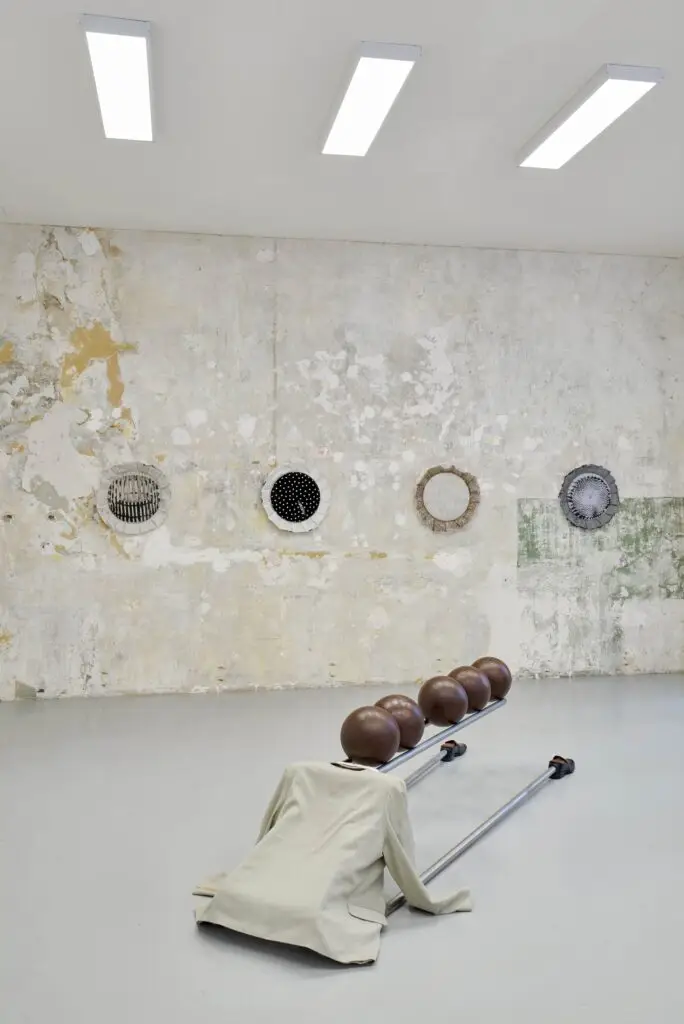
Valentýna Janů works with the indexicality of textile materials—their capacity to carry the trace of touch, pressure, and time—and with the technique of artistic textile printing. The resulting works are stretched into circular formats that define intimate, safely enclosed spaces.
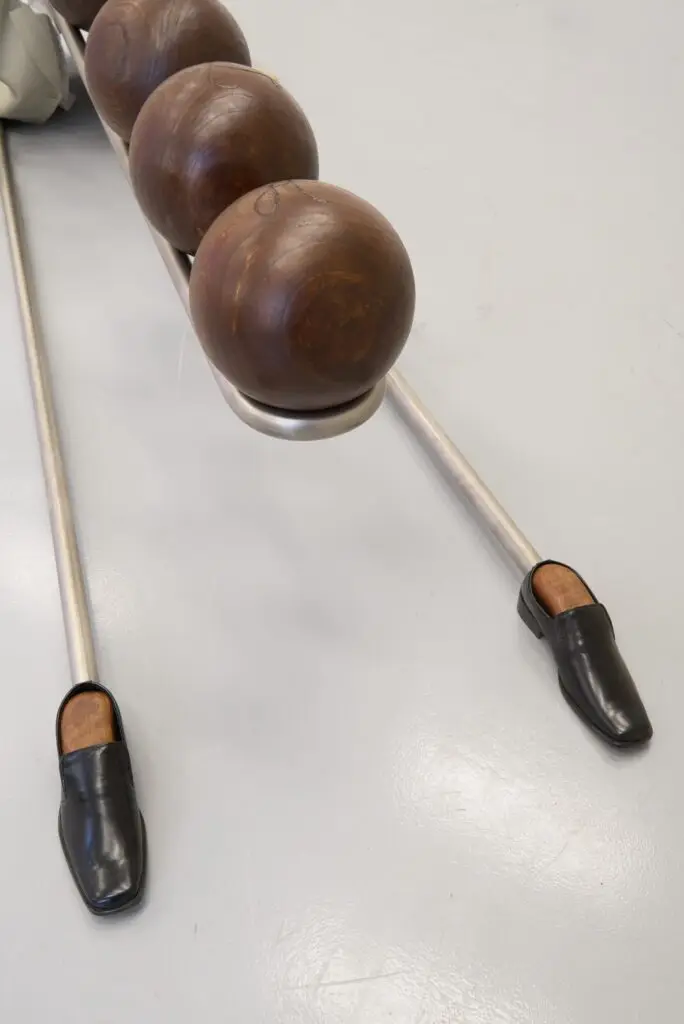
Tereza Kalousová refers to a global visual and corporate imagination that shapes ideas of success and failure. The exhibited wooden spheres bear engraved letters which, in certain sequences, may reveal the meaning of our striving or leave it in a state of instability.
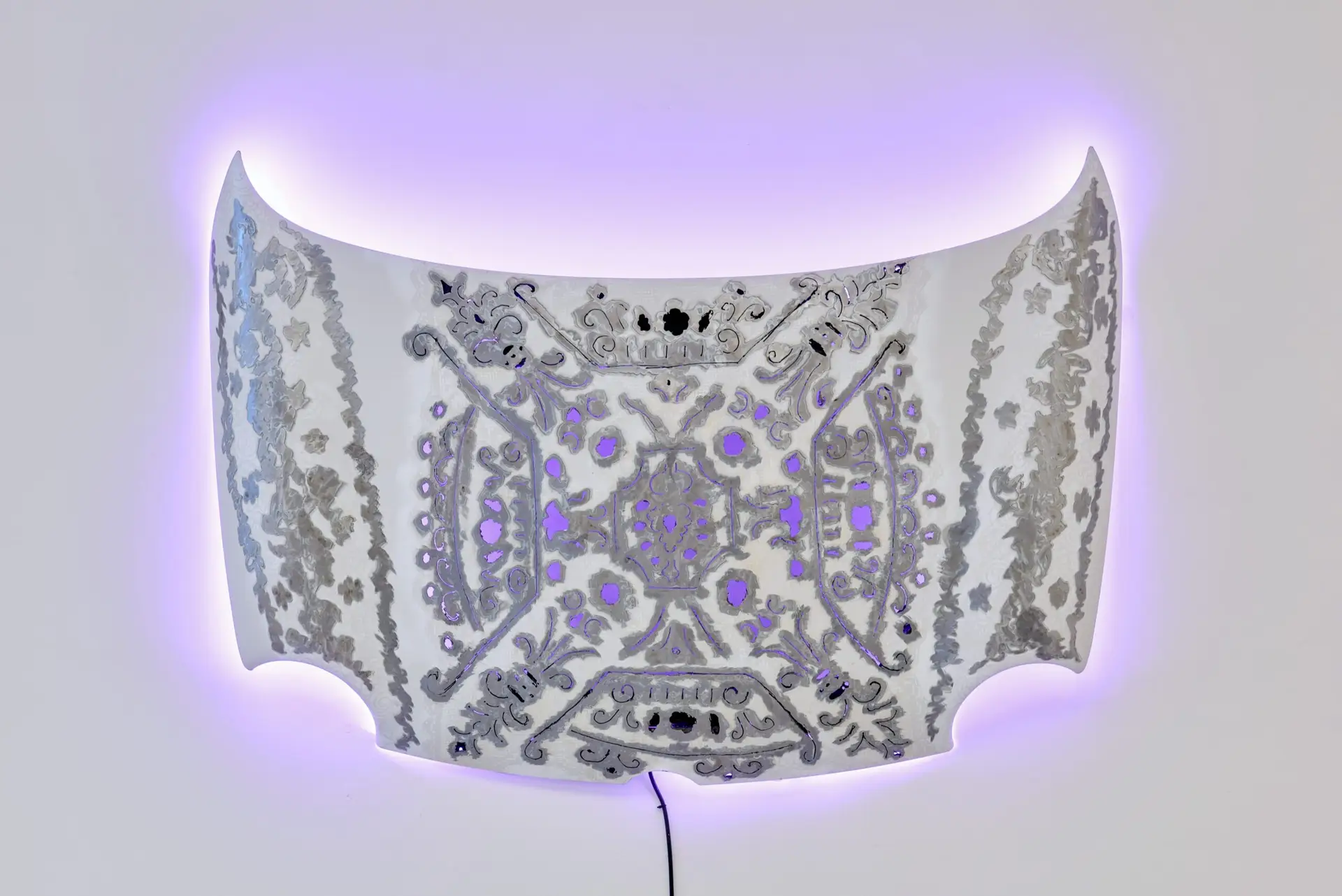
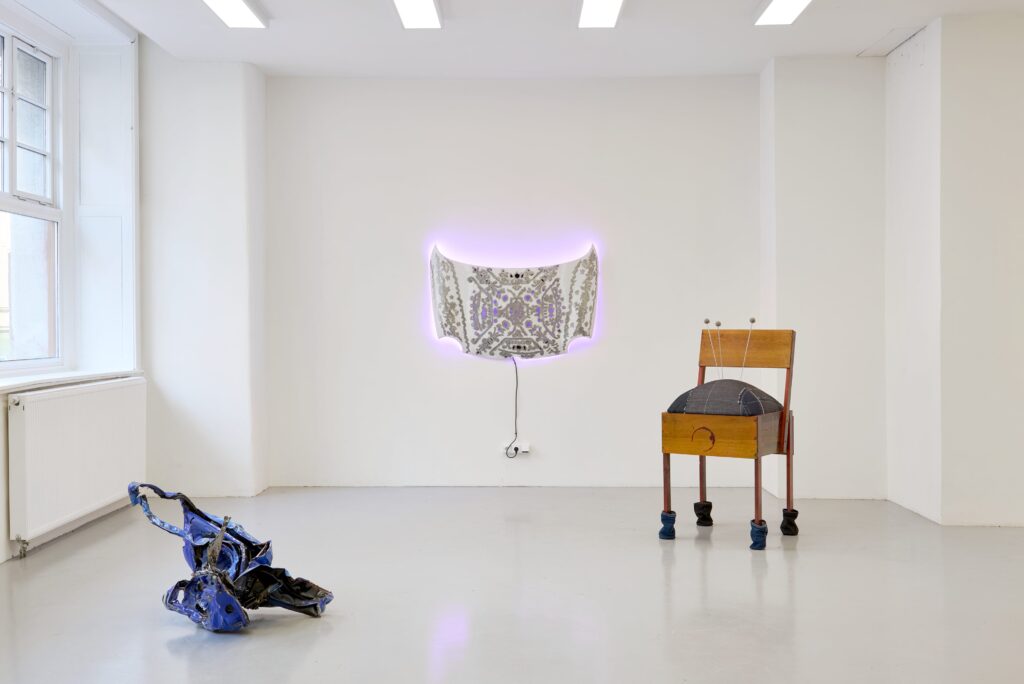
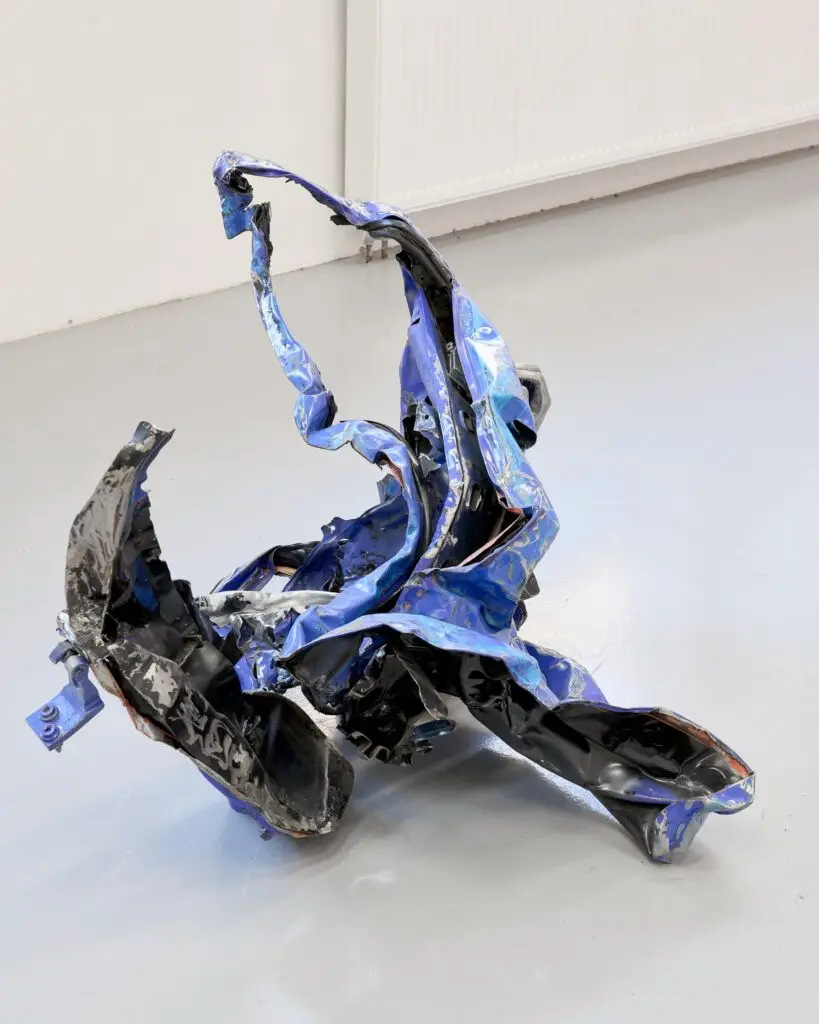
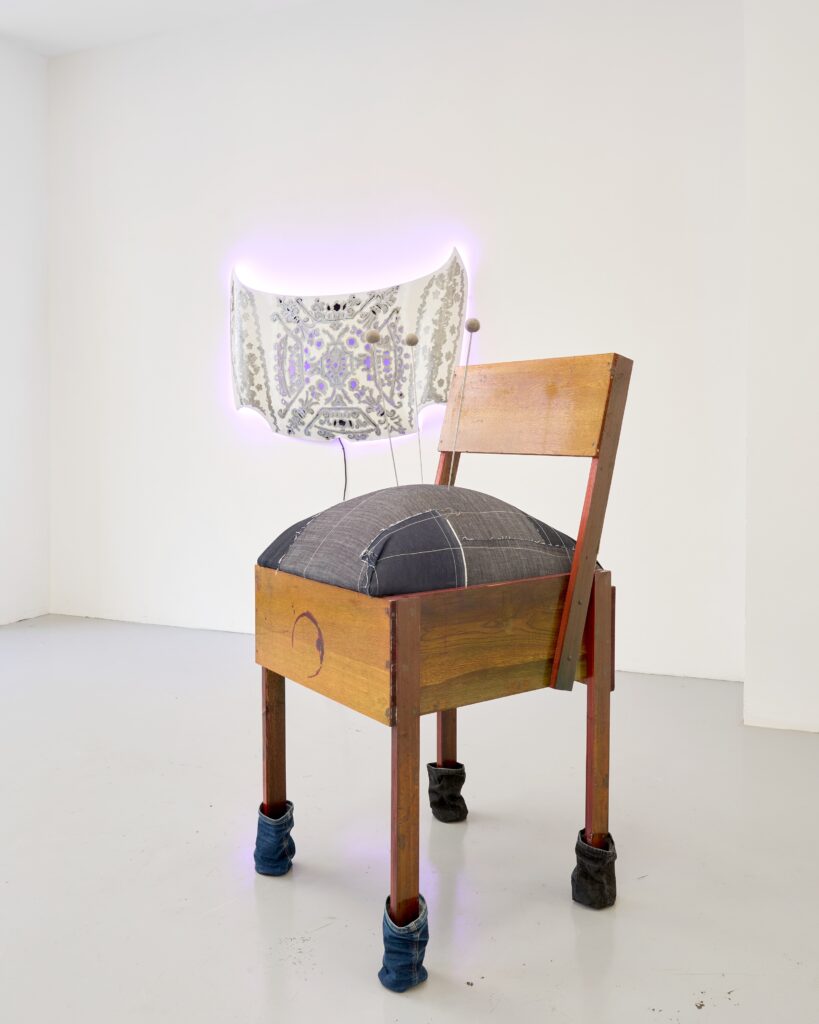
Bety Krňanská appropriates textile structures by engraving and symbolically inscribing them into components of a car body. The engine hood, as well as accident-damaged doors, thus carry ornamental interventions that transform an otherwise smooth and status-laden surface.
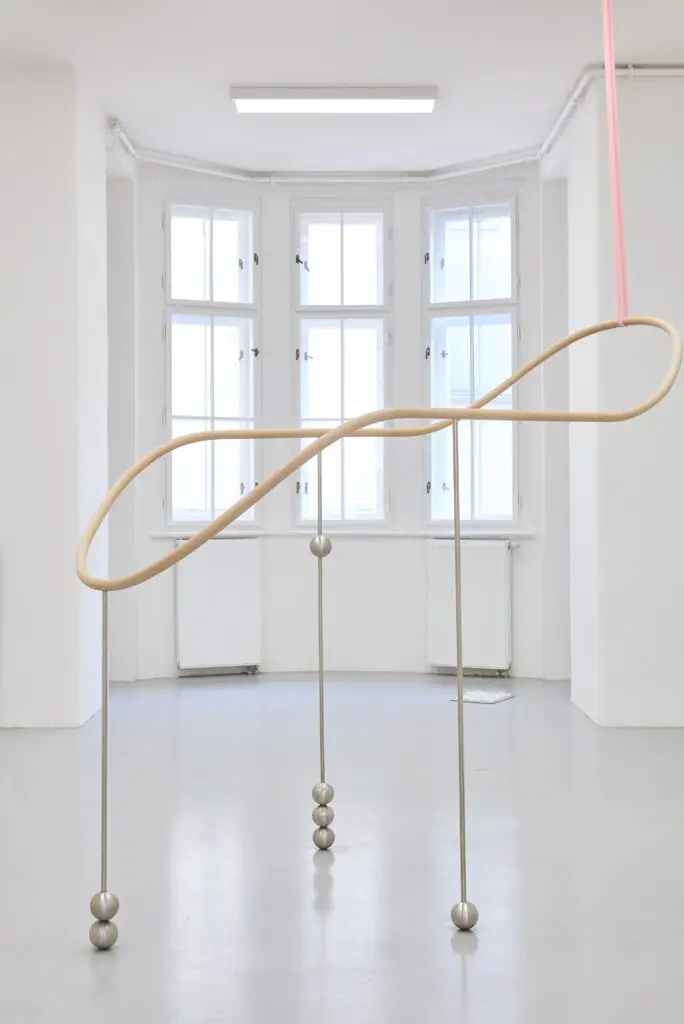
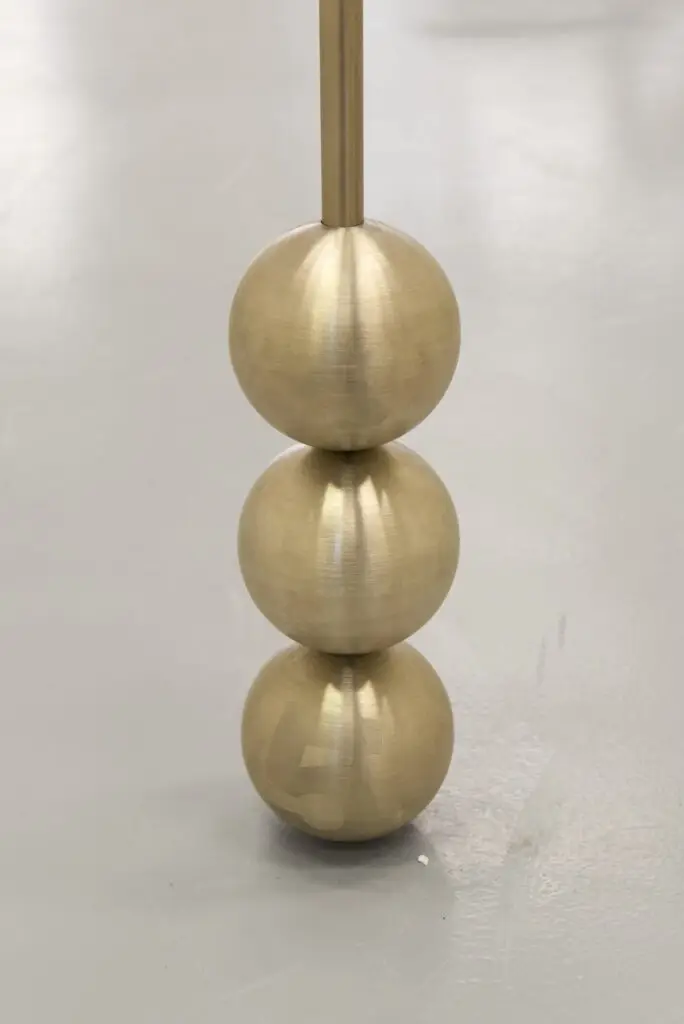
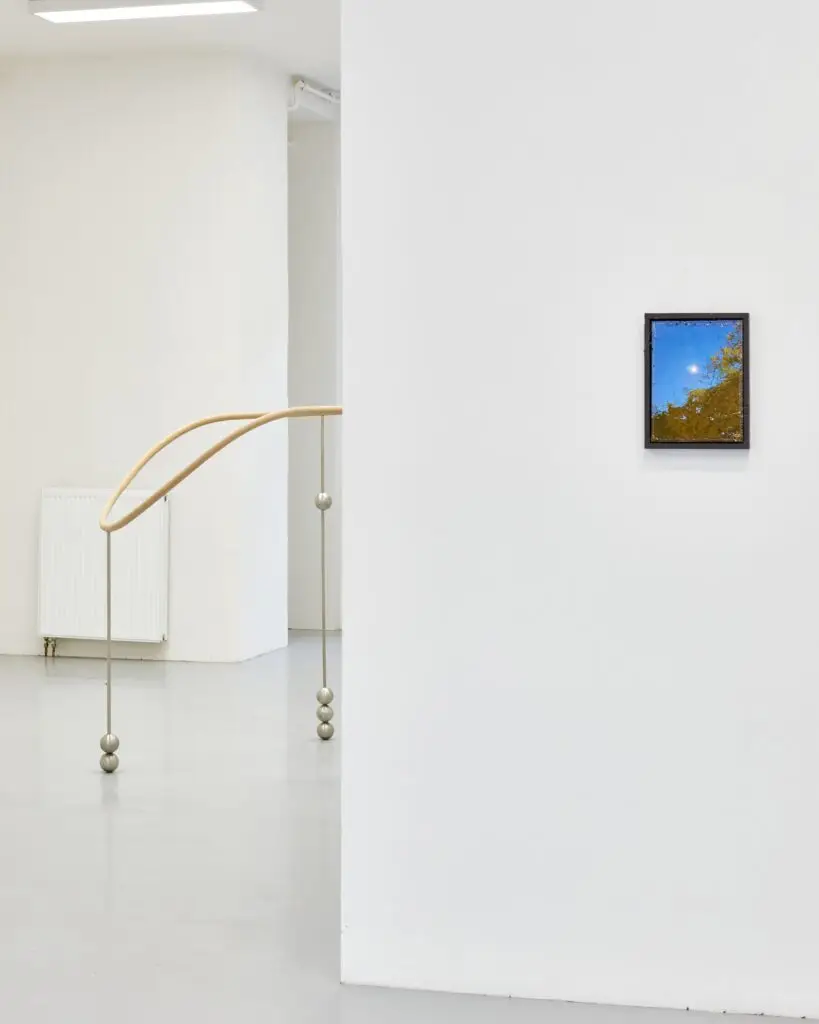
Markéta Slaná develops the motif of repetition and discipline through an authorial object enclosed within the endless loop of a ballet barre, where movement turns into rhythm without resolution, only return.
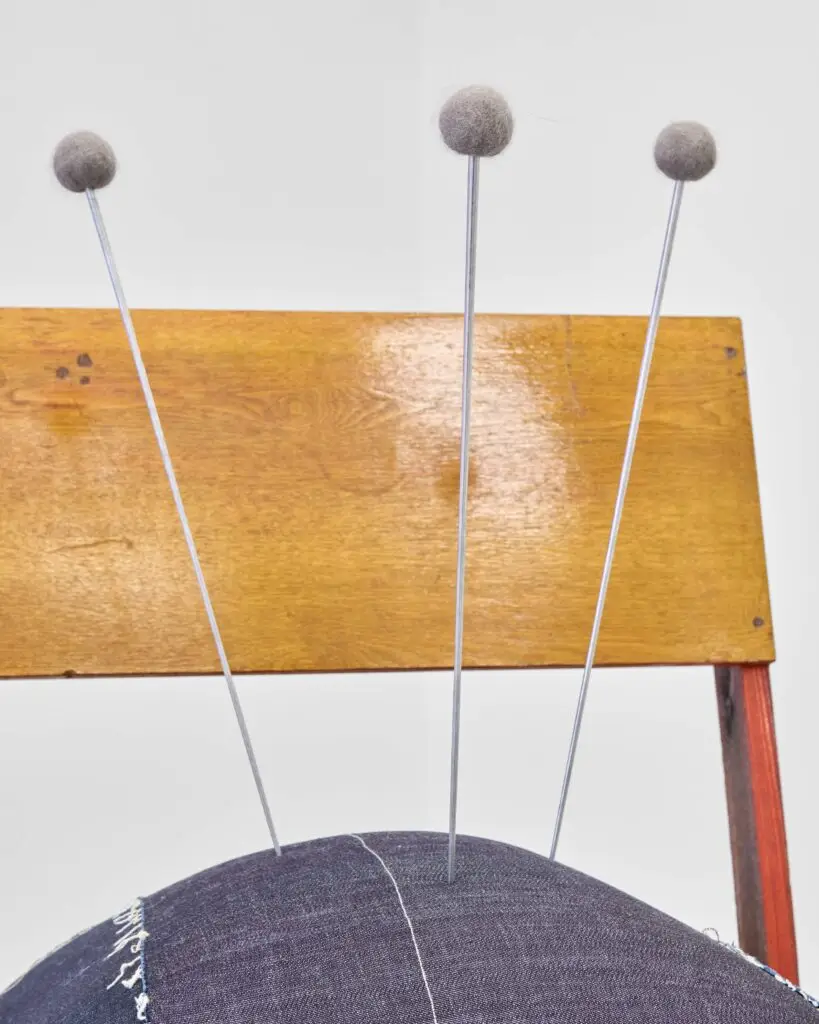
In its monumentality, Nik Timková’s installation draws attention to the never-ending maintenance of domestic life, particularly textile work, balancing between minor repairs, leisure time, and occasional communal gathering.
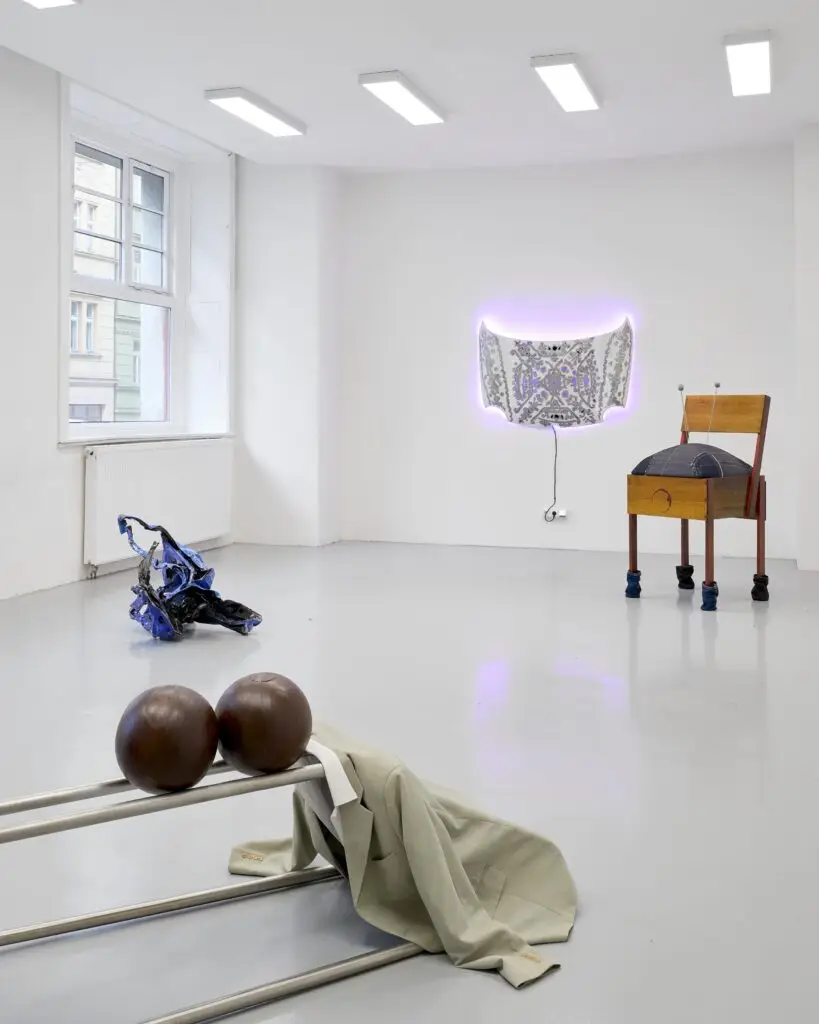
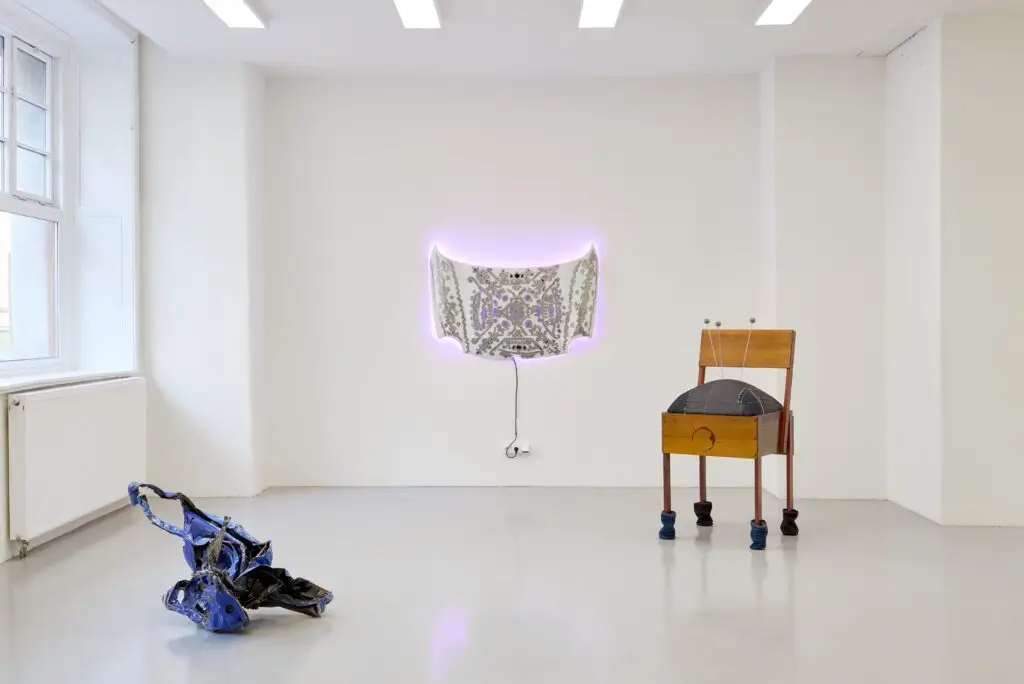
The promise of future self-realisation remains in circulation as an image that continually recedes. The illusion does not attach itself to need as such, but to the idea of its final fulfilment. Movement returns to further adjustments and the ongoing recalibration of image and self. Within this continuous process, subtle shifts emerge: small changes of tempo or perspective that do not disrupt the loop, yet allow it to be inhabited with greater lightness. The horizon does not disappear. It remains a distant point of orientation, approached with an awareness of its conditional and malleable nature. From this acknowledgement grows a space for deviations and for working with the very rules that shape us.