At this year’s Venice Biennale, one pavilion stands out not only for its aesthetic language but for the questions it raises about our relationship to each other and to the natural world. Eglė Budvytytė’s work draws on ancient animist worldviews while quietly pushing back against the logics of contemporary capitalism. We spoke with the curator about what it means to create such a conceptual space today, how it resonates within a geopolitical context, and where the responsibilities of art begin—and end—in an increasingly fraught world.
If you had to distill your pavilion into a single idea, what would it be—and what does it push back against?
I think the title of the pavilion encapsulates the idea of the work very well: animism sings anarchy. The artist, Eglė Budvytytė, is drawing upon the Lithuanian archaeologist Marija Gimbutas’s theories of a Neolithic matrilineal, pre-patriarchal society that revered nature, and involves trembling choreographies that relate to anthropomorphic deities as ritual artefacts. I would say that it pushes back against many of the imposing structures of contemporary capitalist society, including an extractive relationship to nature.
Why this artist, and why now?
Eglė is an artist who I have worked with a few times in the past and I have always admired her ability to convey complex ideas about our relationships to each other and to the environment through the body and choreography. She incorporates multiple facets of her practice – song, poetry, performance – into the medium of film to create anachronistic worlds that are somehow simultaneously utopic and dystopic. I believe her work speaks to the present moment in ways that are abstract, poetic, destabilising and inspiring.
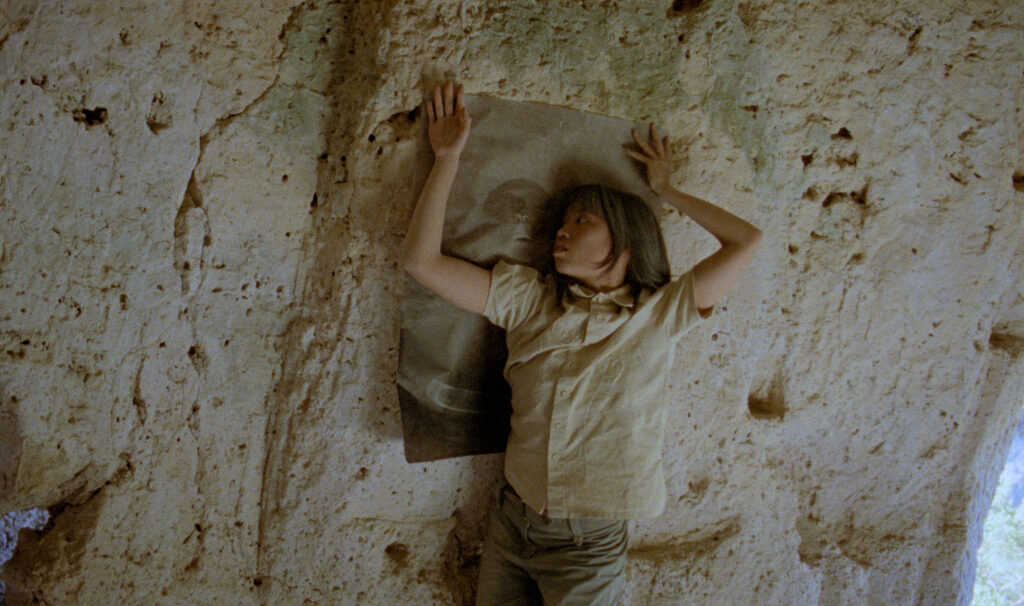
©Eglė Budvytytė, 2026
What does participation in the Venice Biennale actually change for you—beyond visibility?
It has offered me the opportunity to engage in a deep dialogue over an extended period of time with an artist and human being who I have huge respect for.
“Central and Eastern Europe” is still widely used as a category—do you find it meaningful, limiting, or outdated?
There is much to be discussed around geographic terms such as these – I believe it points to some shared histories and can be useful to distinguish from experiences of those in other parts of the world. However, it risks doing a disservice to those included by not also distinguishing the intimate differences between each region or group of people gathered under a single category. I believe this is the same the world over – generalisations may point to something but tend to lack nuance.
Do you feel your work is read differently in Western contexts—and if so, is that a misunderstanding, a projection, or something you actively work with?
As an Irish curator based in the UK, I continue to attempt to disentangle totalising viewpoints that may inform but sometimes unhelpfully categorise and confuse artistic perspectives.
At what point in the process did you become most aware of your geopolitical position—and did it open doors or quietly close them?
I would say that it’s an ongoing process to navigate, and the Venice Biennale is a very particular context in which to consider geopolitical positions.
What was the hardest decision you made that no one visiting the exhibition will ever notice?
I don’t feel it was a difficult decision – others may disagree – but perhaps to continue to work towards the ideal version of the work without compromise, whilst still fundraising to cover the costs of doing so.
How do you negotiate the line between aesthetics and politics without falling into illustration or overstatement?
I believe that art can be a powerful political tool without the need to be explicit, and without serving as propaganda either. Beauty in itself can inspire hope.
In your view, is it still necessary for a pavilion to respond to current geopolitical realities—or can disengagement be a position in itself?
I think it’s impossible to exist in a vacuum, particularly when some pavilions choose the platform of the Biennale as an opportunity to reinforce state narratives, but I don’t think the onus should be on an artwork to engage in geopolitical discussion. However abstractly, work viewed in the context of Venice is often resonating with contemporary concerns, and this year, the world is fraught with them. Conversely, I also believe a distinction can be made between an artwork and the actions of those associated with a pavilion – either personally or professionally in their capacity as representatives of a particular country.
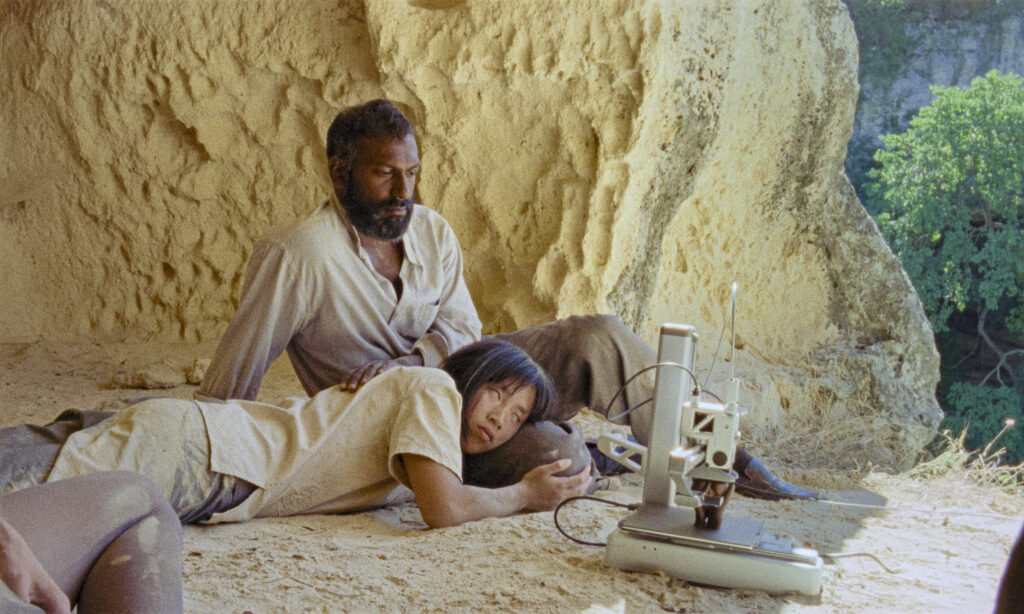
©Eglė Budvytytė, 2026
What kind of reading—or misreading—of your exhibition would concern you the most?
One that flattens meaning and doesn’t engage fully with the work itself.
What is currently influencing your thinking outside the art world—and why does it matter to your work?
For me, becoming a mother in the last few years has re-oriented the way that I socialise and work. Hence, I am thinking a lot about how to build community across these contexts. Matricentric feminism is a new arena for me to explore, and I don’t yet have the answers for how to weave these politics and practices into existing structures, but I believe we will all be better off if we do find a way.