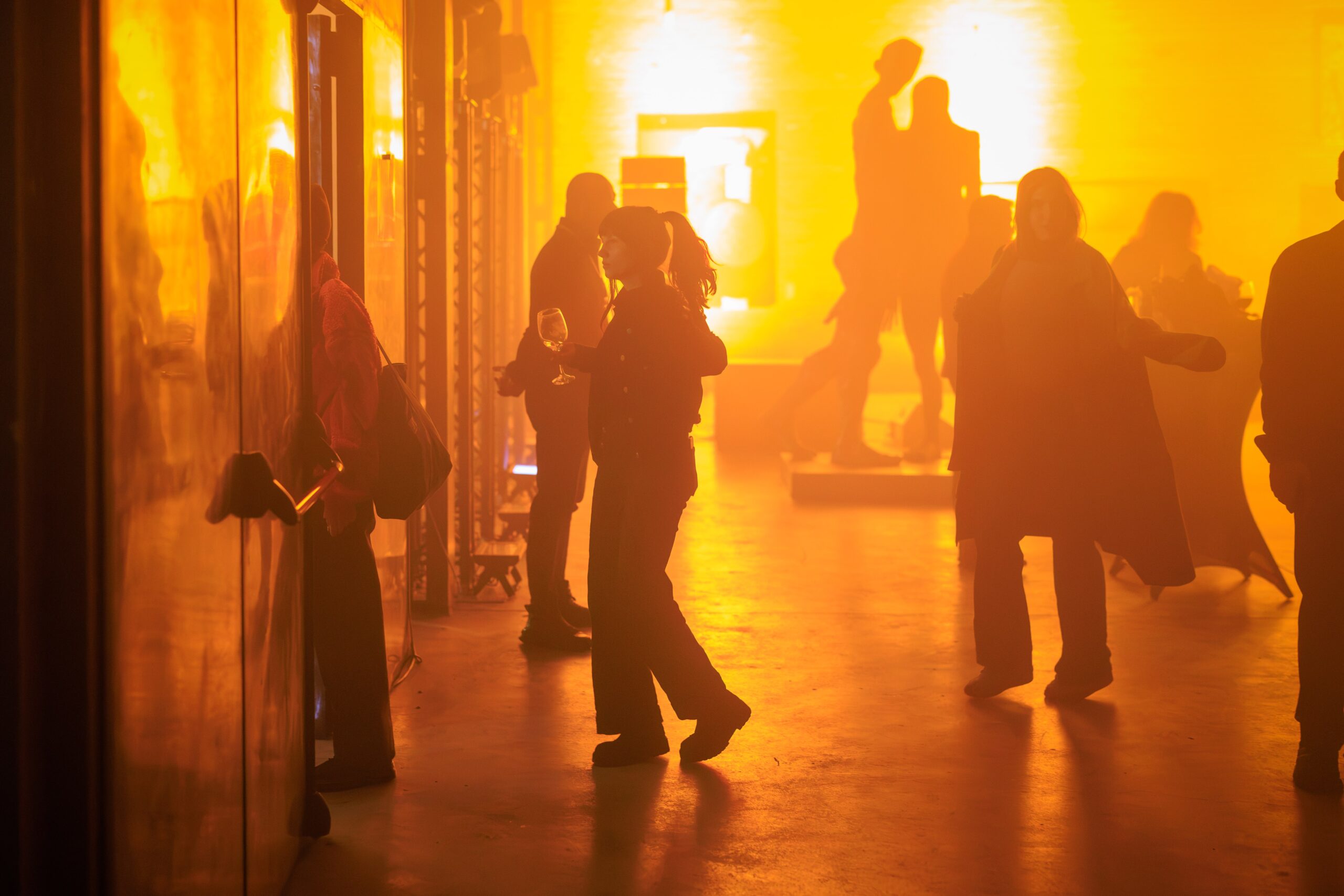
Held from October 17–25, 2026, the inaugural edition of Romanian Art Week brought together galleries, museums, independent art spaces, artists, curators, collectors, and cultural professionals through a programme of exhibitions, discussions, studio visits, and meetings across five Romanian cities. In this interview, Avi Cicirean, founder of Romanian Art Week, discusses the motivations behind the platform, the diversity of the Romanian art scene, its growing international connections, the challenges facing its cultural infrastructure, and his vision for the future of Romanian contemporary art.
What motivated you to imagine and implement Romanian Art Week?
Romanian Art Week started from a simple conviction: Romanian art deserves a moment of its own, a moment of visibility, recognition, and celebration. We have an extraordinarily diverse artistic scene, with talented artists, committed galleries, independent initiatives, collectors, and institutions, but these different parts of the ecosystem do not always have enough opportunities to come together. I wanted to create more than an exhibition programme or a series of cultural events. I wanted to create a shared occasion for the art community and the wider public to celebrate what is happening in Romania, discover new perspectives, and connect with one another. For me, Romanian Art Week is ultimately about bringing people closer to art and bringing the different communities that support it closer together. It is also about creating a stronger sense of visibility and confidence in what we have here. I believe we should take an active role in presenting Romanian art, both at home and internationally, rather than waiting for others to discover it.
Romanian Art Week defines itself as an independent platform. What funding and curatorial model is it based on, and to what extent does it differ from existing ‘art week’ and ‘gallery weekend’ formats?
Romanian Art Week is an independently initiated platform, financially supported by me as its founder, together with the support of our sponsors and partners. We believe that bringing the private sector closer to the cultural ecosystem is essential, particularly in a context where public funding remains limited and cultural organisations need more sustainable forms of support. In terms of its curatorial approach, the first edition was built around the idea of bringing together existing programmes rather than imposing a single curatorial concept on all participants. Each gallery, museum, and independent space retained its own identity, programme, and curatorial autonomy. Our role was to create a common framework in which these different initiatives could become part of a larger conversation. This does not mean that we exclude other curatorial formats in the future. We are open to developing new approaches, including a central exhibition or other projects that could add further dimensions to the programme.
There are already important initiatives in Romania, including gallery programmes, RAD – the Romanian Art Dealers fair, Doi Joi and Noaptea Galeriilor. We see Romanian Art Week as complementary to these initiatives, rather than as a replacement or competitor. What makes our approach different is the ambition to connect exhibitions with professional conversations, studio visits, institutional programmes, and encounters between the different actors of the art ecosystem.
How does the programme relate to the Romanian institutional structure? What does it mean that you are working in partnership with three major Bucharest museums (MNAR, MARe, MNAC), and what role do artist-run spaces and independent initiatives play?
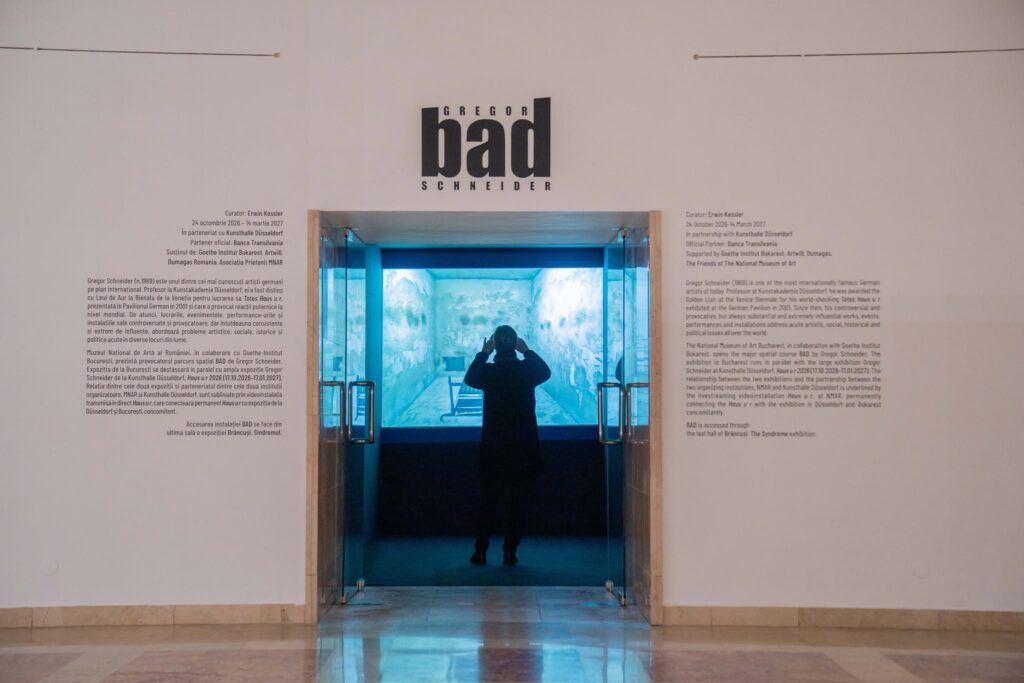
For us, collaboration with museums is extremely important because it brings different parts of the art ecosystem into a shared context. Having MNAR, MARe, and MNAC as official institutional partners was an important part of the first edition. Their involvement went beyond symbolic support: the programme included events hosted by these institutions, from the official opening to other activities and encounters. Museums bring institutional experience, historical perspective, collections, research, and established relationships with audiences. Galleries contribute to the development and presentation of contemporary artistic practices, while independent spaces often provide room for experimentation and new voices.
I see these structures as complementary. A healthy art ecosystem needs all of them. Independent initiatives and artist-run spaces are particularly important because they contribute to the diversity of artistic practices and approaches, often developing programmes and formats that respond directly to the needs of their communities. Romanian Art Week aims to create a context in which these different approaches can meet, exchange ideas, and develop relationships, without losing their individual identities.
How would you describe the current state of Romania’s contemporary art infrastructure: state funding, museum collection-building and the sustainability of the independent sector?
I would describe the Romanian art infrastructure as a space of considerable creative potential, but also of structural challenges.
There is a remarkable amount of artistic activity, and many galleries, independent spaces, and cultural organisations have developed ambitious programmes despite limited resources. However, long-term sustainability remains difficult. Organisations often depend on a combination of private support, project-based funding, personal investment, and considerable amounts of unpaid work. Public funding is important, but it needs to offer more continuity and predictability. Cultural organisations cannot develop ambitious long-term programmes if they are constantly operating from one funding opportunity to the next.
Museum collection-building is another important issue. Strong public collections are essential for preserving artistic heritage and creating a historical record of contemporary artistic production. They also provide recognition and institutional continuity for artists. I don’t think these challenges can be addressed by one initiative alone. What we can do is encourage more dialogue between the public and private sectors, promote collecting as a cultural responsibility, and create opportunities for businesses and individuals to become more actively involved in supporting the arts. I believe a stronger relationship between the public and private sectors is essential for the future of the Romanian art scene. Private support can bring additional resources and opportunities, while public institutions have an important role in ensuring continuity, access, and long-term cultural development. I would like Romanian Art Week to contribute to creating more opportunities for these two sectors to work together.
Following the international success of the Cluj School, what generational and geographical shifts do you see in the Romanian art scene? To what extent have you managed to extend the focus beyond Bucharest and Cluj-Napoca?
The Cluj art scene has played an important role in bringing Romanian contemporary art to international attention, but I think it is important to recognise that the country’s artistic landscape has several active centres, each with its own identity and development. Bucharest, Cluj-Napoca, Timișoara, and Iași all have increasingly dynamic artistic communities, with galleries, independent spaces, institutions, and artists contributing to a diverse cultural landscape. And there are interesting developments in other cities as well.
We are also seeing generational changes. Younger artists and cultural professionals are increasingly connected internationally, more open to interdisciplinary practices, and interested in developing collaborations beyond their immediate contexts. The first edition of Romanian Art Week brought together participants from five cities, allowing us to present a broader picture of the country’s artistic activity. For us, this was an important starting point. We want the platform to reflect the richness and diversity of Romanian art, recognising the different contexts in which it develops rather than concentrating the conversation around only one or two established centres.
Most art weeks and gallery weekends are centred on a single city, where density and short distances give the format its meaning. You have chosen a country with five cities. What was the strategic logic behind this, and what does this format gain or lose as a result?
Our starting point was the idea of celebrating Romanian art beyond the boundaries of a single city. We wanted the inaugural edition to bring together different artistic communities and demonstrate the diversity of what is happening across the country. The five-city format allowed us to connect different local contexts within one shared programme. At the same time, it was an ambitious undertaking, and the first edition also served as a pilot through which we could better understand the possibilities and challenges of this approach.
We are currently evaluating the experience and considering how the format could evolve. We want to make the programme more coherent and accessible, particularly for visitors and international professionals, while preserving the diversity that made the first edition meaningful. For the 2027 edition, planned for 30 September–3 October, we are looking at ways to concentrate the programme and improve the overall experience. We are also considering how the different cities can be integrated into the future structure of Romanian Art Week. We want these decisions to be guided by what makes the platform most relevant and sustainable in the long term.
Does this nationwide coverage primarily reflect the existence of decentralised scenes, or is it also a means of counterbalancing the centralisation around Bucharest? In other words: does your programme mirror the existing structure, or does it seek to actively reshape it?
I think the Romanian art scene is becoming increasingly dynamic in several cities, not just Bucharest. Cluj-Napoca, Timișoara, and Iași have strong artistic communities and increasingly active cultural environments, and we are also seeing interesting developments in other parts of the country. Of course, Bucharest has a higher concentration of museums, galleries, and cultural organisations. That is a reality, but it does not mean that artistic activity elsewhere is less developed or less relevant. Each city has its own history, identity, and professional community, and these differences are part of what makes the Romanian art scene interesting.
I don’t see Romanian Art Week as an attempt to redistribute cultural importance or impose a new structure. Rather, we want to create connections between existing artistic environments and encourage a broader understanding of the Romanian art landscape. We also want to use the visibility generated by the platform to promote relevant artistic events and initiatives taking place in other parts of the country during the same period, even when they are not formally included in the programme. For me, the important thing is that Romanian Art Week contributes to a more connected cultural environment, while respecting the autonomy and identity of each local scene.
How can a multi-city programme with a packed schedule be organised in such a way that international professionals – curators, collectors and heads of institutions – are actually able to follow it from start to finish, rather than just attending events in individual cities? Have you developed a specific logistical or invitation model for this purpose?
For the first edition, we welcomed around 20 international guests, including museum directors, curators, institutional representatives, and professionals from other European Art Weeks. We invited them directly, with the intention of creating opportunities for meaningful encounters with the Romanian art scene. We recognise that a programme spread across several cities presents particular challenges for international visitors, especially when the schedule is very concentrated. This is one of the aspects we are currently evaluating.
For the next edition, we are considering different possibilities for structuring the programme, including how the participation of other cities could be integrated more effectively, or whether a more concentrated, Bucharest-based format would offer a better experience for visiting professionals. We haven’t made a definitive decision yet. What matters is finding the right balance between representing the diversity of Romanian art and creating a programme that international guests can navigate meaningfully. We want their time in Romania to result in genuine professional encounters and relationships that can continue beyond the event.
What does joining The Spider mean in practice: what joint programmes, exchanges or curatorial collaborations can be expected, and what do Romanian galleries hope to gain from this?
Joining The Spider is an important step because it connects Romanian Art Week to a wider European community of organisations working with similar formats and ambitions. At this stage, the most immediate benefits are the exchange of contacts and information, sharing programme announcements, and opportunities to promote one another’s events within the network. Being introduced to the other Art Weeks and becoming part of this professional community is an important starting point.
We are still at the beginning of this relationship, so I would not want to announce specific curatorial collaborations or joint programmes before they have taken shape. In the longer term, I hope these connections will create tangible opportunities for Romanian galleries and artists: international introductions, professional exchanges, collaborative projects, and greater visibility within the European art ecosystem. For me, the value of the network lies in developing relationships over time and turning these initial contacts into meaningful forms of cooperation.
In your view, what do the art scenes of Central and Eastern Europe have in common (post-socialist legacy, institutional fragility, asymmetry vis-à-vis the Western market), and where do they differ most?
I think there are several shared experiences across Central and Eastern Europe, particularly when it comes to the historical development of cultural institutions, the relationship between public and private support, and the way these scenes have positioned themselves internationally over the past decades.
Many countries in the region have had to develop contemporary art infrastructures within relatively fragile institutional and financial frameworks. There is also a shared experience of having to negotiate visibility within an international art market that has historically been concentrated around Western European and North American centres. However, I would not want to treat Central and Eastern Europe as one homogeneous cultural space. Each country has its own history, institutional framework, artistic traditions, and relationship with the international market.
What I find particularly interesting is the diversity of responses to similar challenges. Some scenes have developed strong independent structures, others have benefited from more consistent institutional support, while others have built visibility through individual artists, galleries, or collectors. I believe we have much to learn from one another, precisely because our experiences are similar in some respects but never identical.
How do you view the current state of regional cooperation? Can we speak of a genuine CEE network, or are there rather parallel national scenes?
I think we are moving towards a more connected regional scene, but I would not yet describe it as a fully developed network.
There are certainly individual relationships between artists, galleries, curators, collectors, and institutions across the region. However, these connections are often dependent on personal initiatives or specific projects rather than supported by a continuous structure of cooperation. This is one of the reasons why platforms such as Romanian Art Week and networks such as The Spider are important. They create opportunities for people who might otherwise remain within their own national contexts to meet, exchange ideas, and identify common interests.
I believe the next step is to turn these encounters into more consistent professional relationships. We need more exchanges between galleries, more opportunities for curators to discover artists from neighbouring countries, and more institutional collaborations. A genuine regional network cannot be created simply by declaring that it exists. It develops through repeated encounters, trust, and projects that bring people together over time.
The thematic discussions will centre on issues of artistic creation, presentation and circulation. What professional debates do you consider to be the most pressing for the region?
I think some of the most pressing questions concern the conditions that allow artistic practices to develop sustainably and circulate beyond their immediate contexts.
We need to talk about how artists can build long-term careers, how galleries can remain financially sustainable, how institutions can support contemporary production, and how collectors and private organisations can contribute to the development of the cultural ecosystem. Another important issue is international circulation. Visibility is essential, but visibility alone is not enough. We need to understand how an artist moves from being discovered to being represented, exhibited, collected, and included in institutional collections.
I am also interested in the relationship between artistic autonomy and the economic structures that support art. How can we create an environment in which artists and cultural organisations have the resources to experiment without compromising their independence? And, perhaps most importantly, how can we make contemporary art more accessible without simplifying its complexity? These are conversations that need to involve artists, curators, galleries, institutions, collectors, and the wider public.
What indicators would you use to measure the long-term impact of Art Week (new collectors, institutional collaborations, international visibility of galleries), and where do you see the platform in five years’ time?
I think we need to look beyond the immediate numbers. Visitor attendance is important, but it tells only part of the story.
I would also look at the relationships that emerge from the event: new collectors discovering galleries and artists, institutional collaborations developing, international curators returning to Romania, artists receiving invitations to exhibit abroad, and galleries establishing new professional contacts. Another important indicator is whether the public returns. If someone discovers contemporary art during Romanian Art Week and continues visiting galleries throughout the year, that is a meaningful result.
In five years, I would like Romanian Art Week to be recognised as an important platform for contemporary art in the region, with a strong international network and a lasting relationship with the Romanian art community. More than anything, I would like it to function throughout the year, not only during the days of the event. I imagine a platform that facilitates connections, supports professional exchanges, creates opportunities for artists and galleries, and helps bring new audiences into contact with contemporary art. The real measure of success will be what continues to happen after each edition ends.
What are the initial figures regarding visitor numbers? How many visitors, industry professionals and international guests did you register, and what was the composition of the audience (industry professionals, collectors, the wider public)?
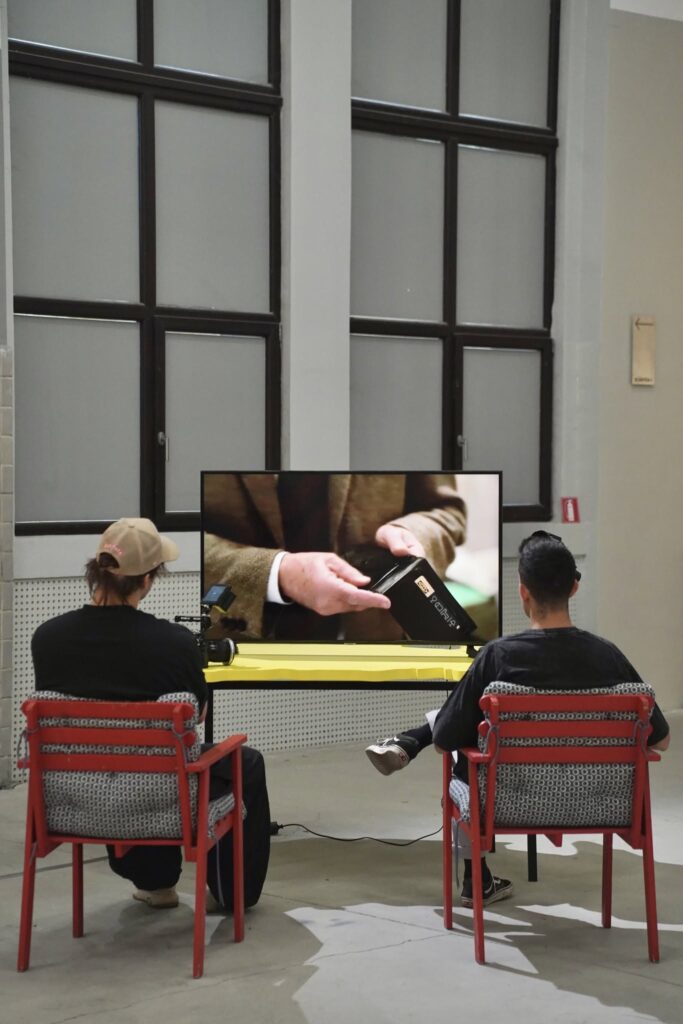
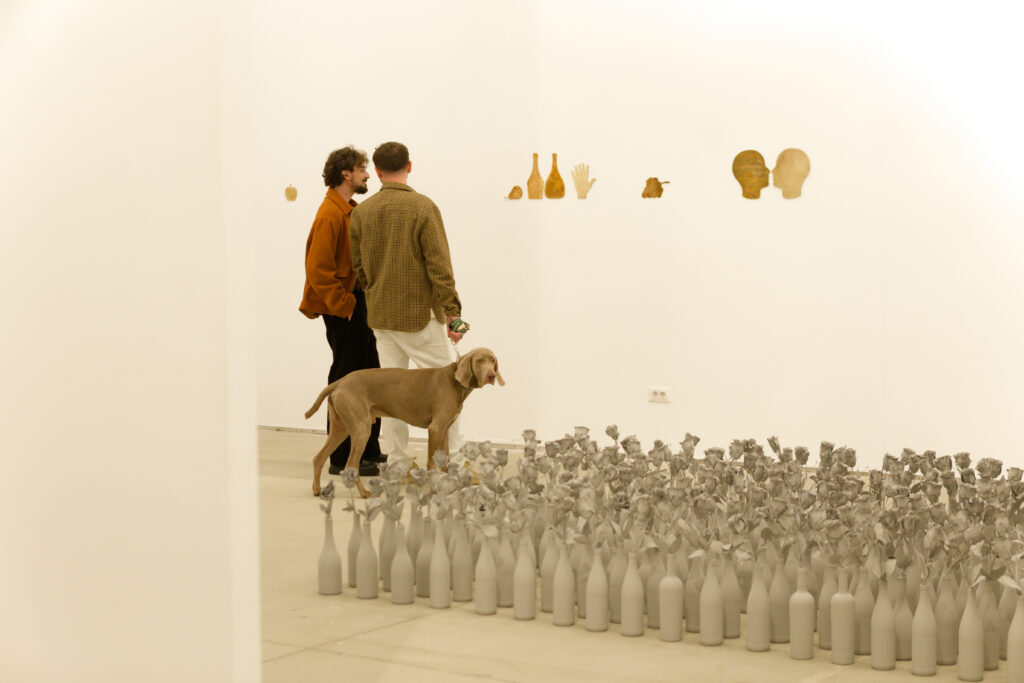
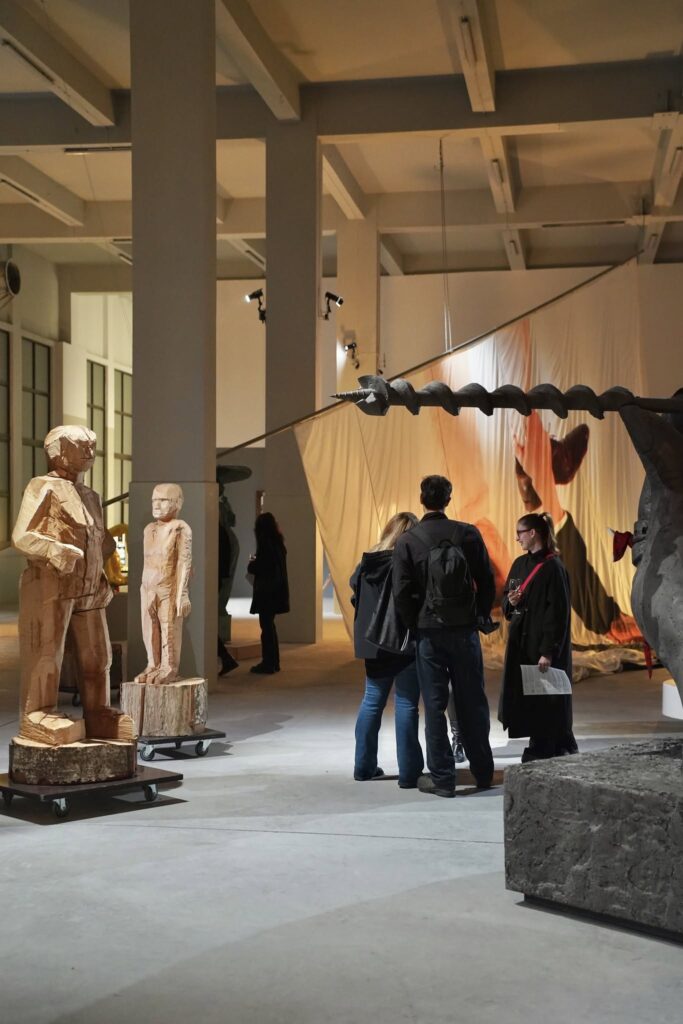
The first edition brought together 60 participating spaces: 29 galleries, 26 independent art spaces, and five museums. The programme included 76 exhibitions, featuring 146 artists, alongside 64 events and a conversation programme with 69 speakers. We also welcomed approximately 20 international guests, including museum directors, curators, institutional representatives, and professionals from other European Art Weeks.
We are still consolidating the attendance figures across the different venues and events, so I would prefer to provide a total visitor number once we have a complete and reliable overview. What was particularly encouraging was the diversity of the audience, bringing together art professionals, collectors, artists, students, and members of the wider public. For us, the diversity of the audience matters as much as its size. We want Romanian Art Week to be a meeting point for established professionals and people who are discovering contemporary art for the first time.
How did the range of participating institutions and galleries compare to the original plan? How many galleries, museums and independent spaces joined, and were there any participants who showed more or less interest than expected?
The inaugural edition brought together 60 spaces: 29 galleries, 26 independent art spaces, and five museums. We were particularly encouraged by the diversity of participants and by the willingness of organisations with very different profiles to become part of the same platform. One particularly positive aspect was that interest continued to grow even during the event itself, with additional enquiries and requests to participate coming in throughout the week. We did not experience withdrawals; on the contrary, the response showed us that there is an appetite for a platform that brings the different parts of the Romanian art scene together.
This is an encouraging starting point, and it gives us a good foundation for developing the next edition.
What was the biggest surprise of the week, and what would you do differently for the next edition?
Perhaps the biggest surprise was the level of engagement and the willingness of so many different people to become part of something new. Bringing together galleries, museums, independent spaces, artists, collectors, international guests, and the wider public was an ambitious undertaking, and seeing these communities meet in one shared context was extremely rewarding.
I was also encouraged by the interest in the professional conversations. It confirmed that people want more than exhibitions and openings; they want opportunities to exchange experiences, discuss challenges, and understand how the art ecosystem can develop. Of course, there are things we would approach differently. The first edition taught us that the programme needs to be more concentrated and that the visitor experience, particularly for international guests, can be improved through better coordination and a clearer structure.
That is why the next edition is planned for 30 September–3 October 2027. We want to create a more focused experience, with a stronger rhythm and more opportunities for meaningful encounters. I don’t see the first edition as a finished model, but as the foundation of something we can continue to develop. The most important thing is to preserve the original spirit of Romanian Art Week: a celebration of Romanian art and the people who make it possible.