Artists: Lucia Sceranková & Tatiana Takáčová
Title: Common Reservoir
Curator: Petra Housková
Venue: Šopa Gallery, Košice
Photos: Tibor Czitó
The exhibition Common Reservoir brings together two artists whose work considers water, landscape, and the body as mutually interconnected systems. The title names a shared space of thoughts, images, and experiences that emerges in the dialogue between the two artists and in the difference between their approaches. What accumulates within it does not remain unchanged: meanings pass through one another, transform, and return in new contexts. Photography, the shared medium of Lucia Sceranková and Tatiana Takáčová, does not function here as a neutral record of reality, but as a space of its construction and transformation.
Both artists are joined by an interest in landscape and in the desire that shapes our relationship to it. For Tatiana Takáčová, this desire becomes the subject of a broader cultural and social inquiry; for Lucia Sceranková, it arises from immediate, bodily lived experience — from the need to remain within a fleeting moment, to capture its trace, and to relate to the environment as something that passes through us. The exhibition thus places two scales of thinking side by side: a wider reflection on the mechanisms that depict, reshape, and appropriate the landscape, and an intimate exploration of the permeability between body, image, and environment.
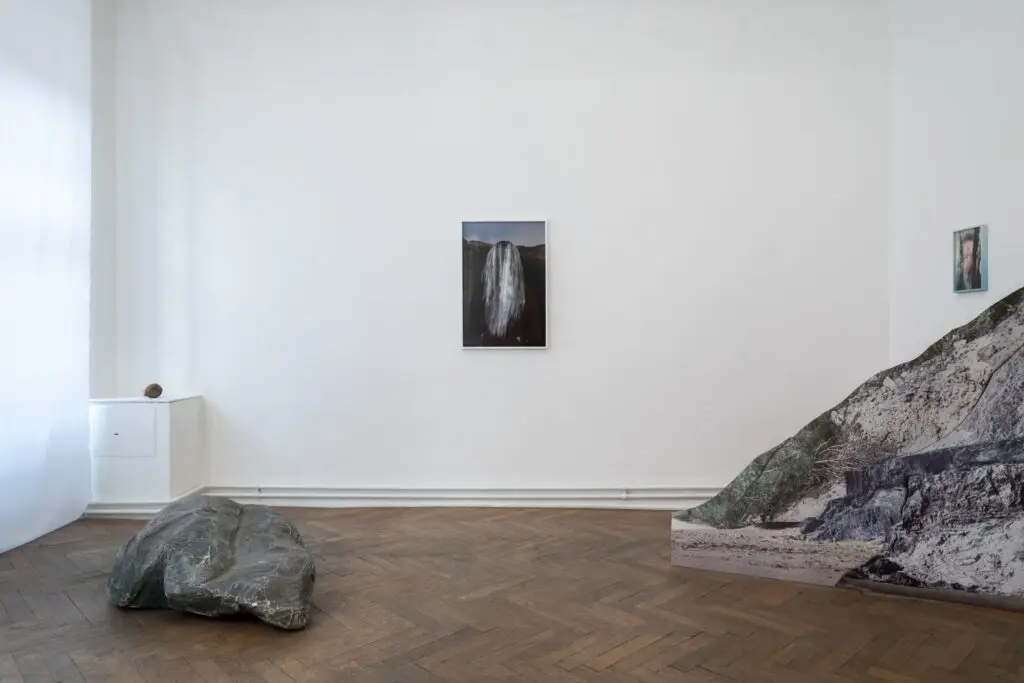
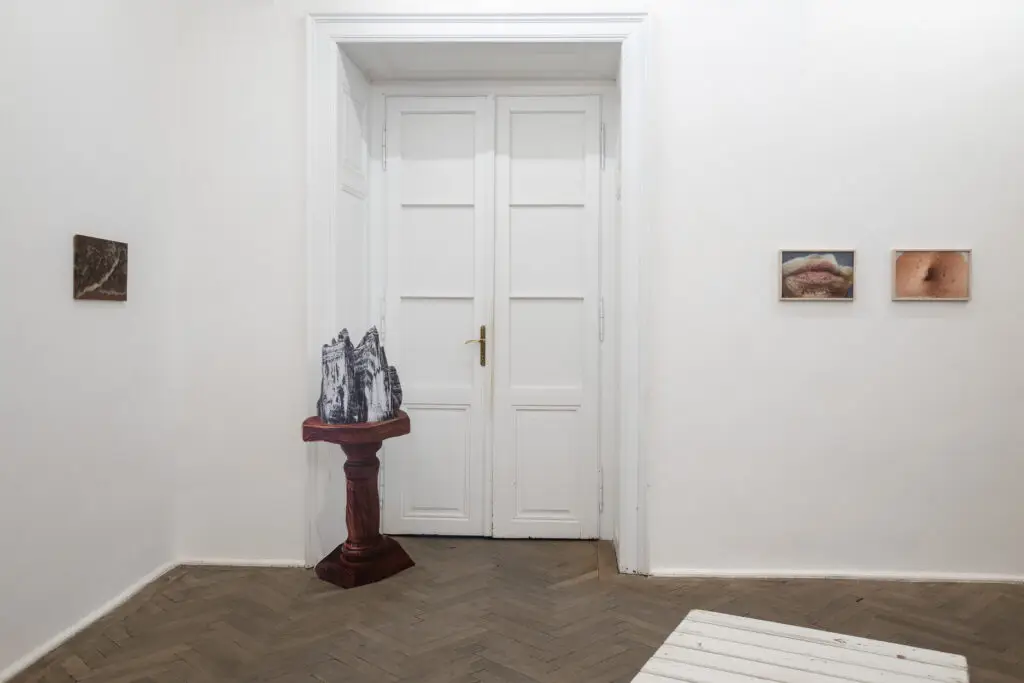
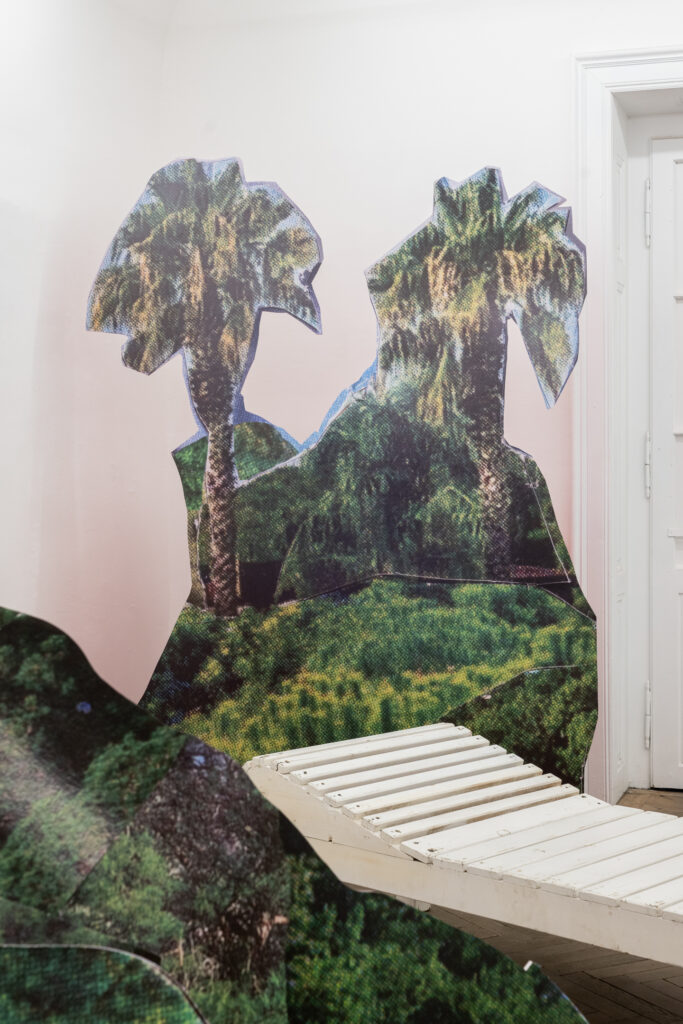
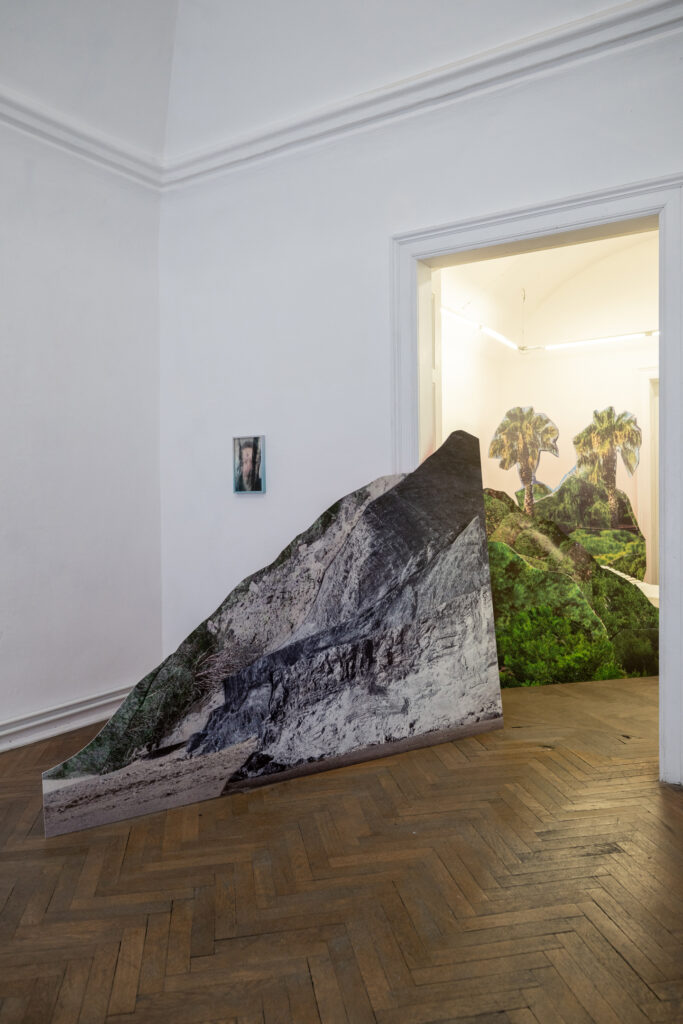
Tatiana Takáčová examines the landscape as a culturally and pictorially constructed space, shaped by the histories of exploration, tourism, and the promise of authentic experience. She traces how the need to discover distant places transforms over time — from early expeditions to contemporary tourism, which turns the landscape into a commodity and its image into merchandise. In travel-agency catalogues she finds only small fragments of landscape, surviving between hotels, pools, and other tourist infrastructure. Vegetation, coastline, or horizon become a backdrop designed to sustain the promise of comfort and exceptional experience, while the material consequences of the landscape’s commercial exploitation remain out of frame. The artist cuts out these fragments, enlarges them, and assembles them into collages that she expands into the gallery space. In the installation, the landscape appears as a dispersed scenery poised between diorama, theatrical set, and artificial oasis. The appeal of the green scenery is disrupted by a red glow reflected from the reverse of the image panels, evoking radiance, fire, or an indeterminate state of threat. A lounge chair placed among the fragments of landscape, in turn, evokes rest and the expectation of comfort. The desire for contact with the environment overlaps here with the demand that it be accessible, safe, and ready for our consumption.
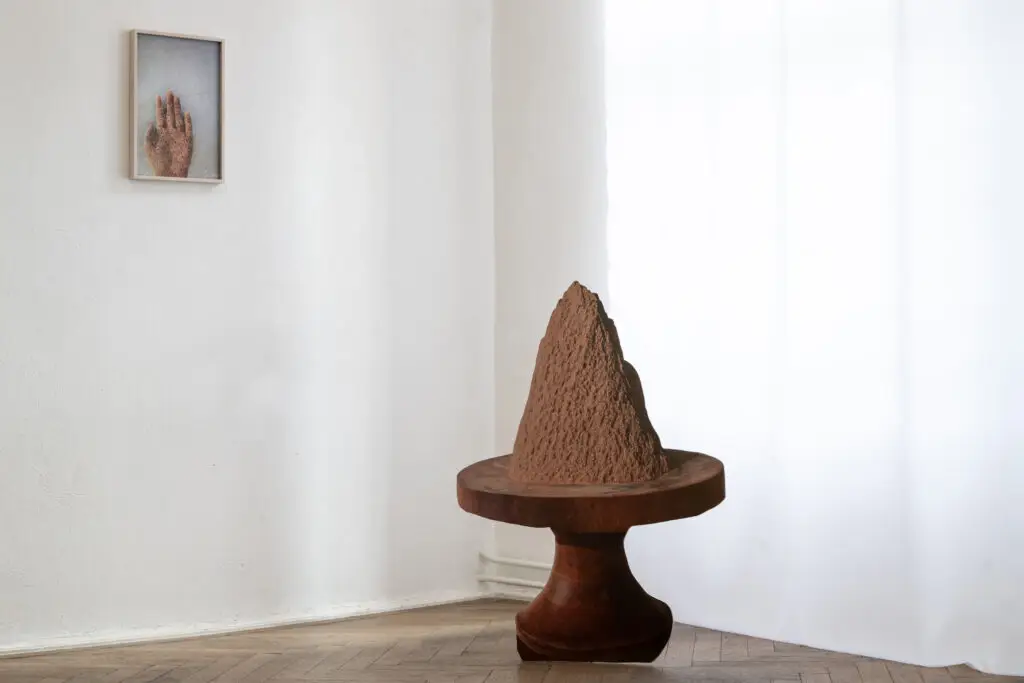
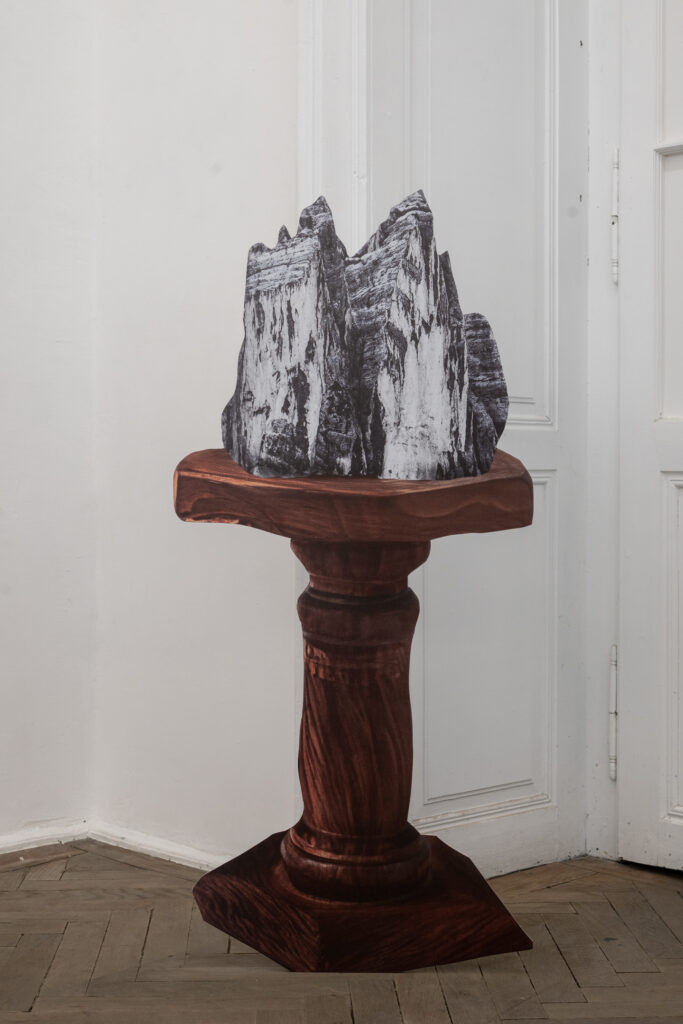
A similar tension is embodied by Takáčová’s natural souvenirs. Sand and rock function as proof of personal experience, as material confirmation: I was here. Removed from their original setting, however, they lose their relationships and turn into objects of a private archive. Displayed on pedestals, they resemble miniature landforms, museum exhibits, or relics. To keep a part of the landscape here also means to alter its scale, context, and meaning.
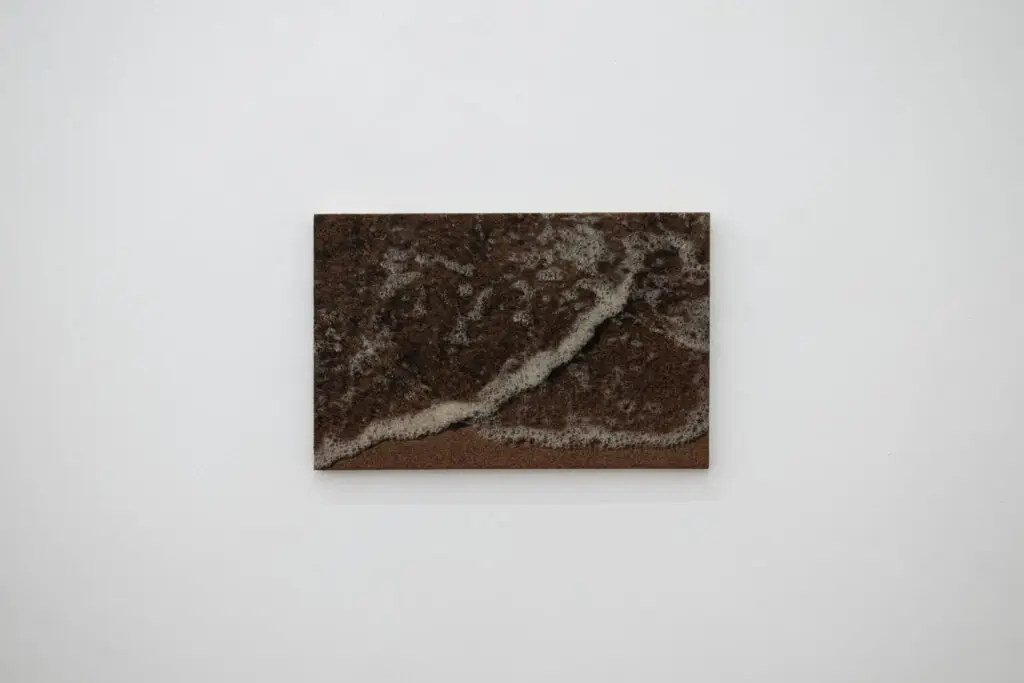
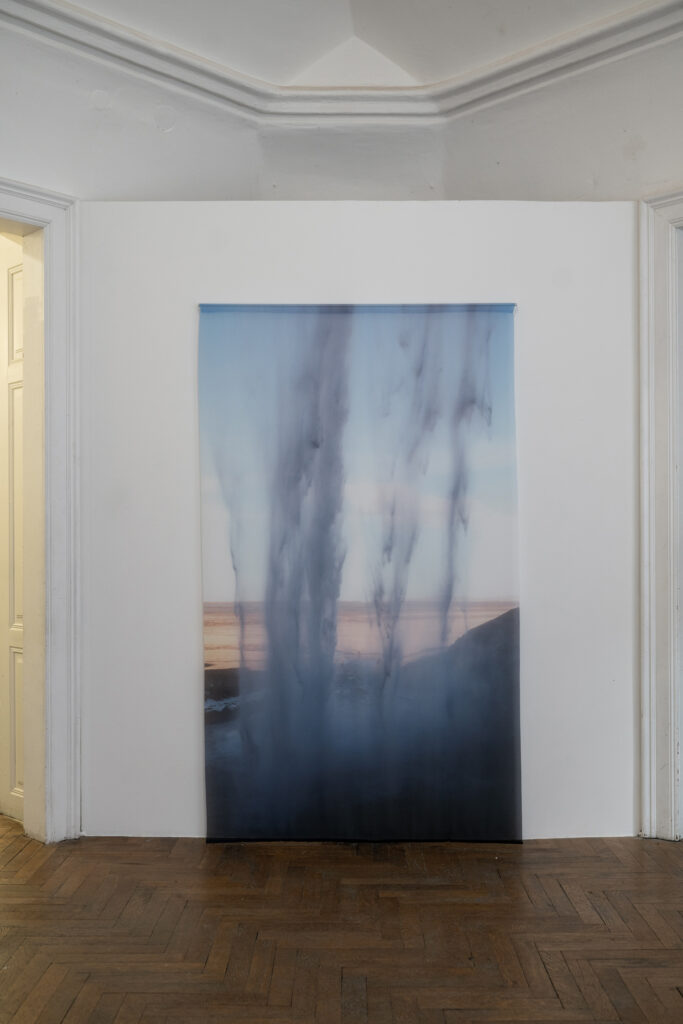
Lucia Sceranková renders the landscape as a permeable environment that cannot be separated from bodily and subjectively lived experience. In her photographs, water is not merely a motif but a material with pronounced visual and semantic potential. In a waterfall or a foaming wave, it appears as a continually shifting event, its form shaped by movement, air, and contact with the surrounding environment. From this flux, photography extracts and preserves a single moment, in which water takes on a temporary, almost tangible form. The captured configuration will never recur in the same way, yet the image allows its trace to endure.
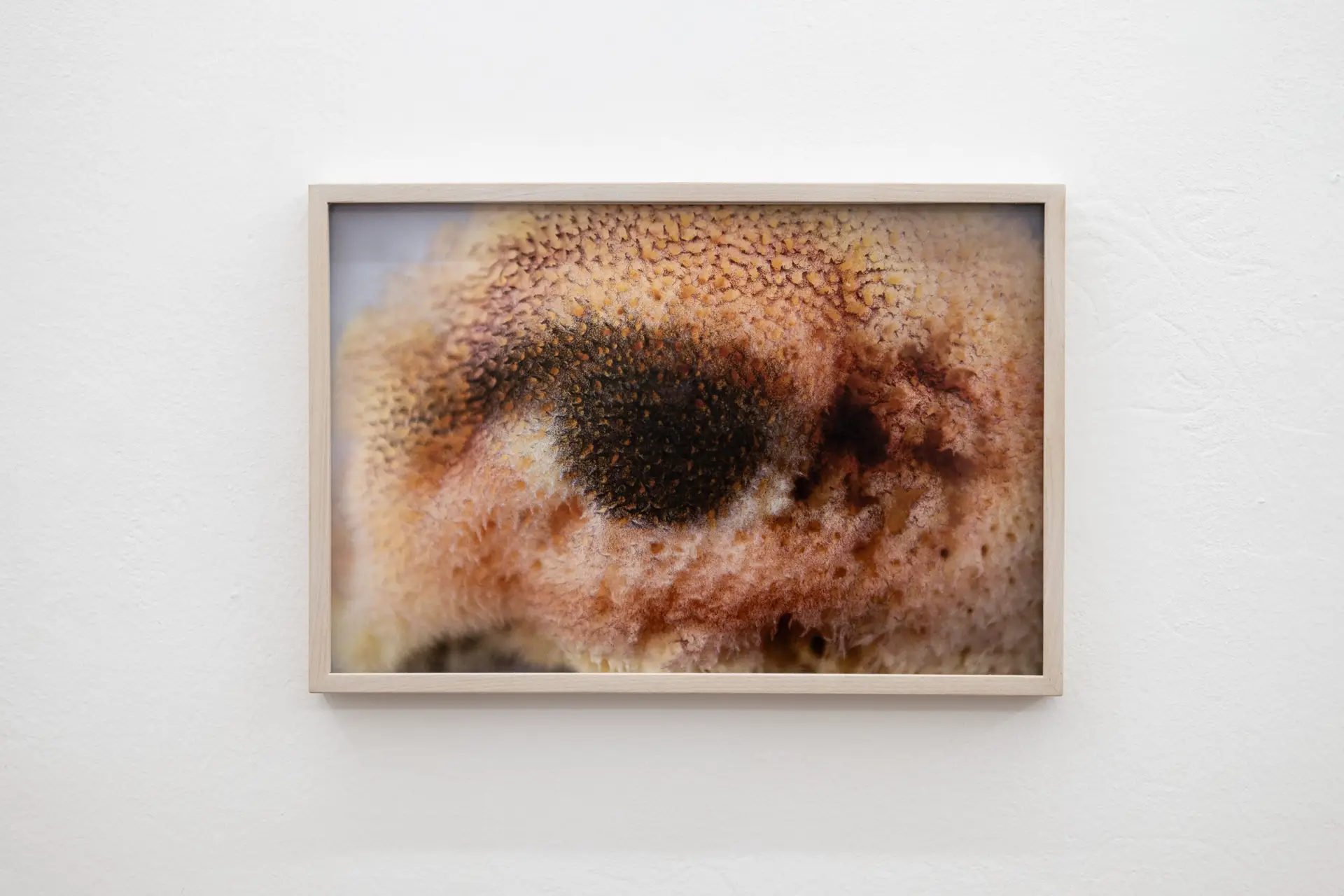
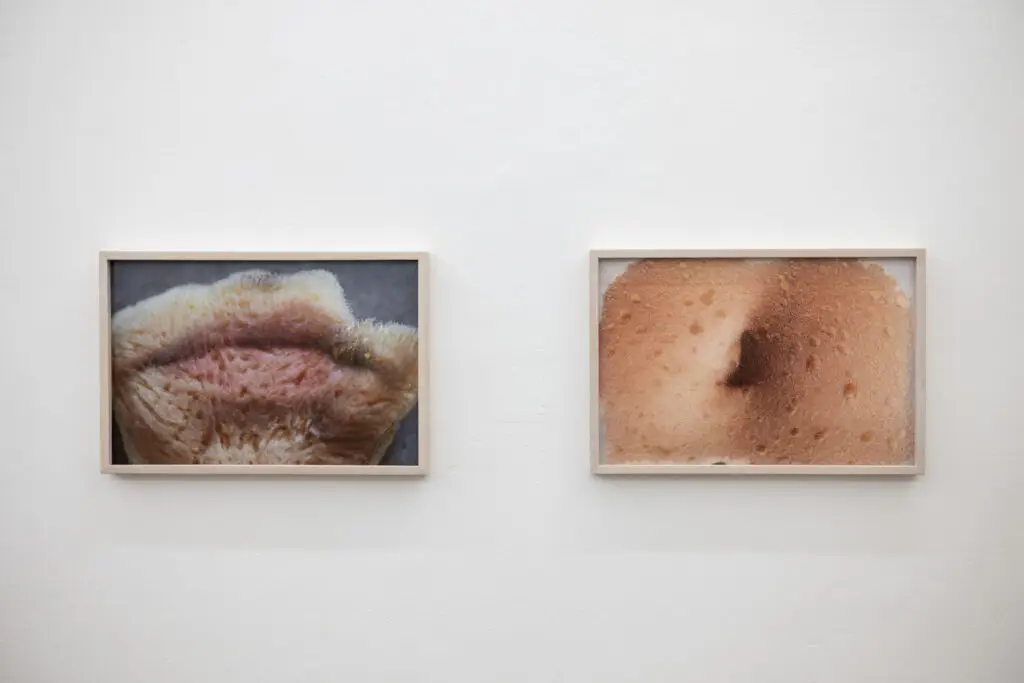
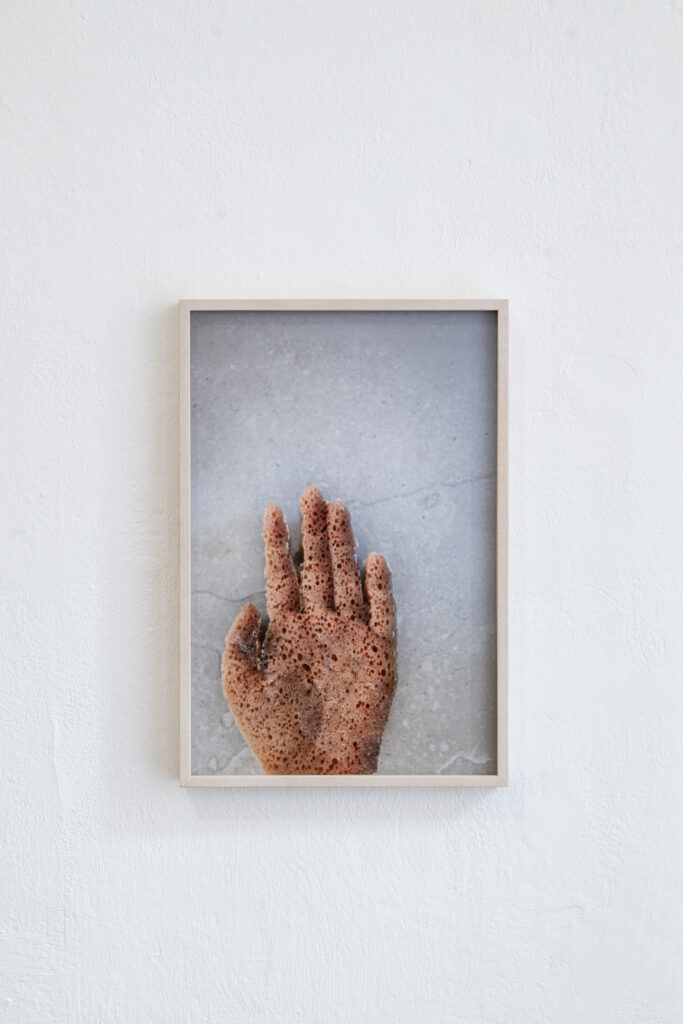
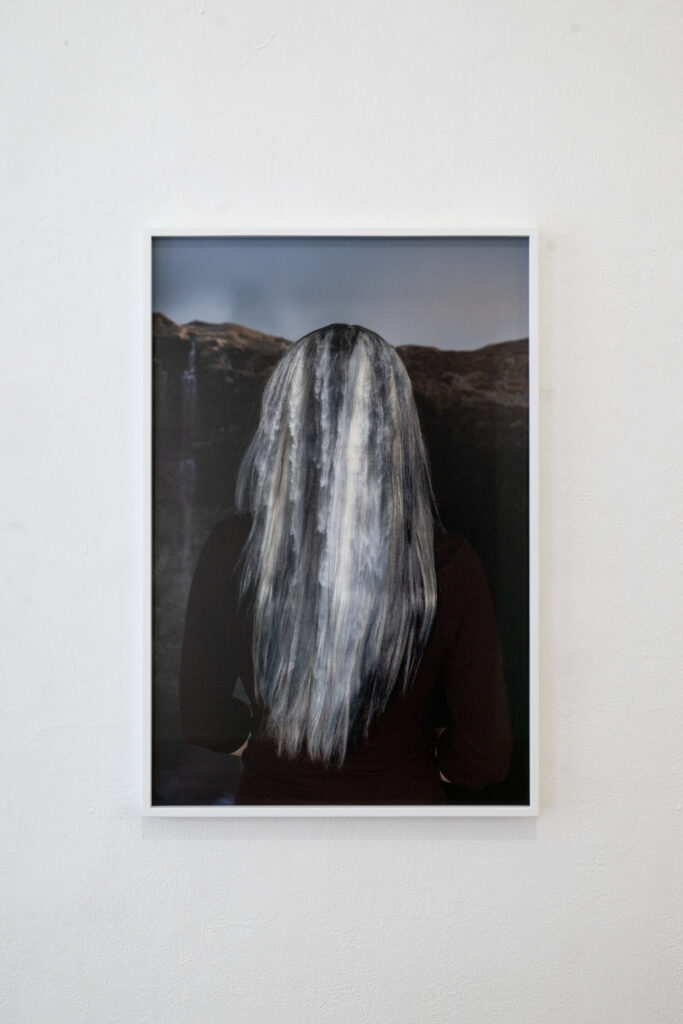
Sceranková further develops the relationship between the human body and its environment through the sea sponge. This aquatic animal exists in constant exchange with its surroundings: it takes in water, filters it, and releases it again. The artist joins its porous body with fragments of the human body — an eye, lips, a navel. The result is images in which the boundary between the human and the more-than-human becomes permeable. The sponge here is not merely a metaphor for absorption, but a concrete organism whose existence depends on the environment in which it lives. In the same way, the human being is not an autonomous entity separate from the landscape, but part of ecosystems and material circulations that nourish and exceed it. This connection is developed as well in images where hair takes on the form of a waterfall and the body thus passes over into the landscape.
In the gallery, the works of the two artists do not stand apart but enter into a mutual proximity that changes the way we read them. Lucia Sceranková’s intimate photographs appear amid the scenographically constructed landscape of Tatiana Takáčová. The works of both artists thus do not create an opposition between body and landscape, but reveal two ways of entering the same mutable system. They meet in the tension between the desire to preserve the world and the awareness that, through our interventions, we continually alter and deplete it.