Artist: Magdalena Lazar
Title: What Happens on Earth Stays on Earth
Curator: Eva Slabá
Venue: bliss Gallery, Warszaw
In 2015, it was proposed that the Anthropocene (the current era in which human activity has become the dominant force on Earth) be referred to by an alternative term – the Carbocene. (1) This term emphasizes the dependence on burning black (hydro)carbons – that is, coal and oil, solar energy “canned goods.” The fact that this is a dependency demonstrates that burning fossil fuels is not evidence of human power, but rather evidence of how deeply humanity has been influenced by the very matter and energy from the Earth’s depths. And today, humanity struggles to break free from these patterns of behaviour. The extent to which excavation and mining have impacted the environment goes without saying. It is within this fraught, carbon-heavy legacy that Magdalena Lazar situates her latest body of work.
Lazar is an artist who comes from Upper Silesia, a region characterized by its mining history and her works in this solo exhibition are profoundly influenced not only by her personal experience, but also by family memory. When we began working together on this project early in the year, she shared with me the idea of a so-called “second sun.” “Imagine a huge lump of coal on which we are now standing: several tens by several tens of kilometres wide and over a kilometre deep. We live on a vast seam stretching from Mysłowice to Ostropa. If a meteor were to strike Silesia, or if we ourselves were to throw a spark onto this coal, it would catch fire. … The sun burns constantly, exploding ceaselessly, and Silesia could be a second sun; it possesses the same energy. … this energy constantly affects us, that walking upon pure energy transforms us.” (2)
This idea is a quote from Erwin Sówka, a member of the Janowska Group – a collective of self-taught, non-professional, “naive” artists consisting mainly of underground miners from Upper Silesia. Another prominent member of this group was Teofil Ociepka, who was often credited with providing the group’s spiritual guidance. However, this guidance cannot be attributed solely to him. As Agata Stronciwilk shows, spirituality is equally rooted in the metaphysics and symbolism of subterranean exploration and extraction. Coal, as an organic matter, possesses its own metaphysics of life (of former life forms) that is unearthed and burned by fire. The underground space of the mine was thus historically regarded sacred, and the awe and dread of venturing into the earth’s depths were clearly reflected in the miners’ beliefs, customs, and artistic expressions (e.g. Gwarek ’58’s graphics or Ludwik Holesz’s carboniferous paintings). (3) When Zbigniew Rokita opens his book Banką po Śląsku with the words, “I also want to find out who this man is – the one who fascinates some and fills others with fear: Homo silesius,” Lazar, too, sets out on a similar quest. (4)
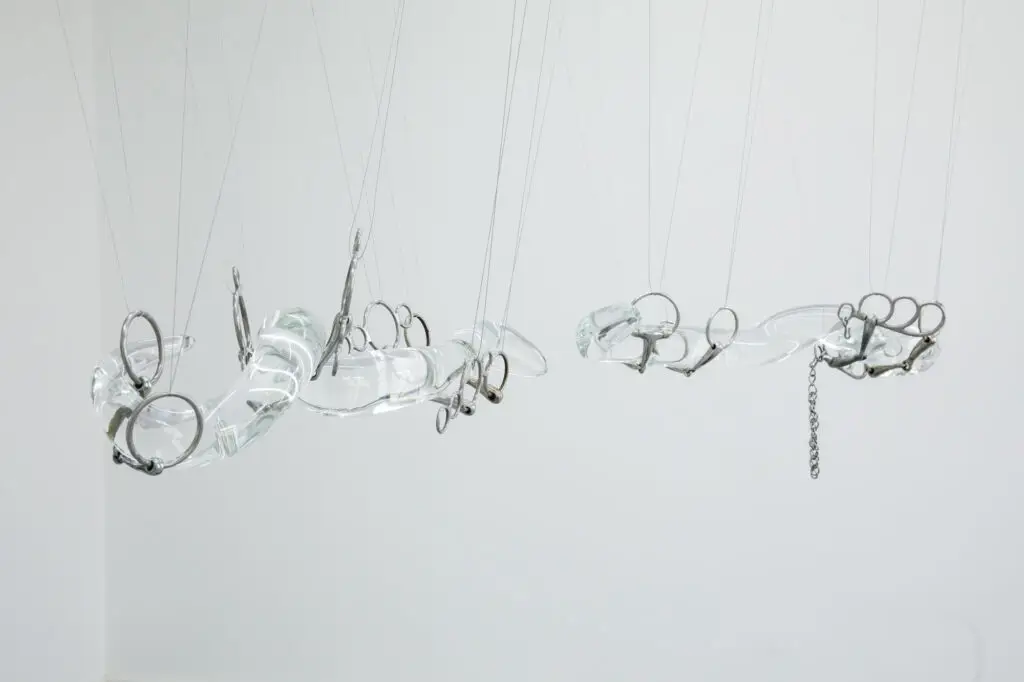
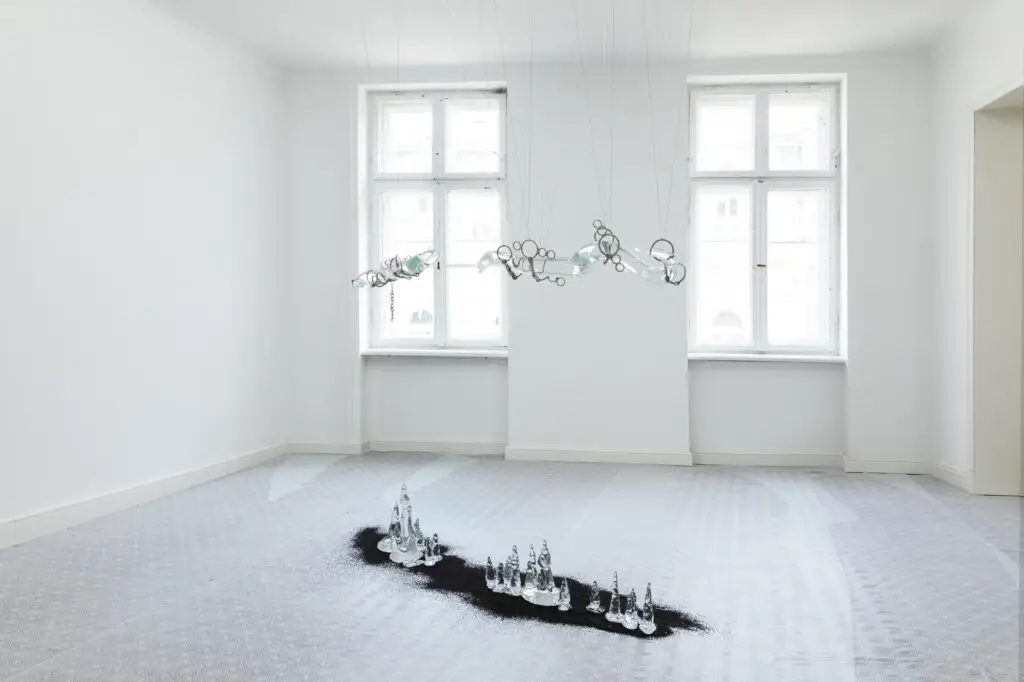
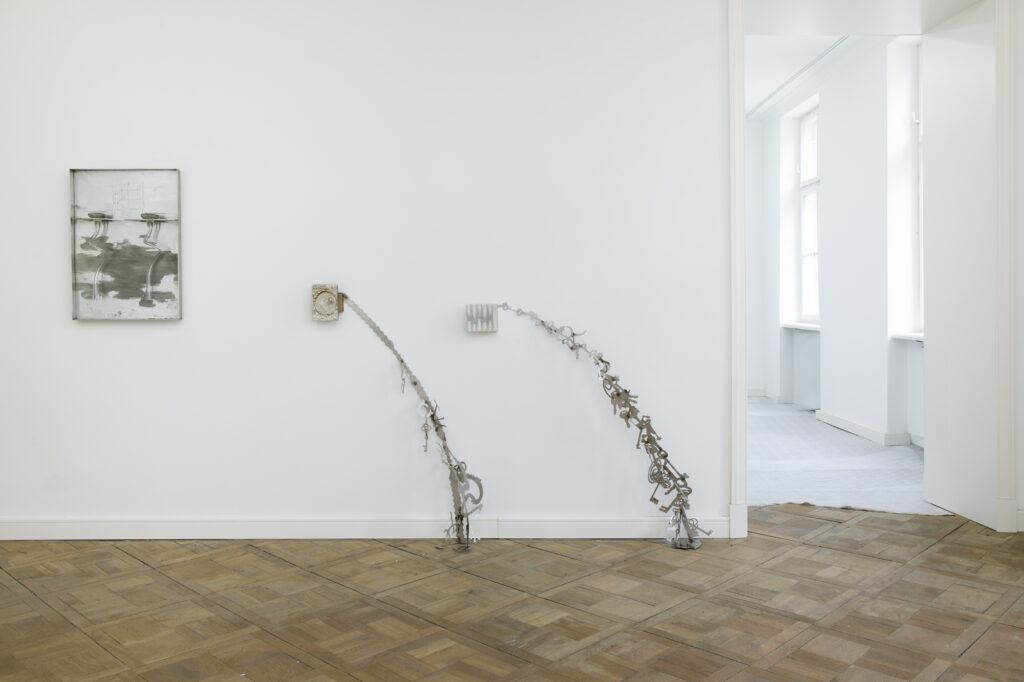
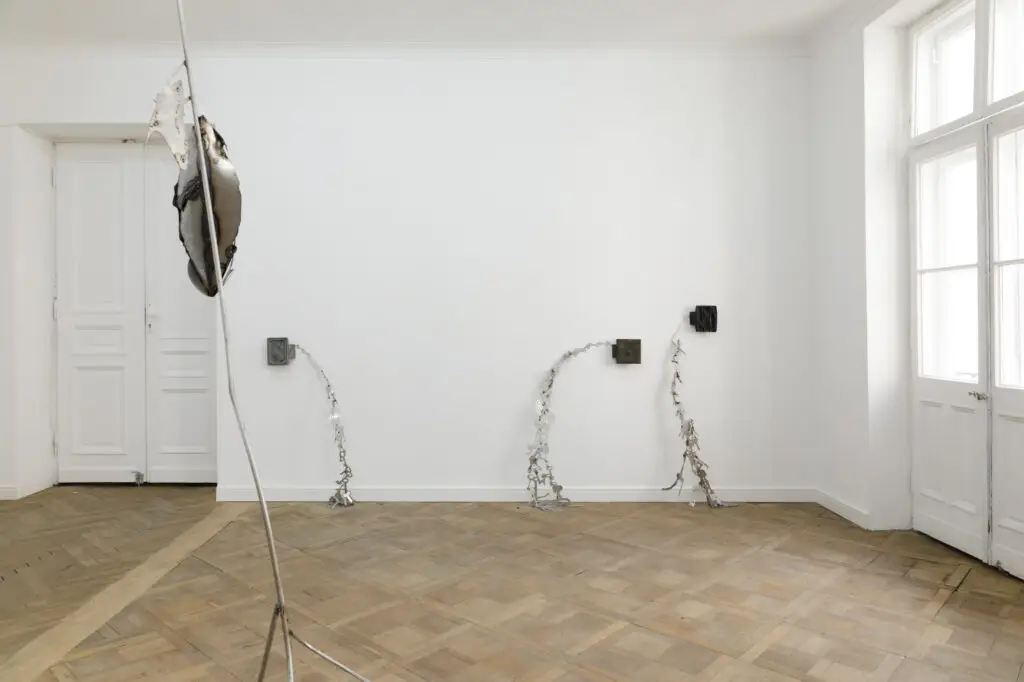
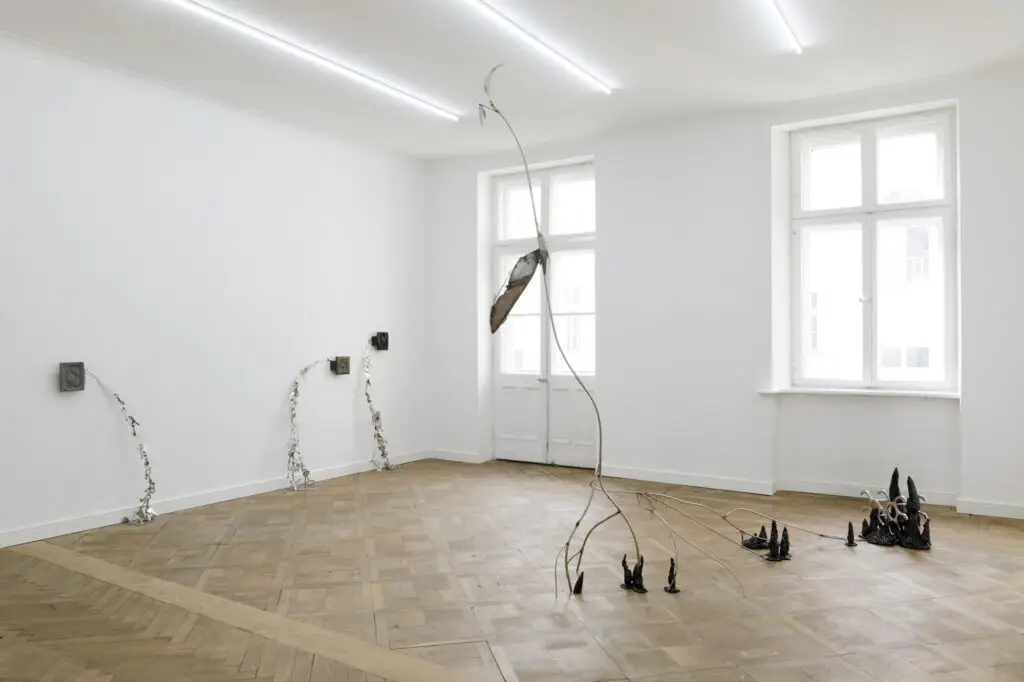
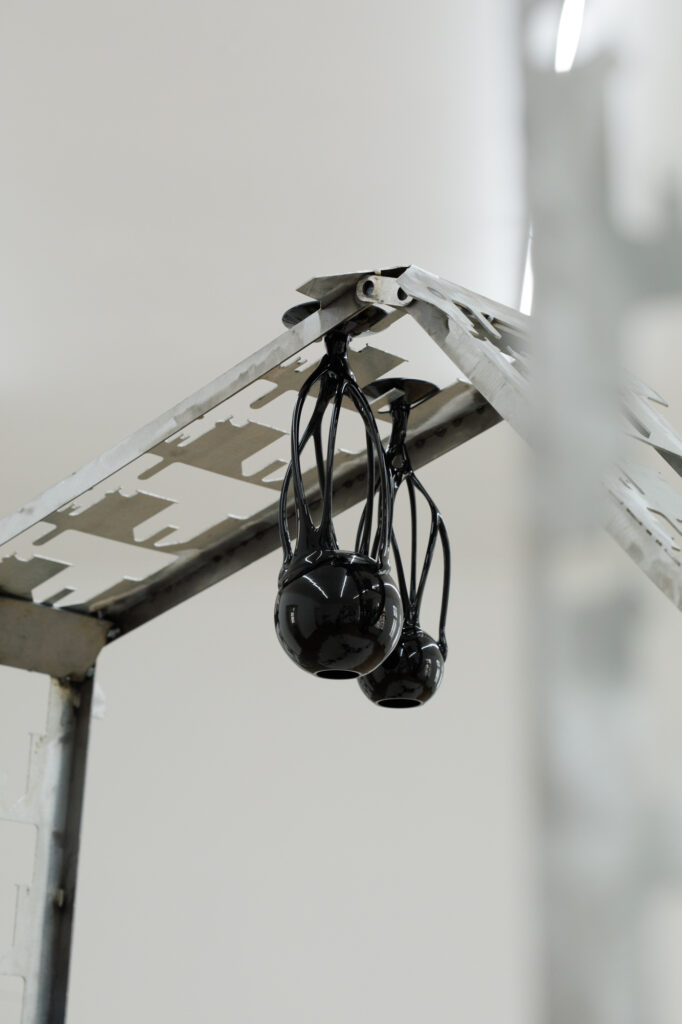
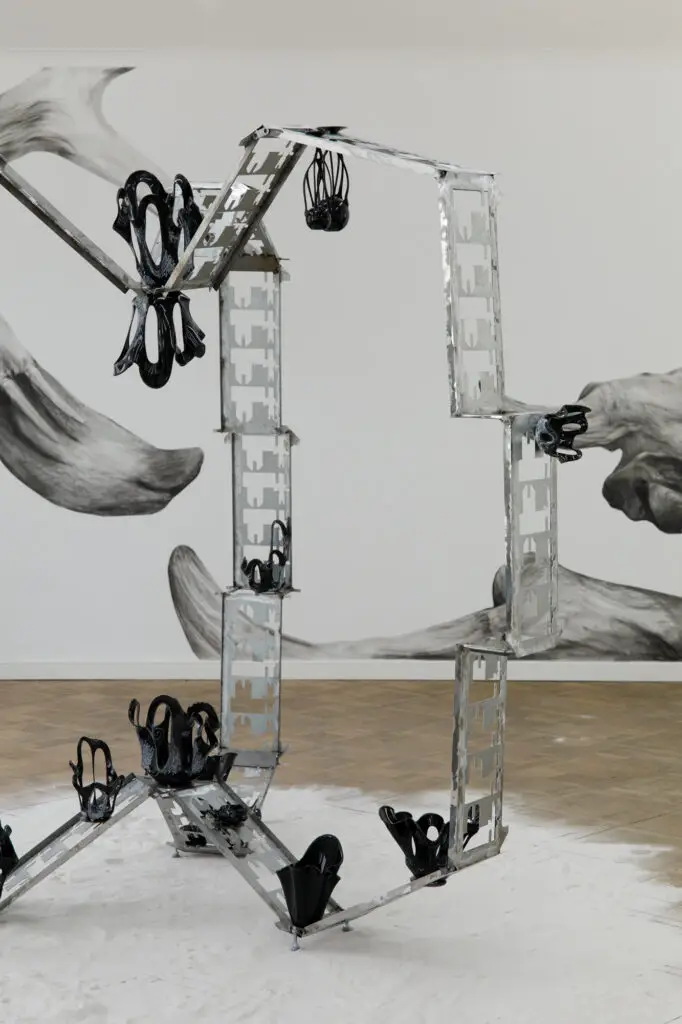
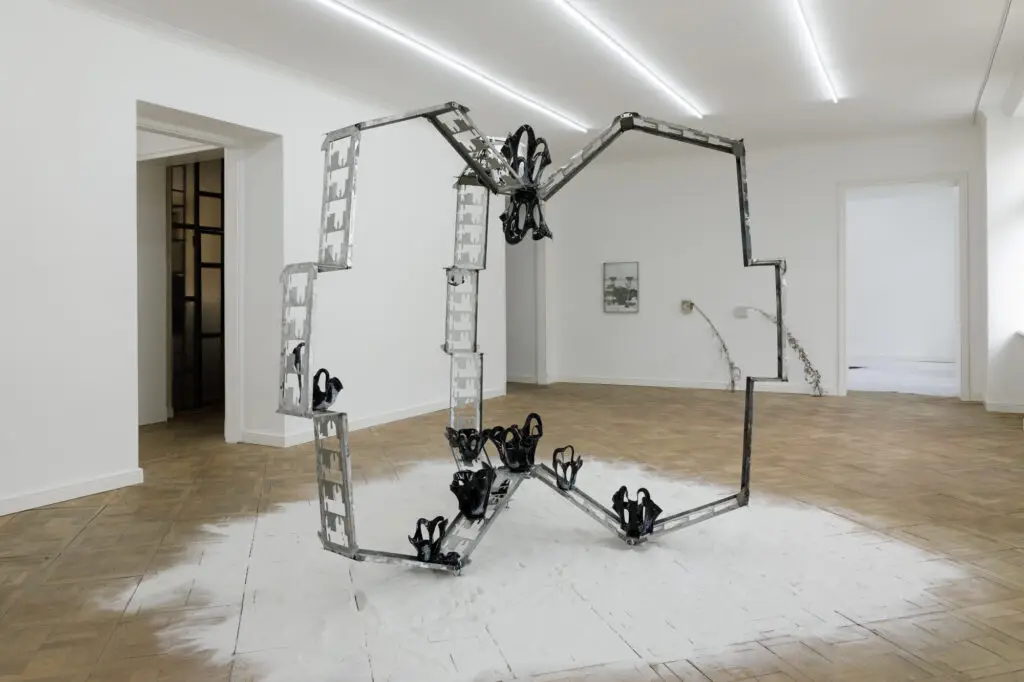
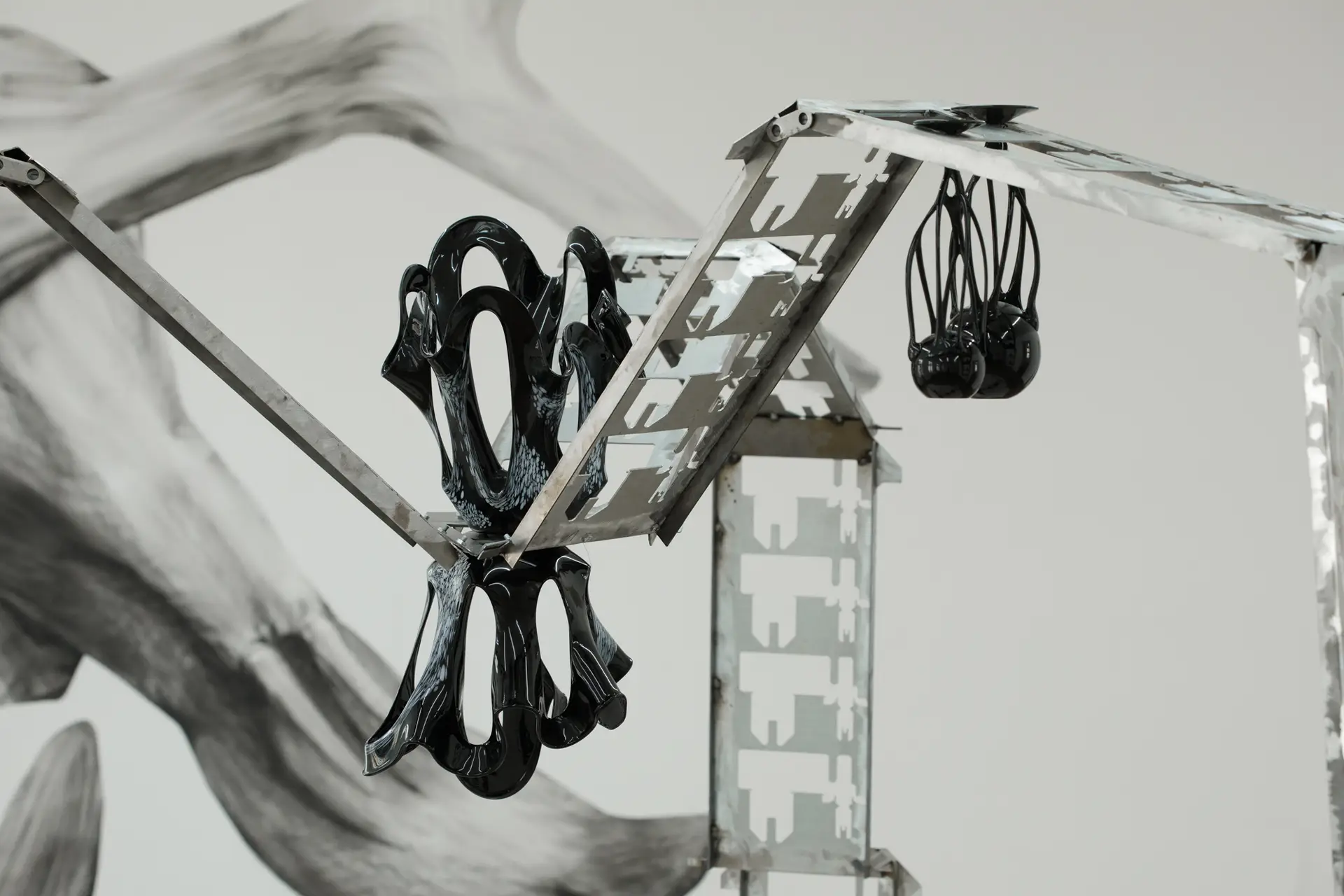
As is typical for Lazar, she integrates various media (photography, objects, installation) and works with a wide range of materials in this series as well – from those she processes herself (metal, textile, cast glass) to found elements that she incorporates into her works (blown glass, scrap metal, or horse bits). In the central piece What Happens on Earth Stays on Earth, the artist pairs metal remnants from a scrapyard and found 1980s decorative glassware (“durnostojki”) with alchemical iconography and almost apocalyptic symbolism. These peculiar horn-shaped glass forms echoe the look of the mushroom Craterellus cornucopioides (“trumpet of the dead”) and at the same time resemble an illustration from the 15th-century French alchemical manuscript, where decay is depicted in a vessel filled with black water (this process is also known as “nigredo”). Inside lies a couple in a loving embrace, marking not an end, but the origin of a new life. The installation is complemented by sand, a raw material for glass, and a charcoal drawing on the wall depicting organic remains found in the soil, drawing attention to the subterranean environment and its organic life, brought to the surface by mining.
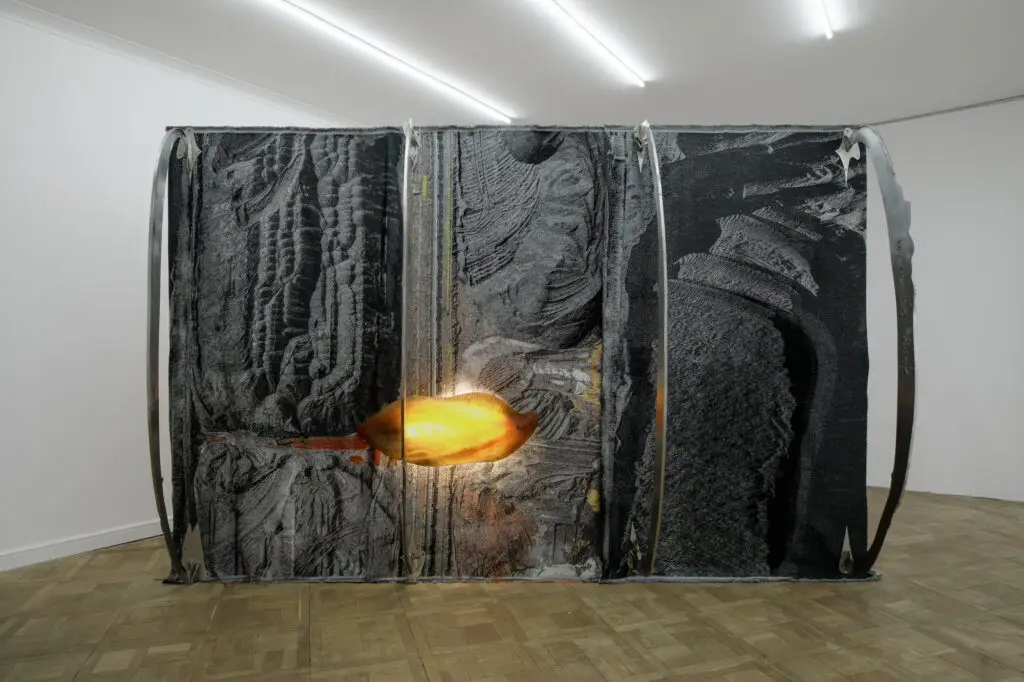
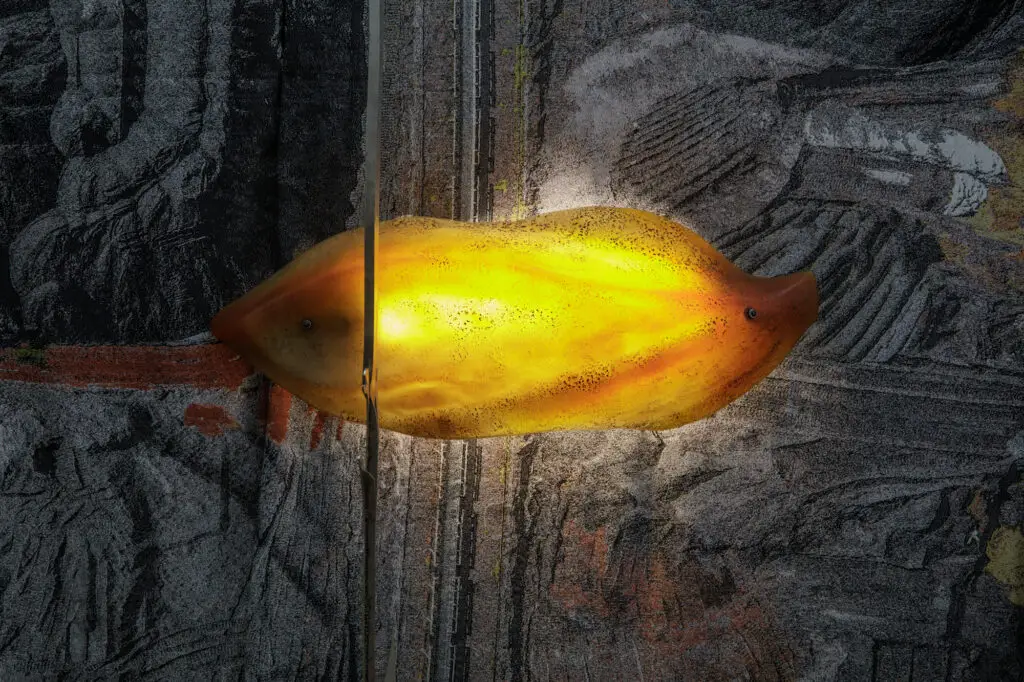
The theme of mined coal and its transformation manifests vividly in the work Second Sun. Photography of extracted coal is woven directly into fabric using the jacquard technique and illuminated by the orange light of a vintage lamp, evoking a living Silesian sun emerging from darkness. The entire piece is bound by steel arches – a direct reference to the structural anchors, which prevent homes from collapsing due to mining tremors. Hand-welded quotes from internet culture, “It’s so over” and “We’re so back”, serve not only as a commentary on rapid emotional swings, but also as a critique of industrial exploitation: a rhetoric that constantly oscillates between historical decline and utopian visions about former mines transformed into centres of advanced technologies, logistics or AI infrastructure.
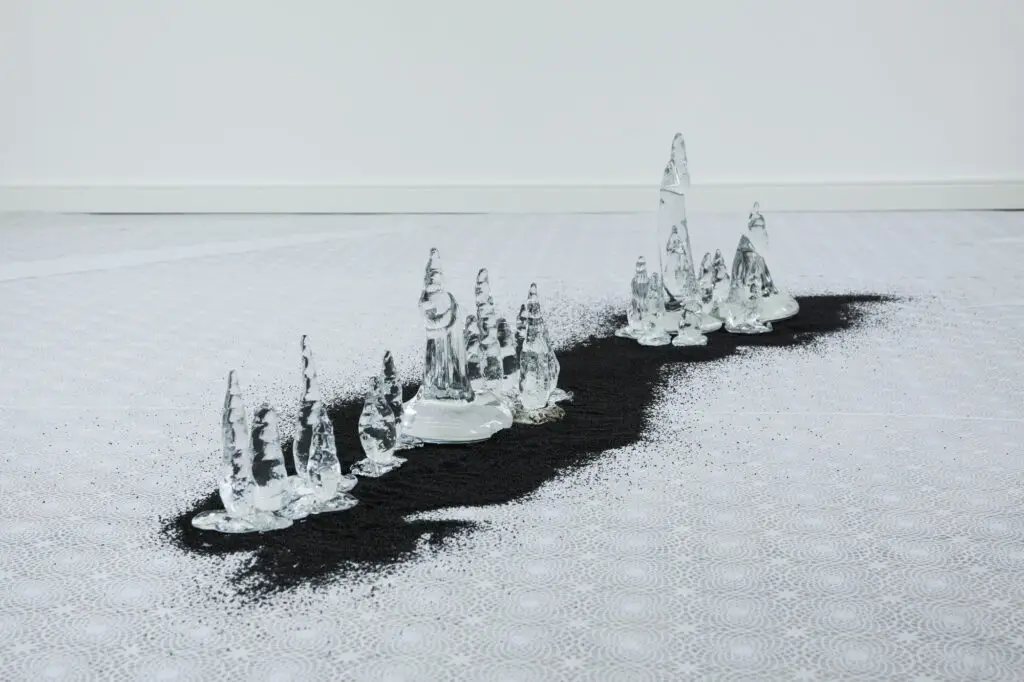
Social context and the gradual erosion of local identity come to the fore in Tongues in Decline. Two large cast-glass sculptures of tongues, featuring horse bits and melting, icicle-like stalagmites, rest on lace-trimmed oilcloth (a nostalgic staple of households of that time) to address the fading Silesian dialect. The language, which was once the melody of the artist’s childhood and a social marker of the working class, is turning into a fading trace of memory due to disuse. This loss extends beyond mere vocabulary; it represents a dwindling access to a specific world – its relationships, memories, experiences and its way of interpreting reality.
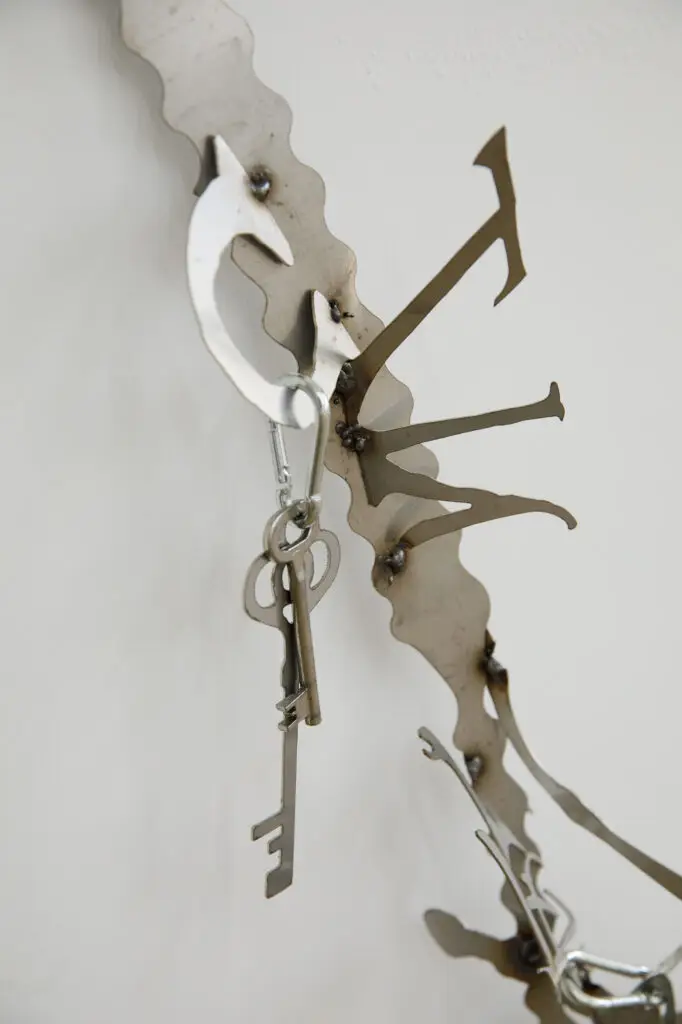
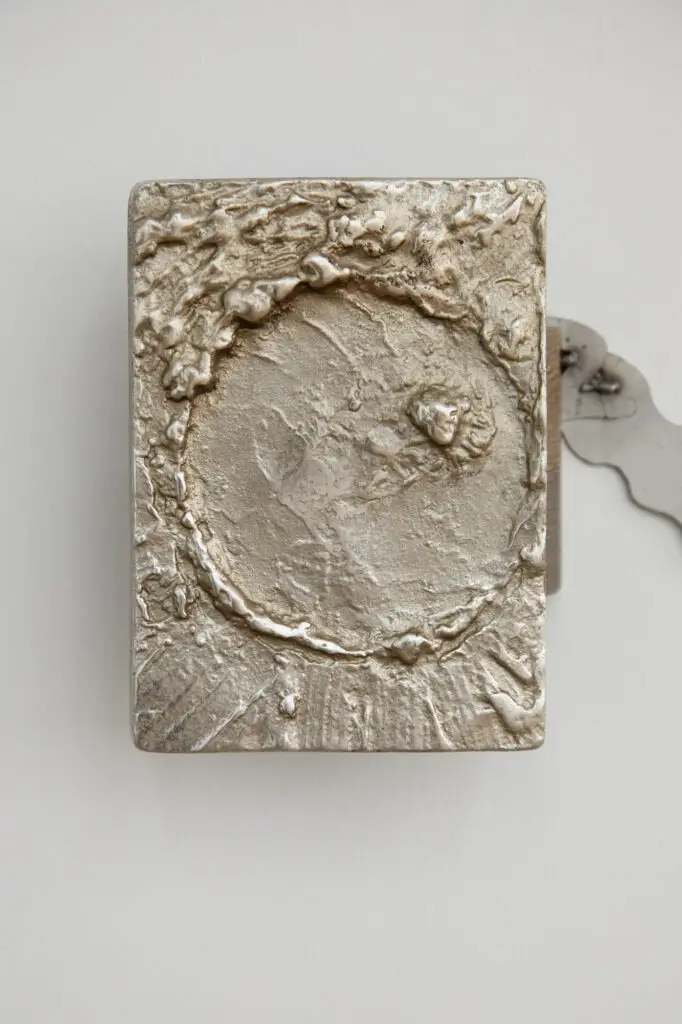
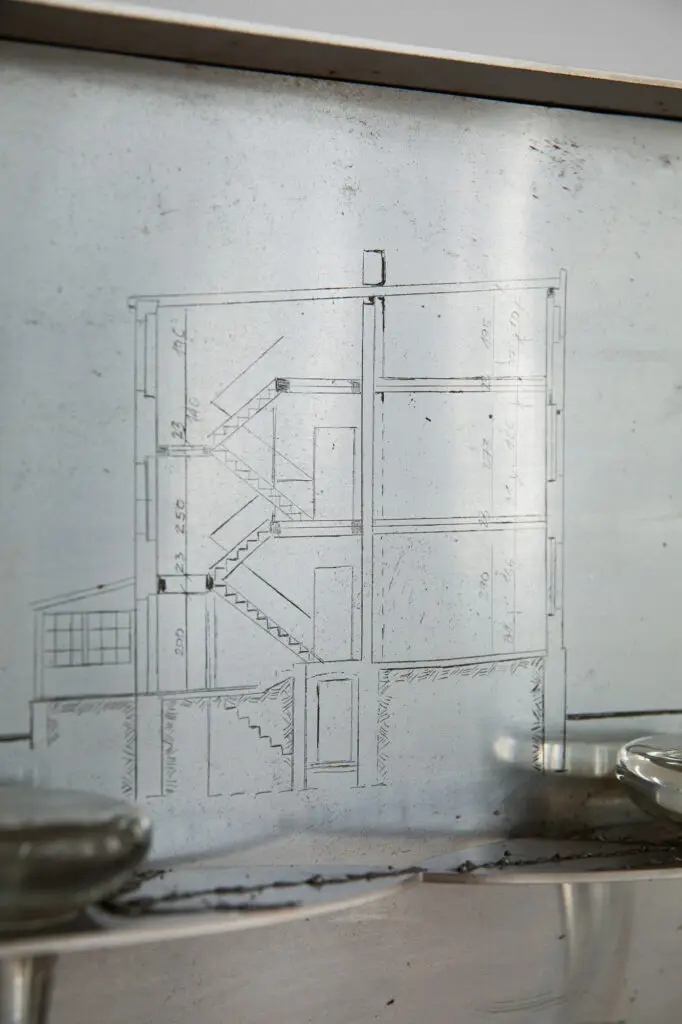
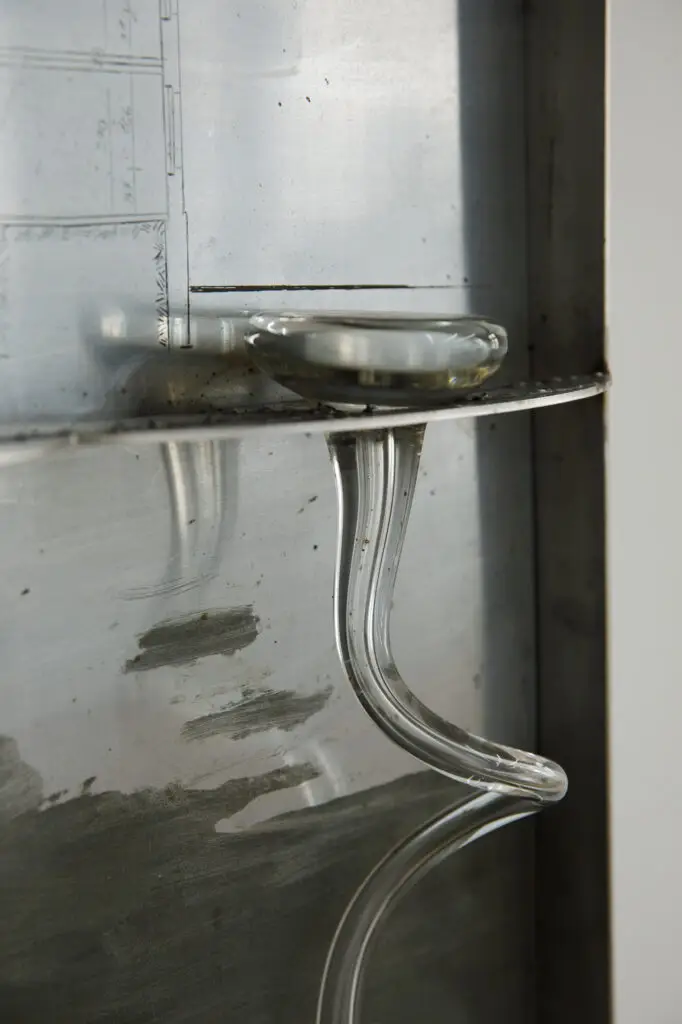
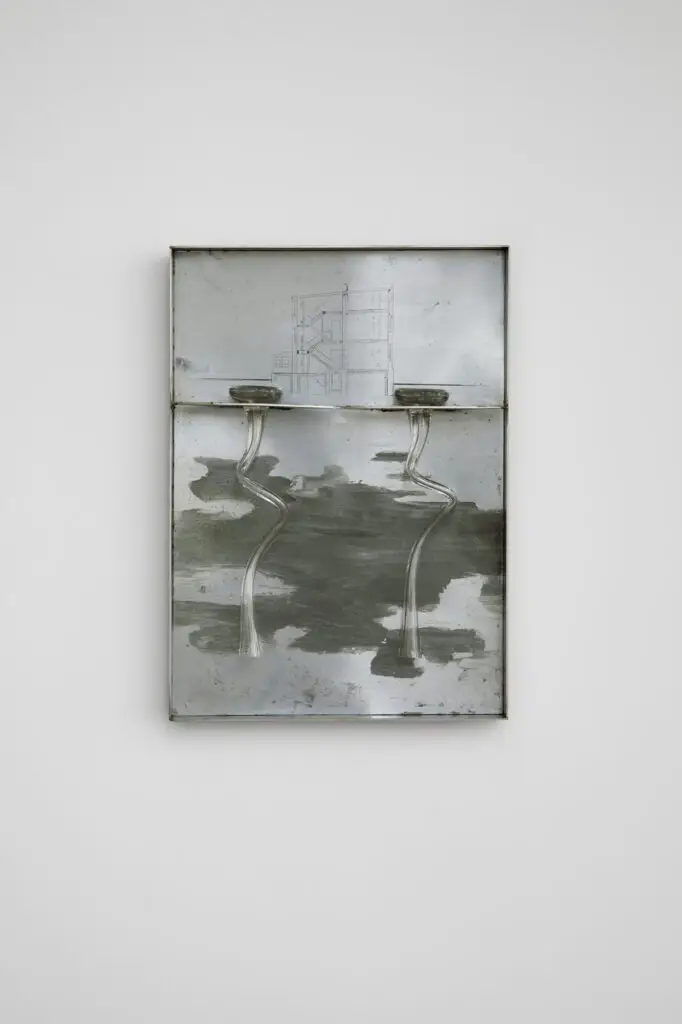
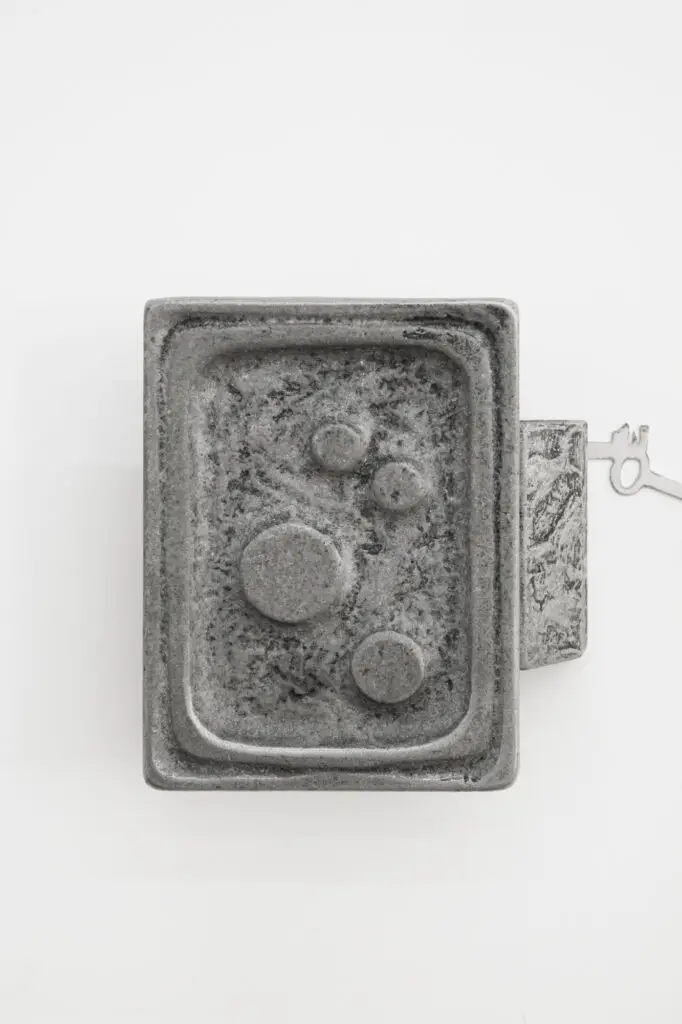
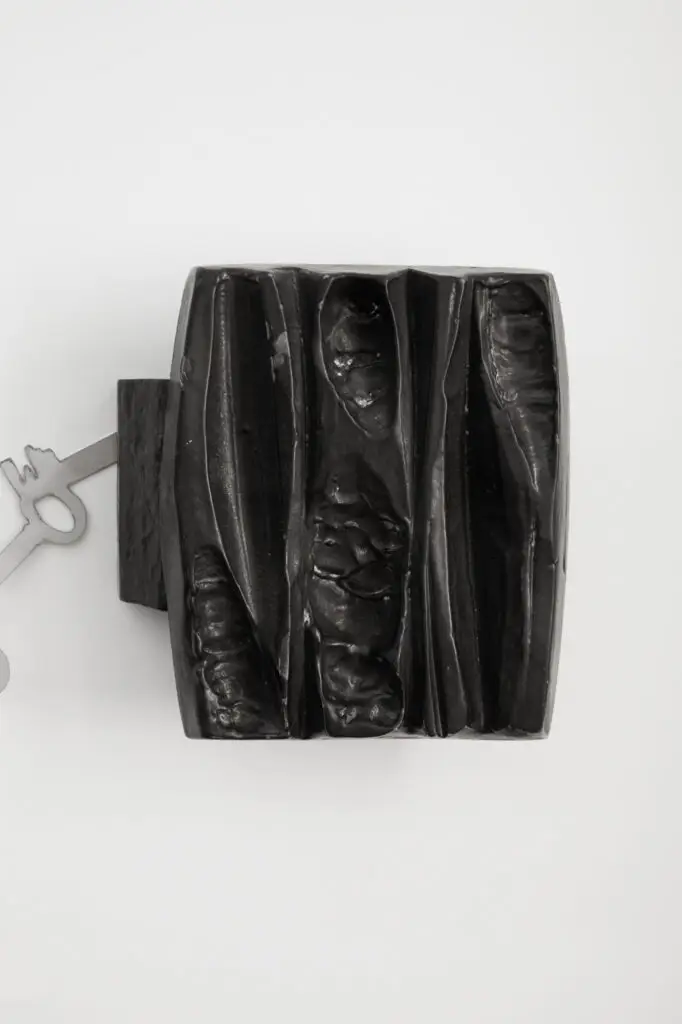
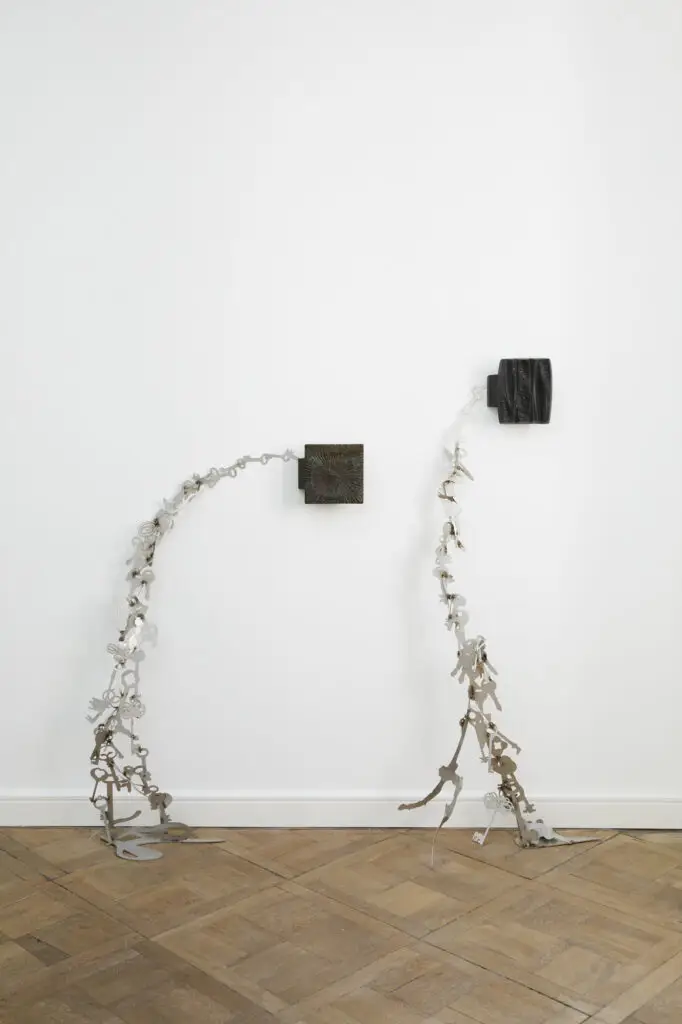
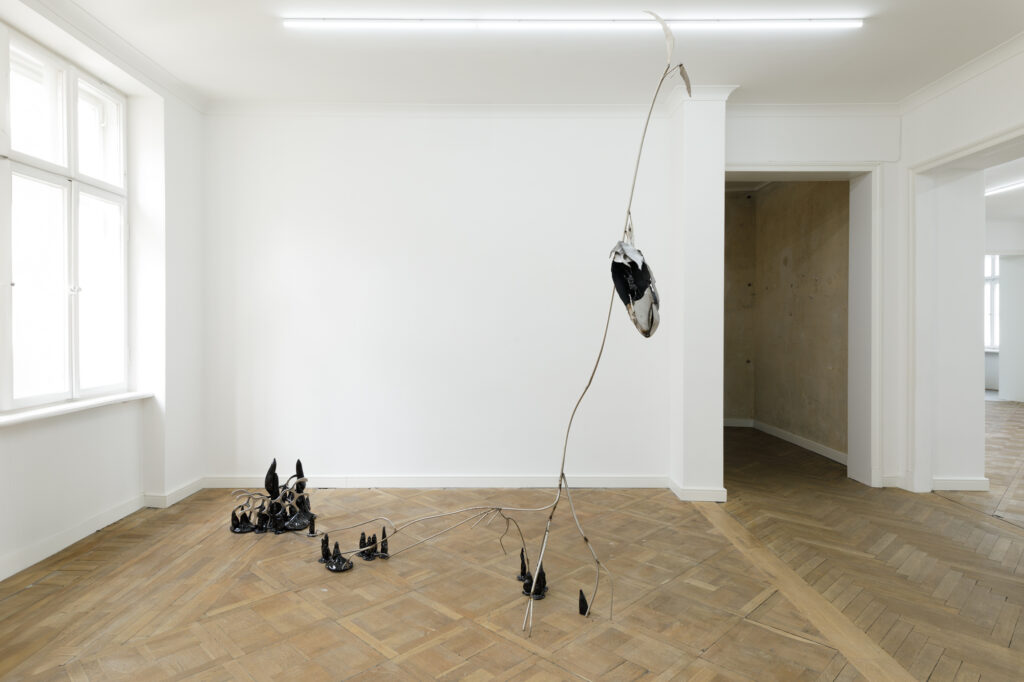
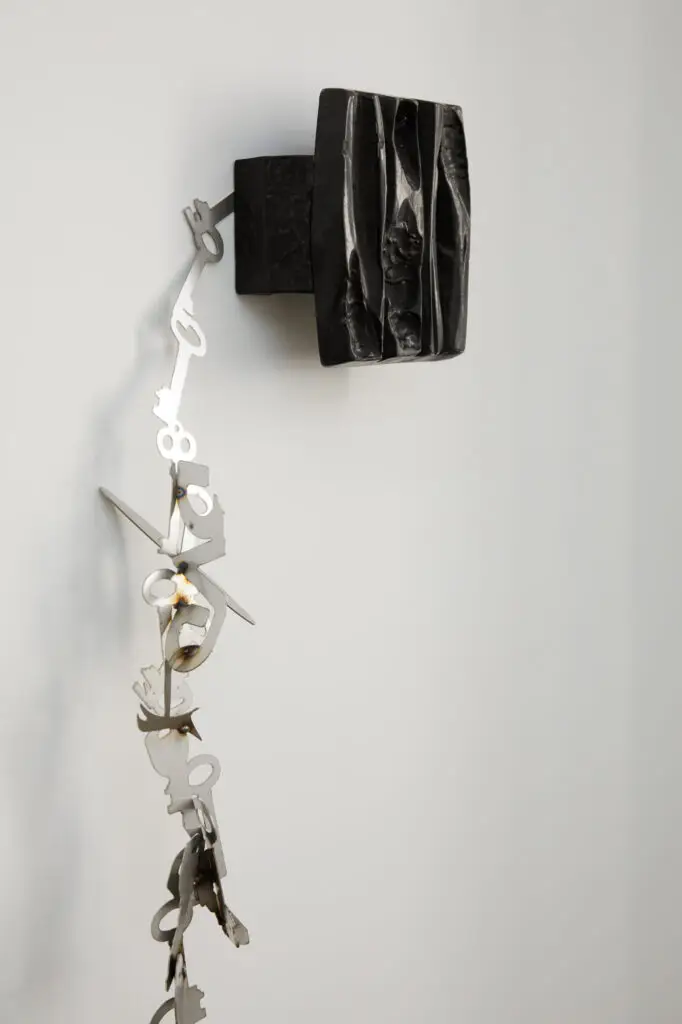
The personal trauma associated with unstable ground is captured in My Nightmares Are Transparent, Opening onto Prehistory. An etched architectural drawing of Lazar’s family home in Zabrze (built by her great-grandfather, who later died in a workplace accident at the Bielszowice mine) is overlaid with metal eyes gazing into the earth like an X-ray. The work captures the anxiety of a family living above active mine shafts, while the ground sank and shook beneath them. The title is inspired by Adrienne Rich’s poem Diving into the Wreck, in which Rich also dives under the surface. This sense of displacement continues in At My Most Nostalgic, where a swarm of steel keys emerges from discarded door handles, symbolizing frequent moves, the loss of a family home and the shifting dwellings that define our lives. At the same time, Lazar draws attention to what often escapes our everyday perception and notions of time and space: The Vegetative Season depicts metal plants bearing pods, one of which contains an ominous black glass seed. The black seed could refer to the Black Marble satellite project, which maps Earth at night against the backdrop of the dark void of space: the planet does not glow on its own, but thanks to human activity that essentially consists of burning energy.
And it is precisely here, from the depths, that Lazar ascends back to the surface. Her explorations do not portray “homo silesius” as someone who fills others with fear, nor a figure who fascinates others with quirkiness or eccentricity. Instead, she confronts history with great respect while challenging the illusion of human control. Through her craftsmanship and thought, she is revealing a world in constant transformation. The exhibition project urges a deeper humility toward the planet’s creative and destructive forces and reminds us of the cyclical processes in which nothing truly disappears. What is extracted, transformed, or discarded persists – circulating as matter, memory, or energy – and this perspective extends to the social context as well, shaping shared narratives, culture, and language. She reminds us that whatever happens on Earth continues to resonate deeply within it. Let me conclude this text with the final passage of Rich’s poem. (5)
We are, I am, you are
by cowardice or courage
the one who find our way
back to this scene
carrying a knife, a camera
a book of myths
in which
our names do not appear.
(1) LeCain, T. J. (2015). Against the Anthropocene: A neo-materialist perspective on history. International Journal for History, Culture and Modernity, 3(1), 1–28.
(2) “Wyobraź sobie ogromną bryłę węgla, na której teraz jesteśmy: kilkadziesiąt na kilkadziesiąt kilometrów szeroką i na ponad kilometr głęboką. Żyjemy na ogromnej żyle ciągnącej się od Mysłowic do Ostropy. Gdyby w Śląsk uderzył meteor albo gdybyśmy sami rzucili jakąś iskrę na ten węgiel, on zapłonie. Erwin powtarzał, że musimy być w gotowości. Słońce pali się cały czas, nieustannie eksploduje, a Śląsk mógłby być drugim słońcem, ma taką samą energię. Był przekonany, że ta energia nieustannie na nas działa, że stąpanie po czystej energii nas przemienia. Nie twierdził, że Ślązacy są nadludźmi, ale że przez tę niewyobrażalną podziemną moc wszystko na Śląsku jest bardziej kolorowe, żywsze, ciekawsze, a historia intensywniejsza.”
Rokita, Z. (2025). Aglo. Banką po Śląsku. Znak Literanova. Pp. 11–12.
(3) Stronciwilk, A. (2025). The spirituality of the Carbocene: On coal and art in Upper Silesia. In J. Balisz-Schmelz & K. Dworniczak Brill (Eds.), Enchanted socialist modernity: Art of Central and Eastern Europe (1945–1989) in the face of alternative spirituality (pp. 88–108), Leiden–Boston 2025, Pp. 88–108.
(4) “Chcę też przekonać się, kim jest człowiek, który jednych fascynuje, a innych napawa lękiem: Homo Silesius.”
Rokita, 2025, p. 9.
(5) Rich, A. (1973). Diving into the wreck. In Diving into the Wreck: Poems 1971–1972. W. W. Norton & Company, Inc., pp. 22–24.