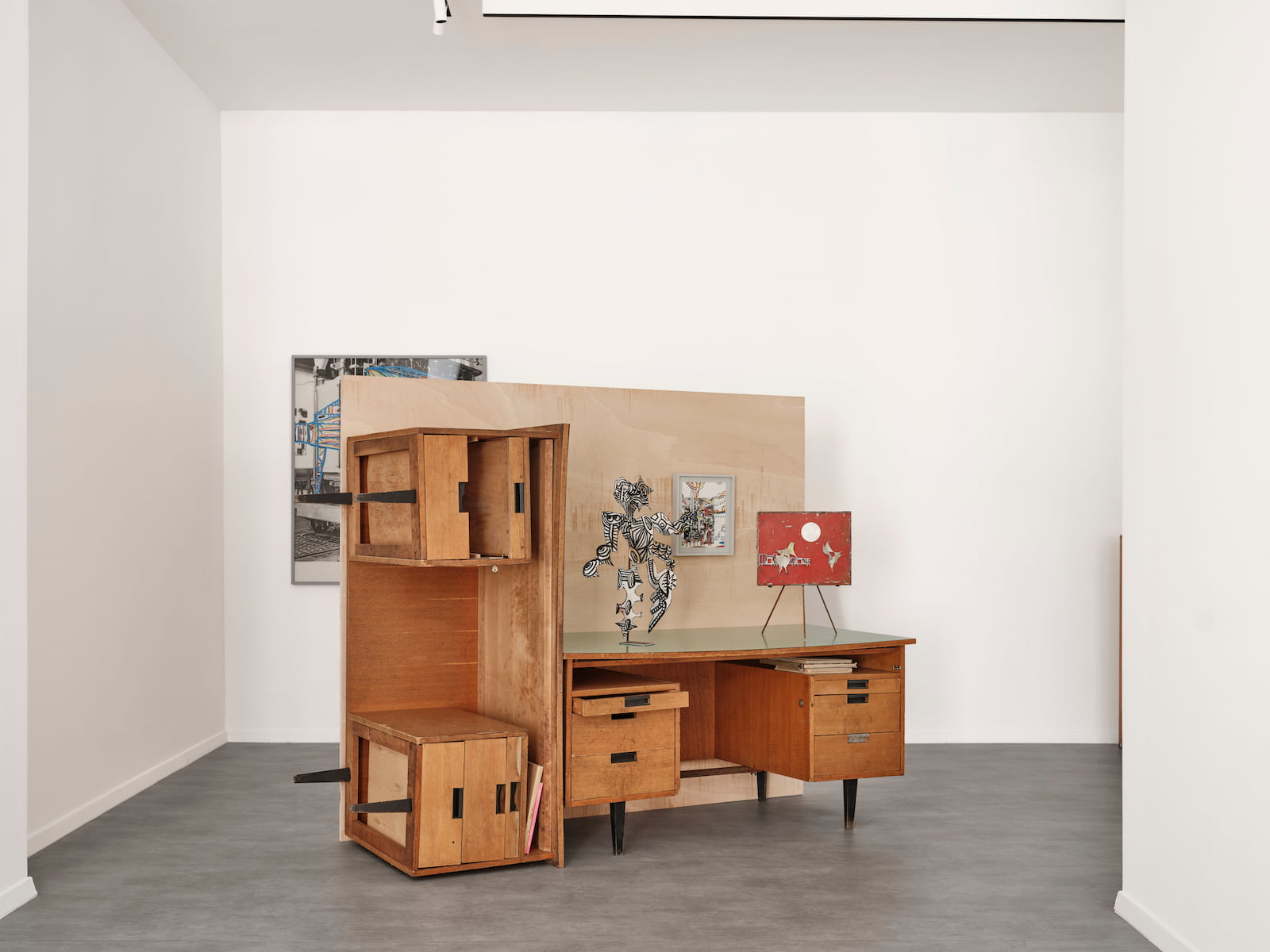
Artist: Marko Tadić
Title: Funga Robo
Venue: TROTOAR, Zagreb
Curator: Martina Marić Rodrigues
Exhibition text: Ana Dević
photos: Damir Žižić
With his Funga Robo exhibition, Marko Tadić presents a cross-section of his recent works, in which he examines speculative visions of the city of the future from the perspective of artistic ecologies. The title, Funga Robo, refers to mushroom (fungal) mycelia and the field of robotics. A connection is thus established between biological and technological forms of social organisation. Funga Robo explores the possibility of spatial reorganization and redistribution, which along with the urban context, also includes a rethiking of the gallery exhibition space.
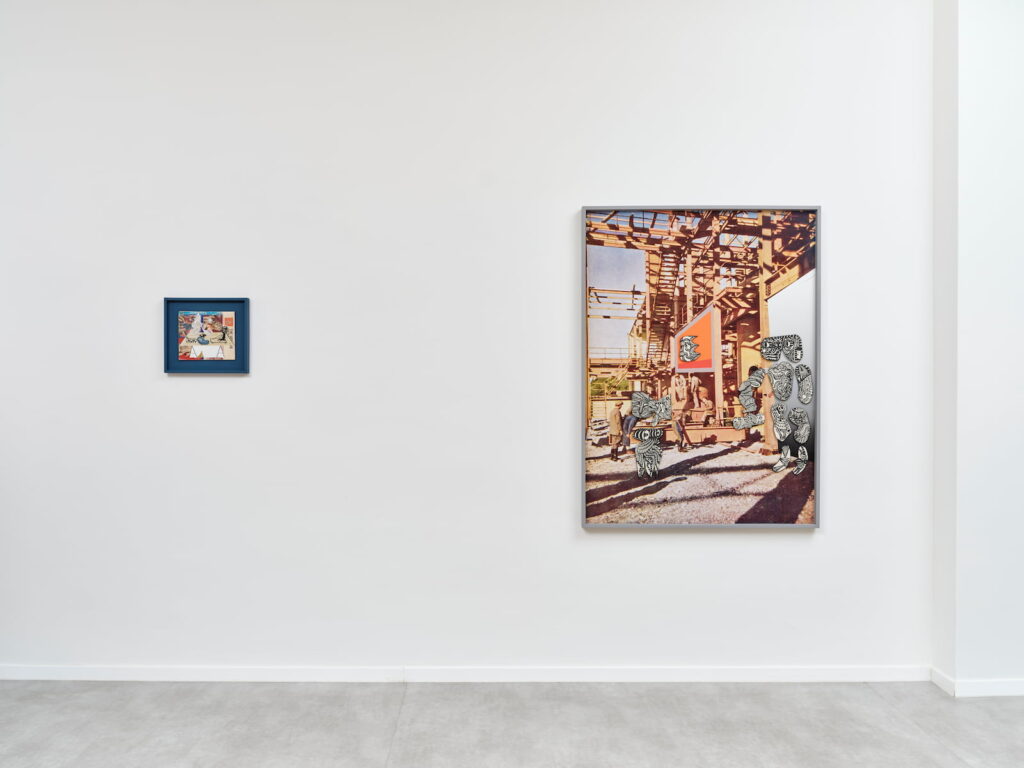
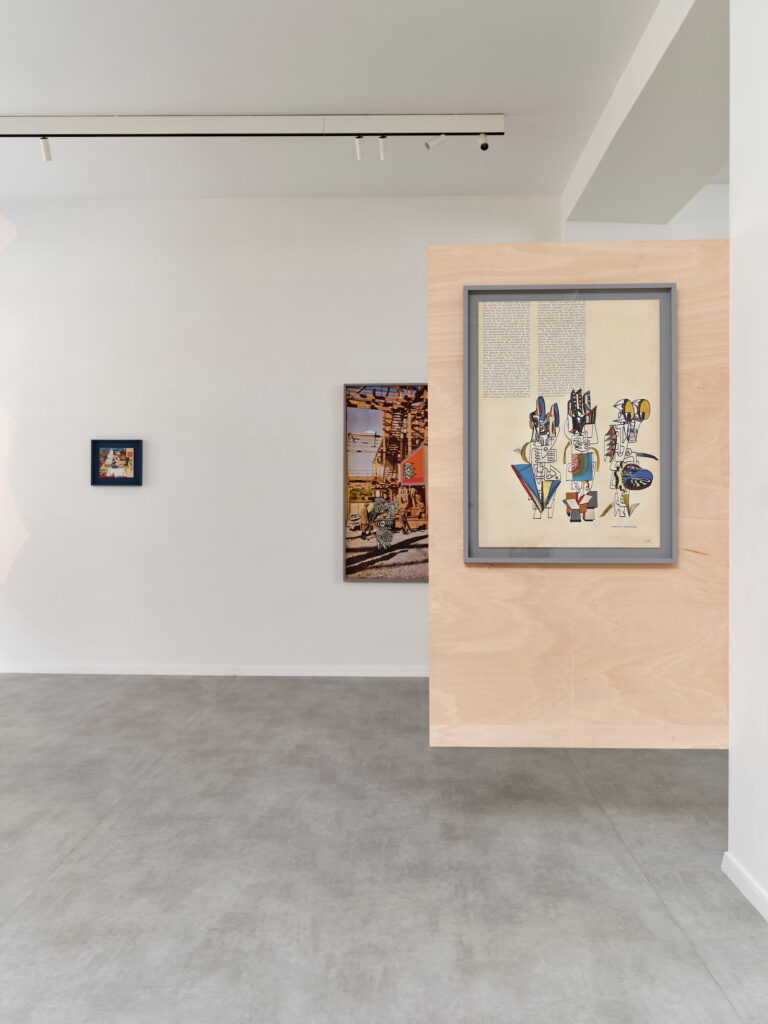
Using the materials at hand and the improvisational method of bricolage, which “construct[s] a system of paradigms with the fragments of syntagmatic chains”,[1] Tadić creates a hybrid display in which the exhibition meets archival and performative elements. Through the media of collage, drawing, animation, and the exhibition design, the artist carries out interventions on pieces of furniture, pages of urbanistic books, journals, and photographs taken in the 1950s and 1960s, which was marked by socialist progress and innovative urban designs.
Tadić looks to both the past and the future simultaneously, using documentary and advertising photographs as a background for questioning the present. Marked by a post-socialist and post-social condition, this present is one in which social spaces and shared assets in the urban tissue have been rapidly dismantled for the sake of uncompromising capitalist growth, and whose effects have recently been accompanied by devastating events such as earthquakes, storms, and fires, largely caused by lack of our care for the environment. The main characters of the Funga Robo series are a collection of anthropomorphised, black-and-white figures, which resemble paper puppets, and which embody the collective identity of an extraterrestrial mycelium, functioning as its intermediaries. Inspired by the system of fungal networks, these characters suggest forms of spatial reorganisation and community that are non-invasive, decentralised, and interconnected. Like foreign, alien architects, they are “consultants”, assistants whose view of the city includes transhuman, living, and non-living perspectives that connect the progressive achievements of the past with visions of new urban systems.
Bringing together processes of conscious growth with processes of city development, and an aesthetics that matches function, ecological optimism in the organism/mechanism of the city focuses on collective living and the co-existence of differences. With its exploration of the spatial reorganisation of the city, Funga Robo opens up a space of alternative visions, of not only needed but also imaginable more just and sustainable future.
The other key element of the exhibition is the display itself. In the past few years, as part of the artist’s approach to exhibition displays, he has been developing strategies that bypass the conventional placing of works on gallery walls, and uses elements of the furniture and found objects. Cabinets, tables, chairs, and worktops create a kind of exhibition scenography marked by temporality, highlighting the processual nature of the work and the openness of the space to constant transformations. In doing so, gallery spaces function as hybrid zones that at once bring to mind the atmosphere of the home and a theatrical set.
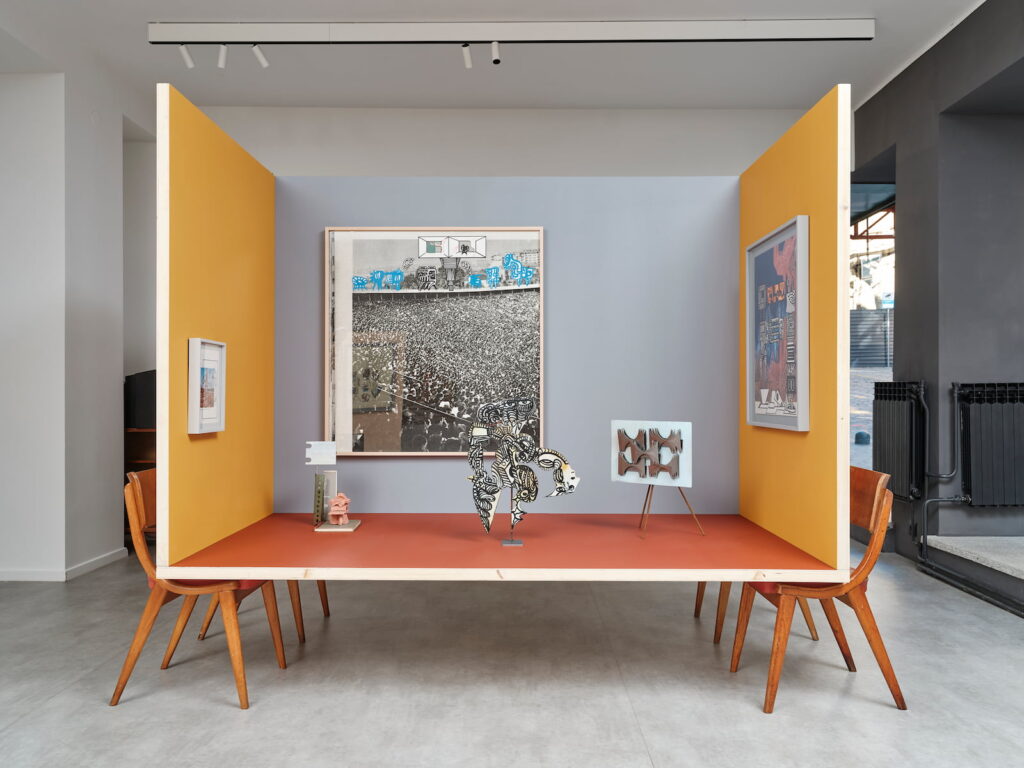
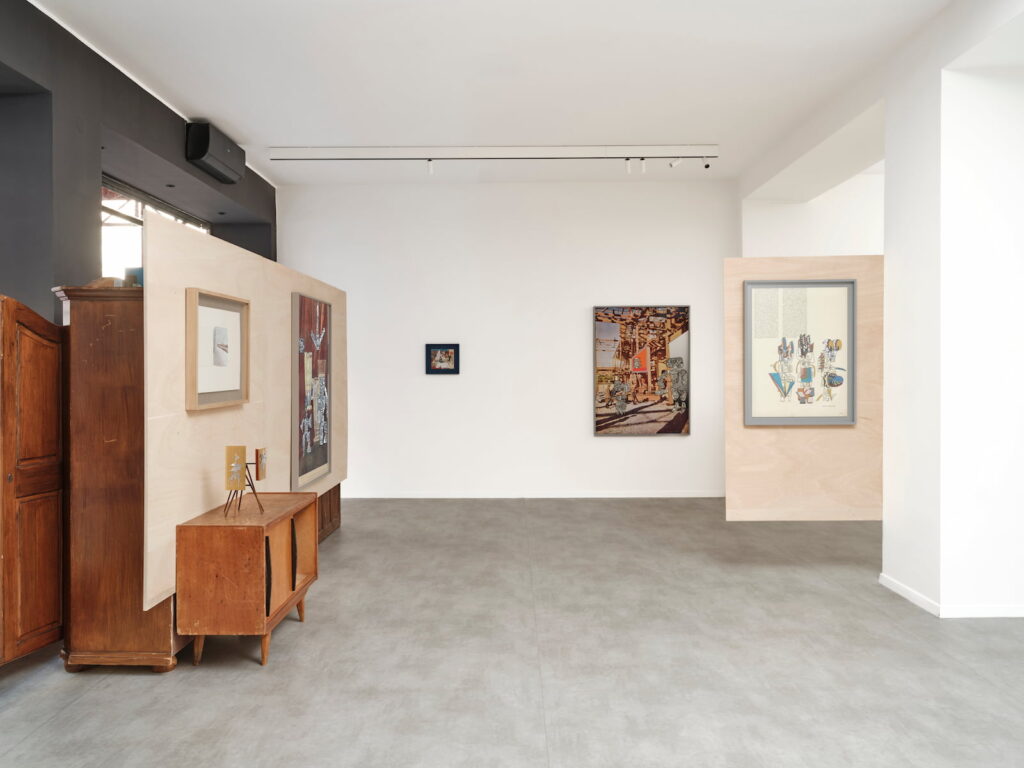
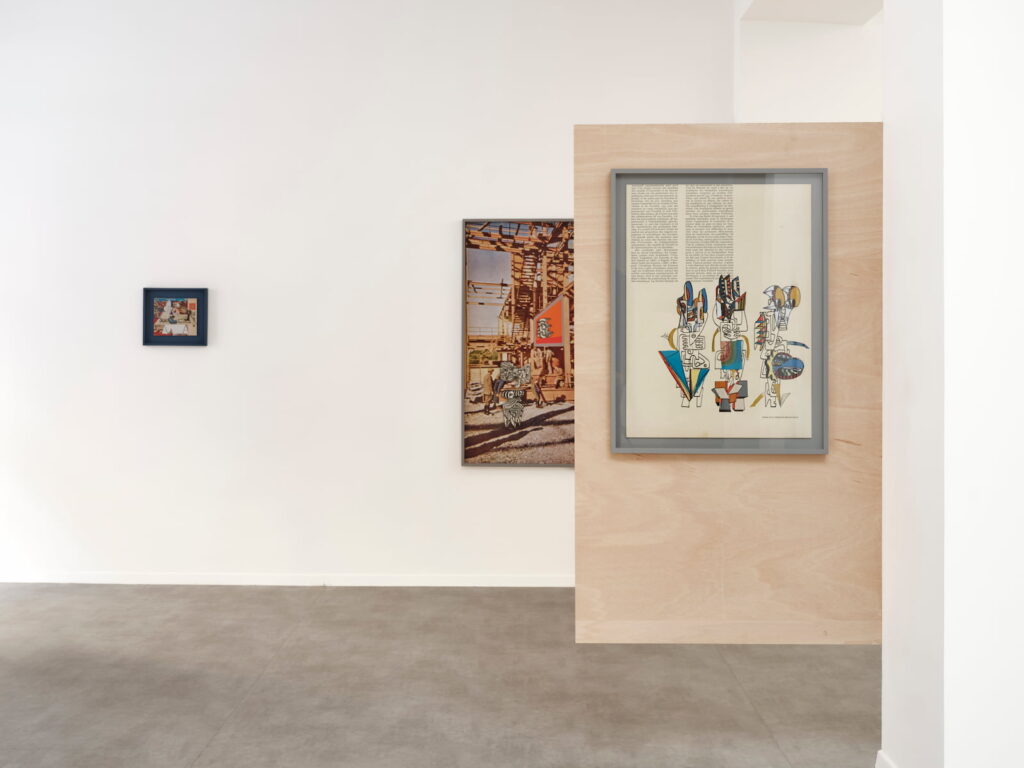
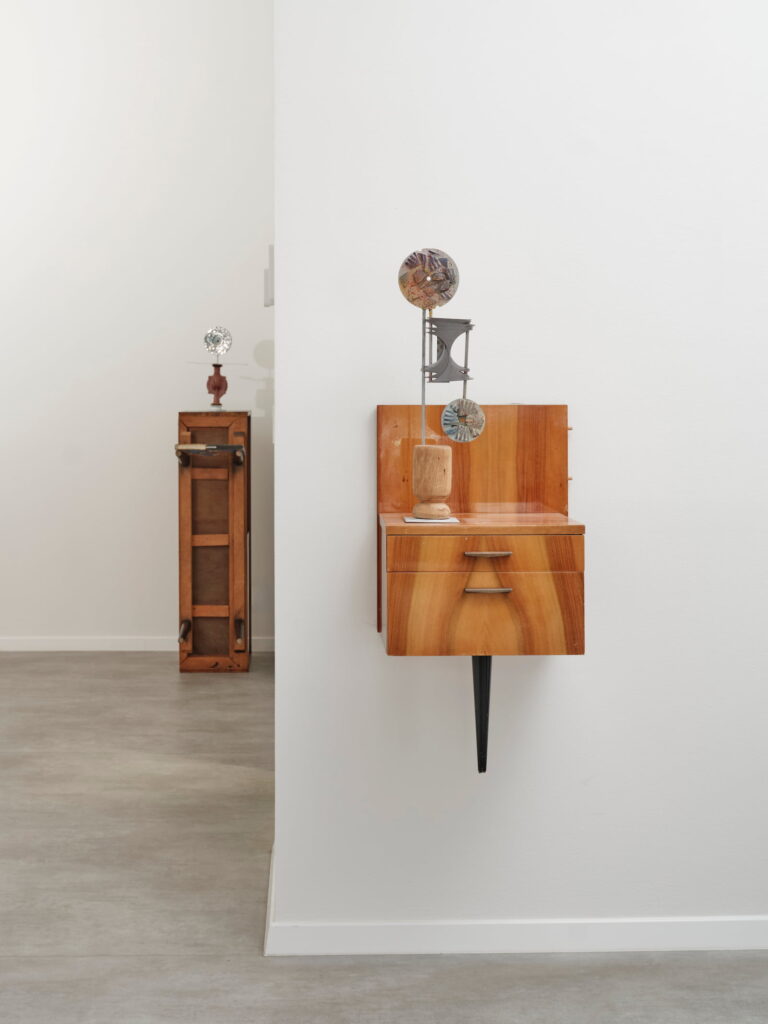
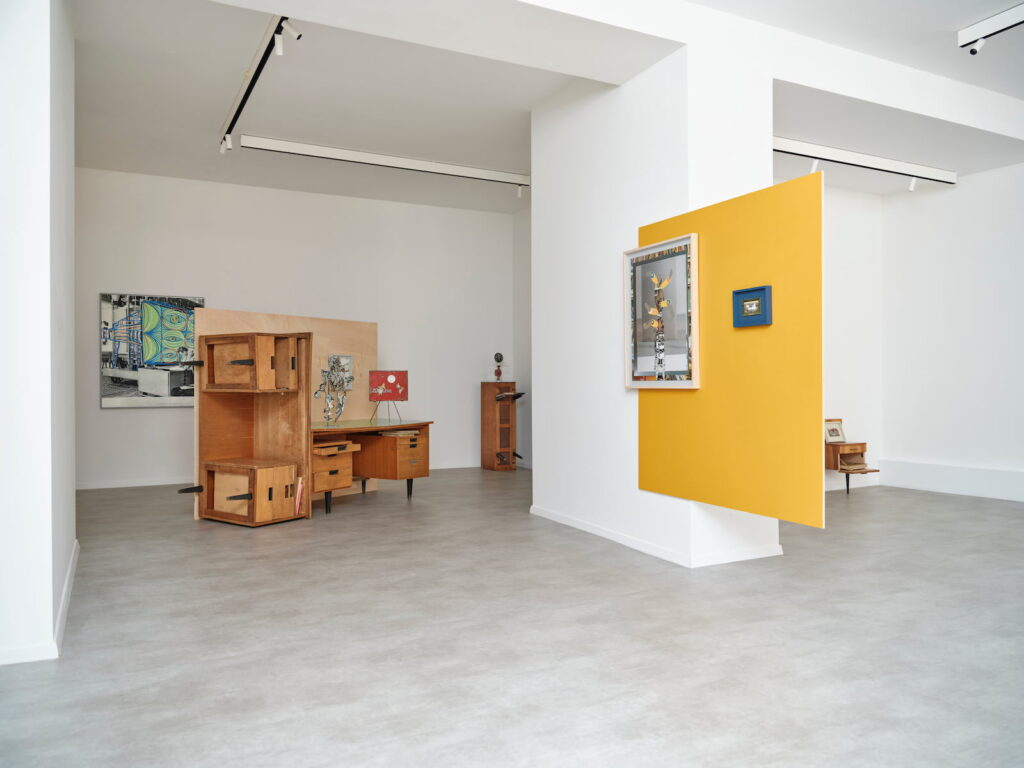
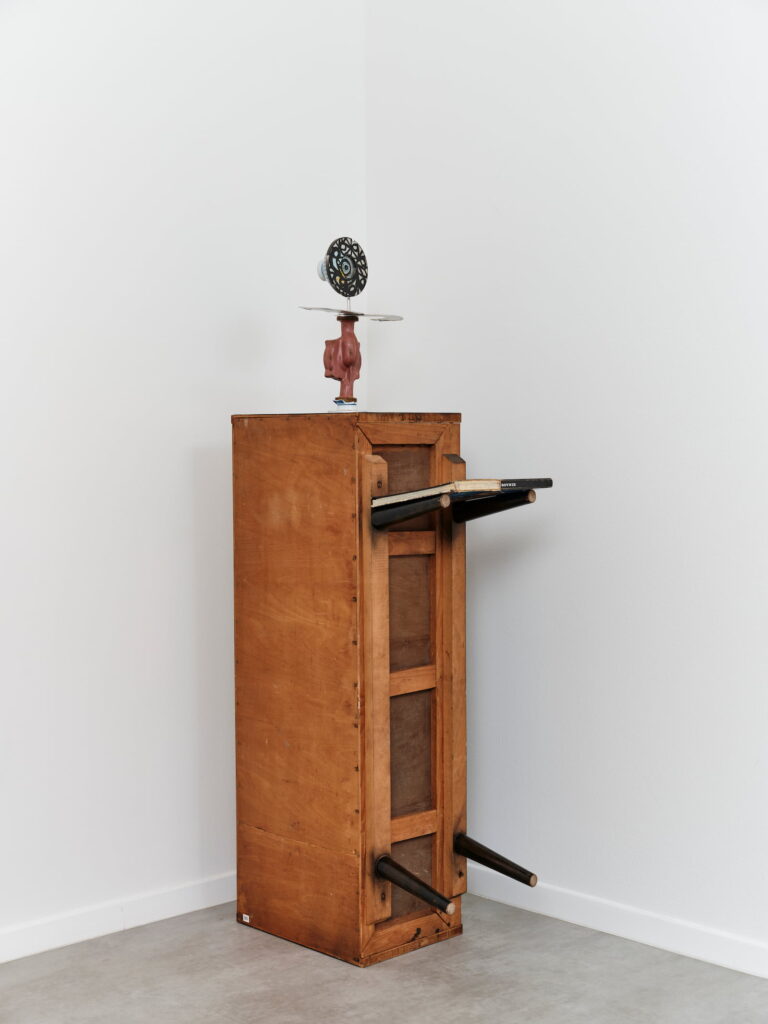
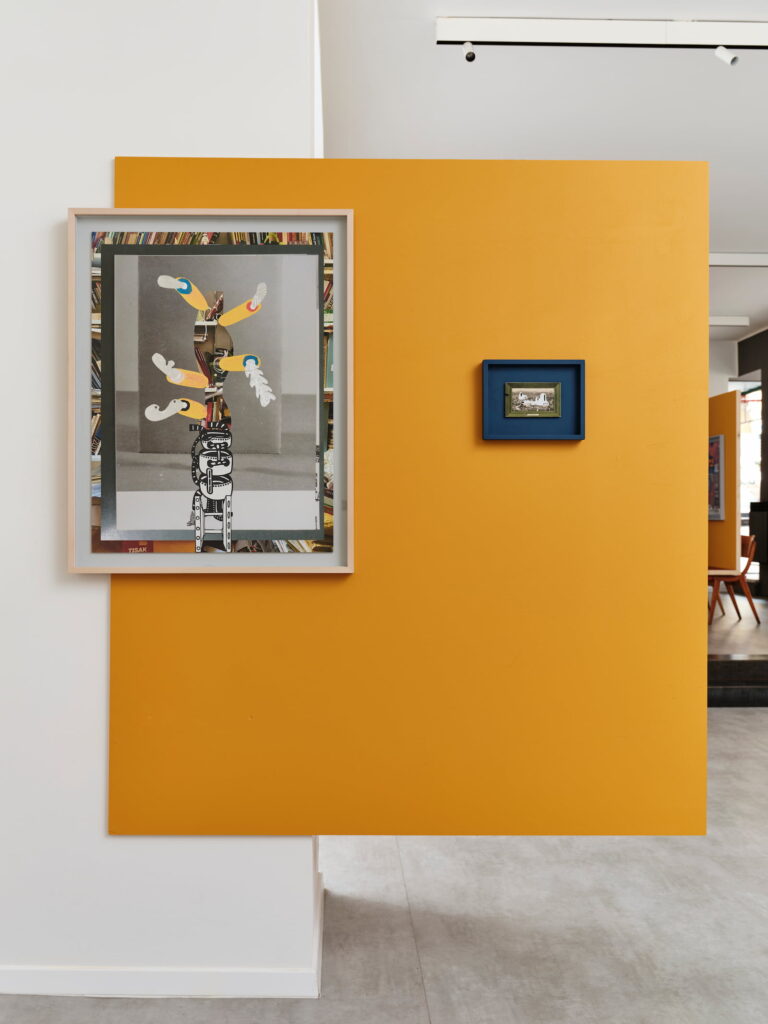
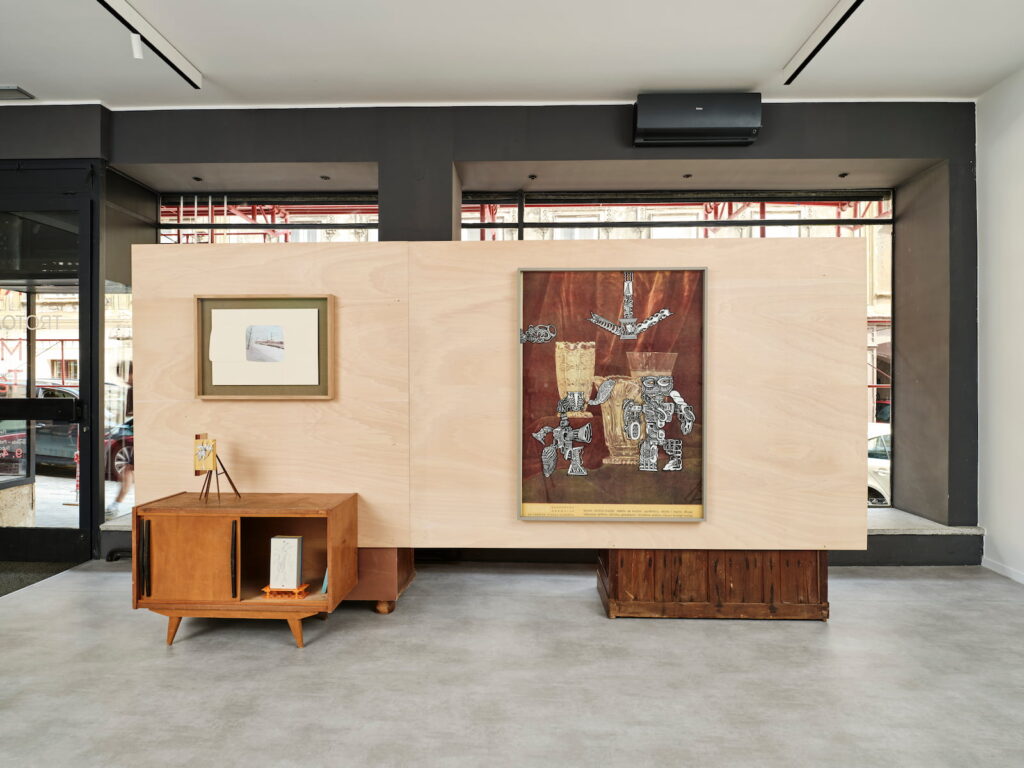
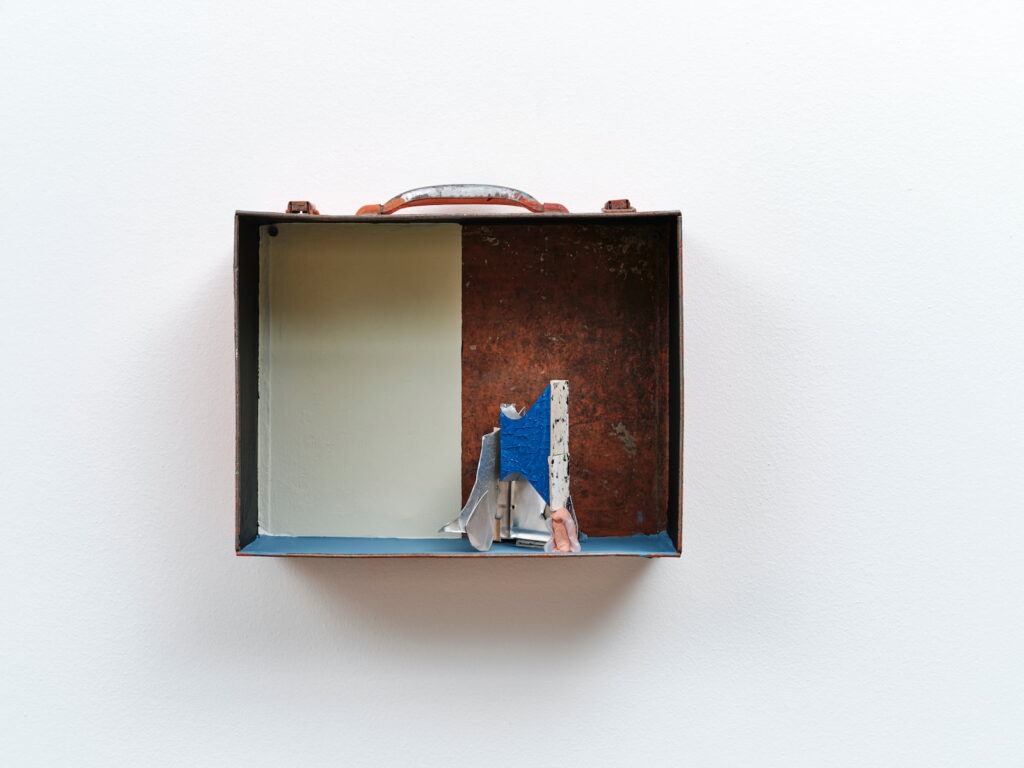
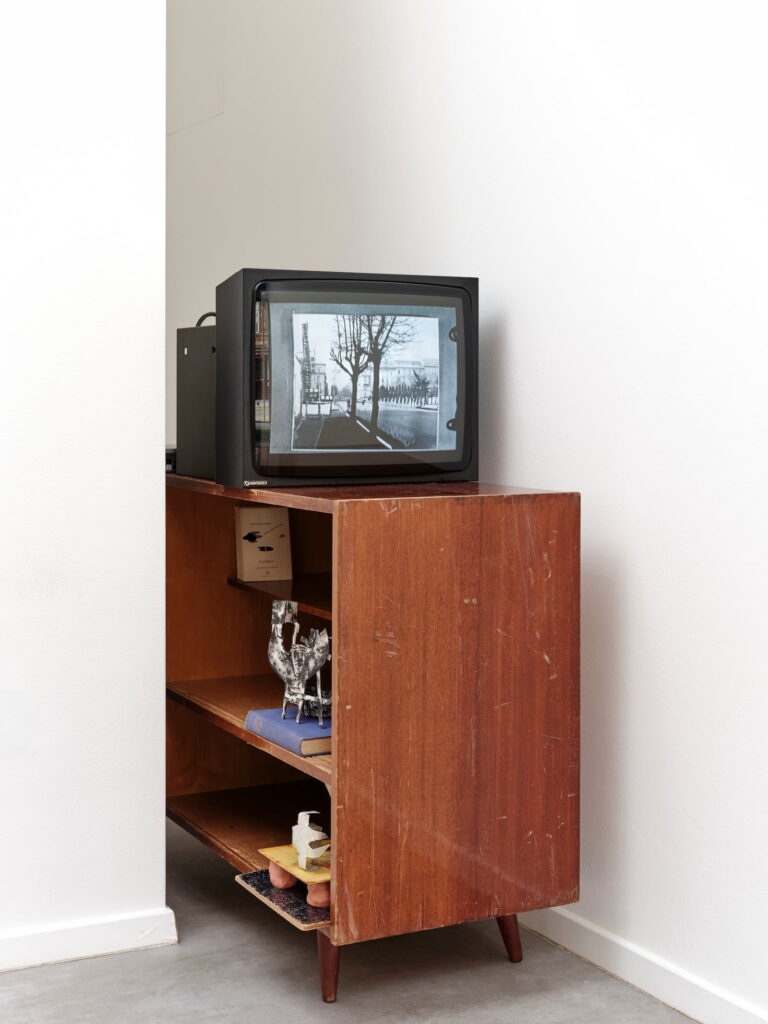
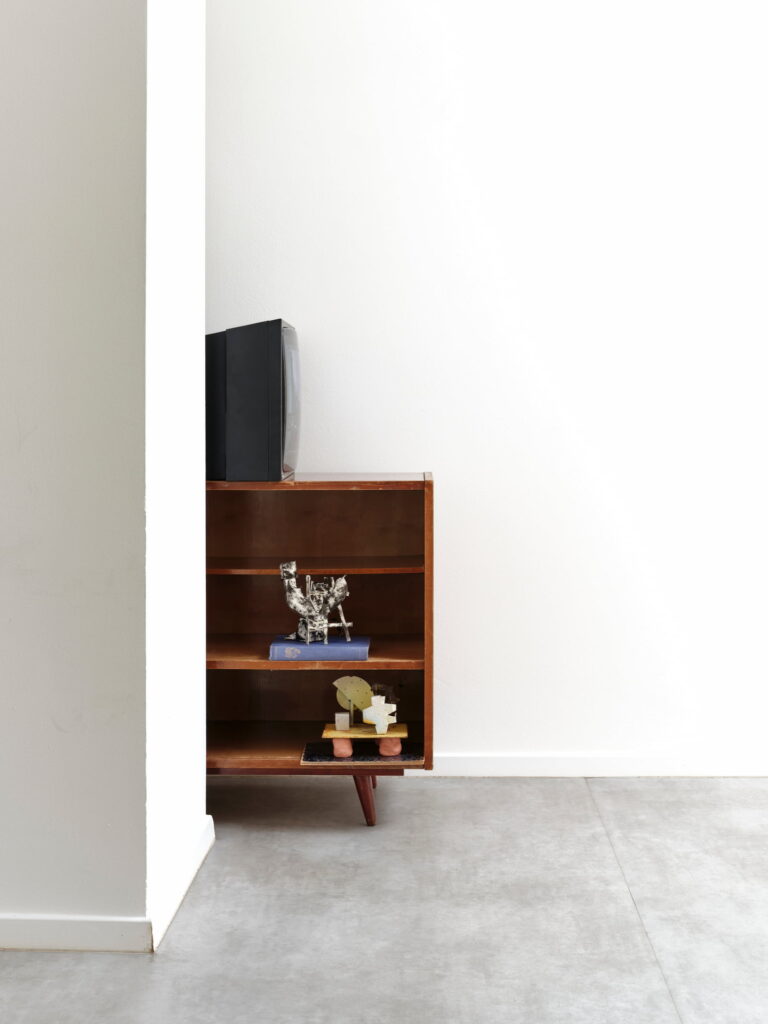
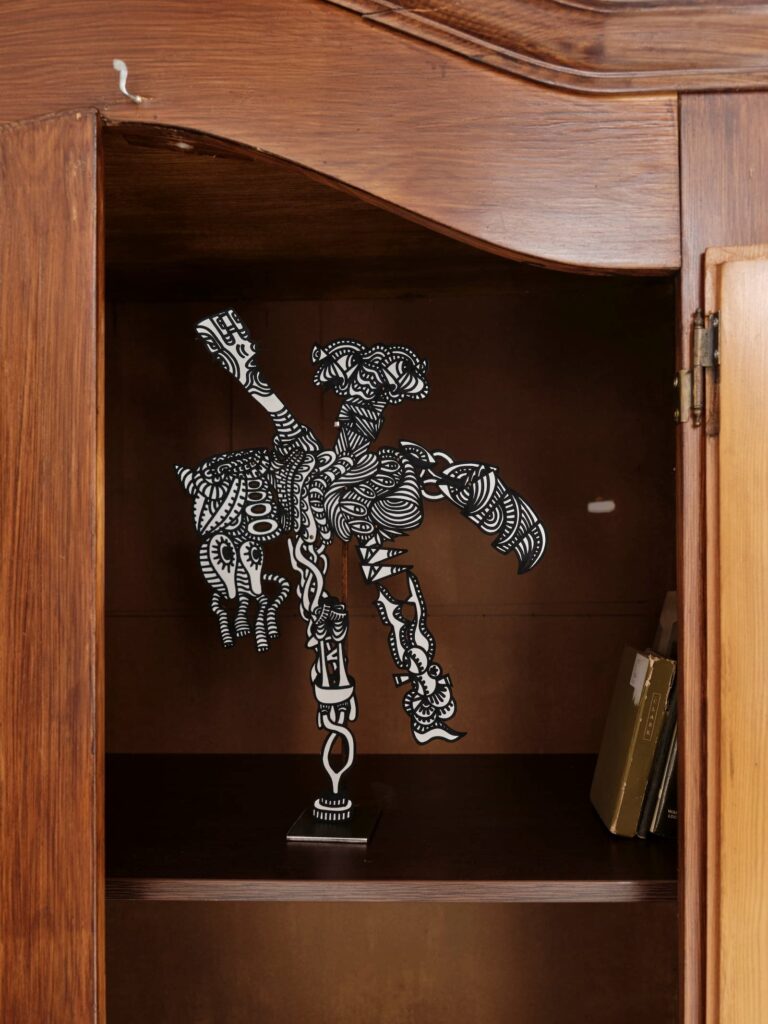
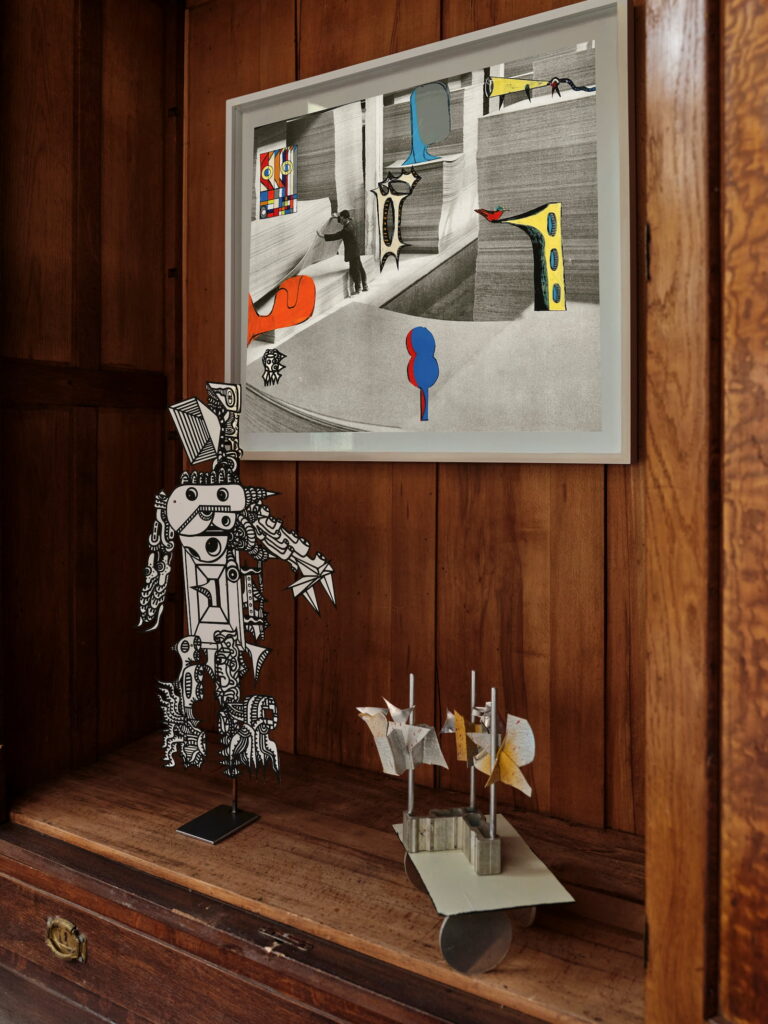
The curator Marco Scotini has noted, in the context of Marko Tadić’s work, the importance of the processes in which objects and artefacts that have ceased to serve their initial function become a space of new possibilities. “In fact, what Deleuze calls ‘a bin’ today equals a space of opportunity, a latency field, where any accomplishment may re-emerge as a possibility, at its own discretion: a generic possibility to articulate or to act, never lacking in determined articulations or all the accomplished actions.”[2] Scotini’s conclusion can also be applied to the works from the Funga Robo exhibition. By using the object as a repository of information, a bearer of transformation, and a makeshift means of display, Marko Tadić creates an atmosphere in which the spatial organisation is based on a concept of artistic ecology as a space that defies perfectionism, compulsive growth, and competitiveness, and which is focused on coexistence, modulation, and play.
Along with the element of play, in the context of the artist’s work it is nevertheless important to emphasise the issue of catastrophism, which paradoxically enables playfulness and the creation of the new imaginaries that characterise his work. That which remains unnamed in the works of Marko Tadić can only just be sensed. This is the question of the end of the world in which we live, and it is precisely this breakdown of the familiar that is enabled by the aesthetic and ethical re-evaluation of the world that we encounter in the artist’s work. Beginning with the remains of the past and a kind of cultural refuse, he considers architecture and urbanism as spaces of new, as-yet unrealised possibilities. “Someone once said that it is easier to imagine the end of the world than to imagine the end of capitalism. We can now revise that and witness the attempt to imagine capitalism by way of imagining the end of the world.”[3] Following this maxim by Frederic Jameson, we can see how Tadić’s works open up precisely this imaginary in-between space where the outline of a new cycle begins to appear on the ruins of the old world.
[1] Claude Lévi-Strauss, The Savage Mind, (The Garden City Press Limited, 1966), 150.
[2] Marco Scotini, “Demonumentalising History / The haunting plots of Marko Tadić” in Horizon of Expectations, Moderna galerija, 2017), 30.
[3] Frederic Jameson, “Future City”, New Left Review, 21, May-June (2003): 76.