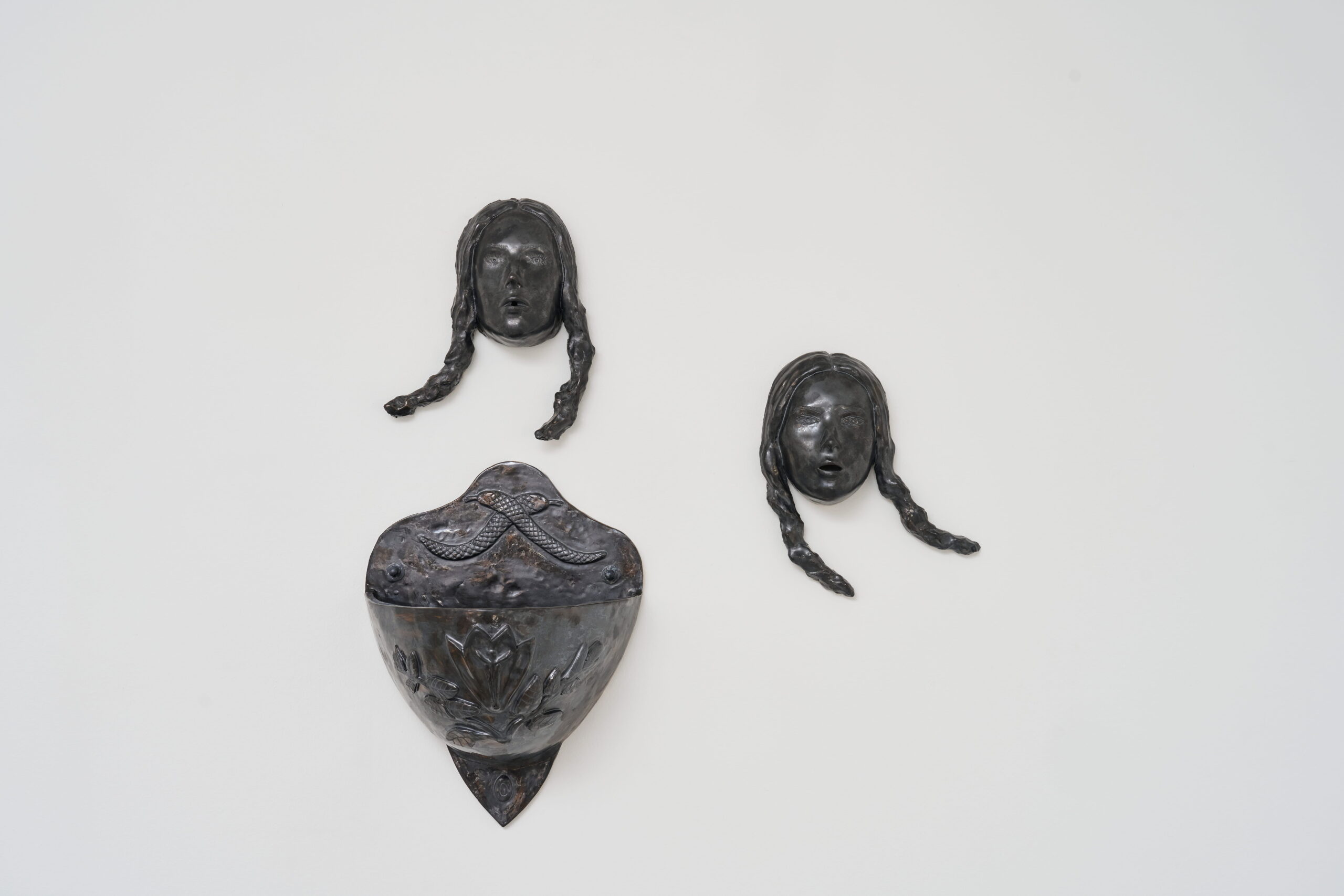
Artist: Mia Akrap
Title: Stronger Than Bone
Venue: Trotoar Gallery, Zagreb
Curator: Gabriella Rebello Kolandra
Photos: Damir Žižić
Mia Akrap (Požega, 1995) draws on her own life as her primary material. The works presented here are new, produced for her first solo show at Trotoar Gallery, and engage with questions of relationality, trauma, and autobiography. Although the exhibition does not include paintings, the artist’s primary medium, it nevertheless reflects a sustained commitment to it. Akrap’s confessional approach translates her inner emotional and psychological landscape – memories, affects, and personal experiences – into a body of work that is at once intimate and resonant beyond the individual. The exhibition firmly situates her practice within a broader feminist discourse.
In an artistic landscape where production is frequently outsourced to specialised artisans and services, Akrap places emphasis on engaging with different stages of the process, often over extended periods of practice. A visit to her studio, located on the ground floor of a residential building in Zagreb, provides a clear measure of this approach: the space is organised to accommodate a range of processes, reducing the need for external assistance while remaining flexible in its modes of production. Akrap’s practice develops in close proximity to her experience of motherhood, and these dimensions inform and permeate one another.
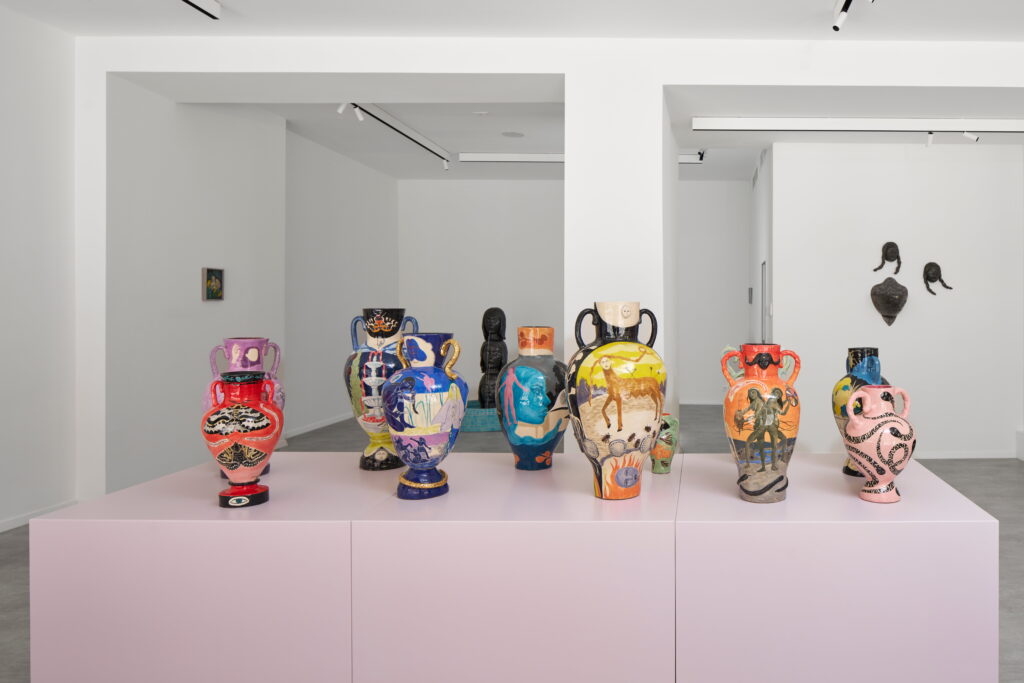
The works presented in Mia Akrap: Stronger Than Bone are structured as a personal mythology, articulated through an iconographic system in which recurring motifs – water, hair, cords, animals, and fragmented bodies – operate as carriers of memory. Central to her practice is an investigation into the transgenerational transmission of memory and behavioural patterns, approached as a field of inquiry. Understood as embodied structures that persist across a family lineage, in her case along a female line, these processes are engaged from within, as sites where inherited experiences are negotiated, reworked, and also resisted. Subjectivity emerges through this tension, taking shape where personal memory and socio-historical conditions converge.
The title of the show draws on two distinct yet related references. One is the artist Theresa Hak Kyung Cha’s experimental 1982 book Dictée. Difficult to classify, the work operates at the intersection of autobiography, historiography, and literary experiment, incorporating techniques drawn from film editing. Published shortly before Cha’s premature and violent death, Dictée foregrounds a constellation of historical and mythological women, including the Korean independence activist Yu Guan Soon, Joan of Arc, and Demeter and Persephone.
A second point of reference emerges in the poetic essay “Rain Dreamed by Sound: Reading Theresa Hak Kyung Cha” by artist Cecilia Vicuña, published as a contribution to Minds Rising, the online platform of the 13th Gwangju Biennale, curated by Defne Ayas and Natasha Ginwala.
Vicuña approaches Cha’s work through a poetics of sound and transmission, where language persists beyond the written as vibration and resonance across time.
At the opening of Dictée, Cha includes an epigraph attributed to Sappho:
May I write words more naked than flesh,
stronger than bone, more resilient than
sinew, sensitive than nerve.
Rather than citing a historical fragment, Cha produces a deliberate fabrication invoking the ancient Greek poet from the island of Lesbos: her referent is not a quotation by Sappho but the very idea of the poet, which evokes fragmentation on multiple levels.
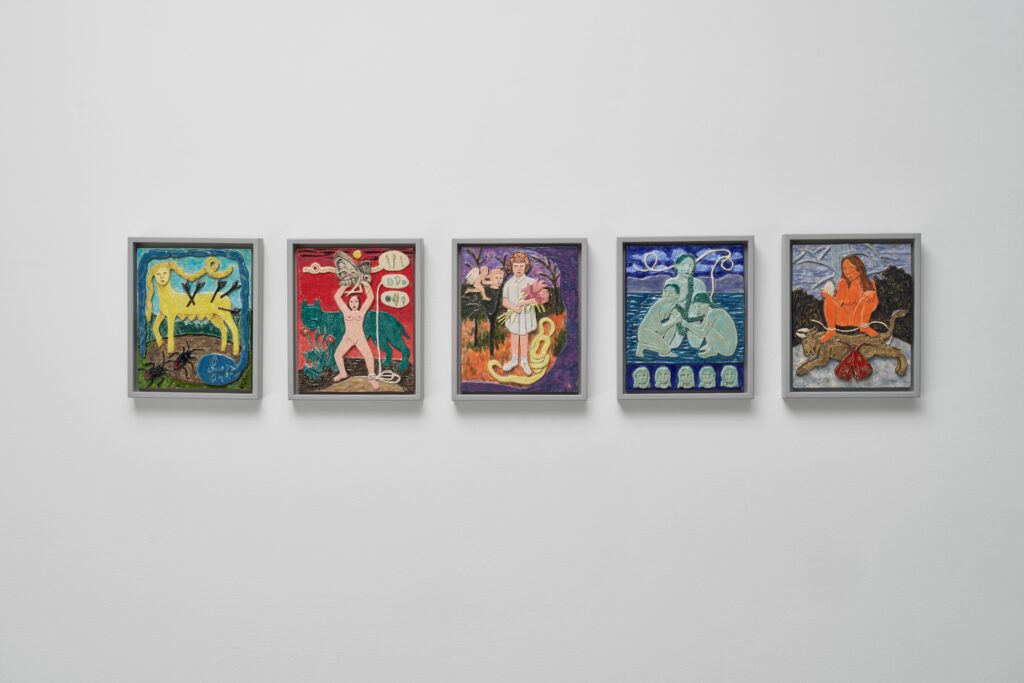
Akrap’s ceramic works operate through a comparable displacement of origin. While their scale and form recall ancient vessels, they do not function as citations; they open up a space in which genealogy is reconfigured as a relational system structured through forms, figures, and motifs.
The assembly of multiple vessels into a single body further stratifies this structure, producing a field of possible readings, and recognition shifts from one fragment to another, without privileging a single point of view. This non-hierarchical mode of viewing is reinforced by the circular form of the vessels themselves, which resists linear interpretation and instead suggests a continuous movement across the surface.
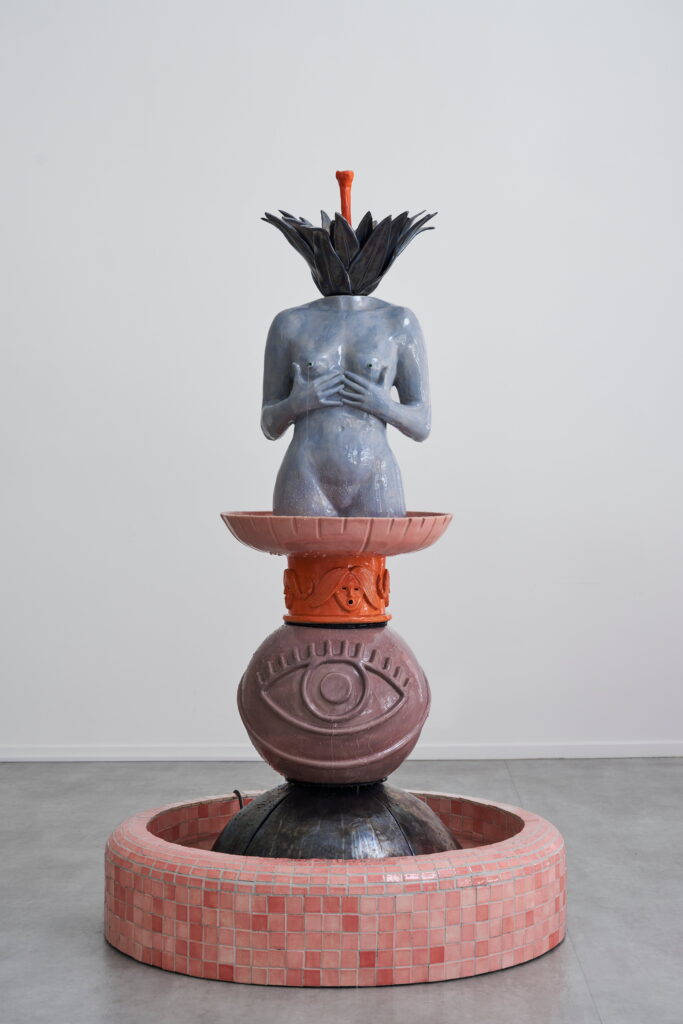
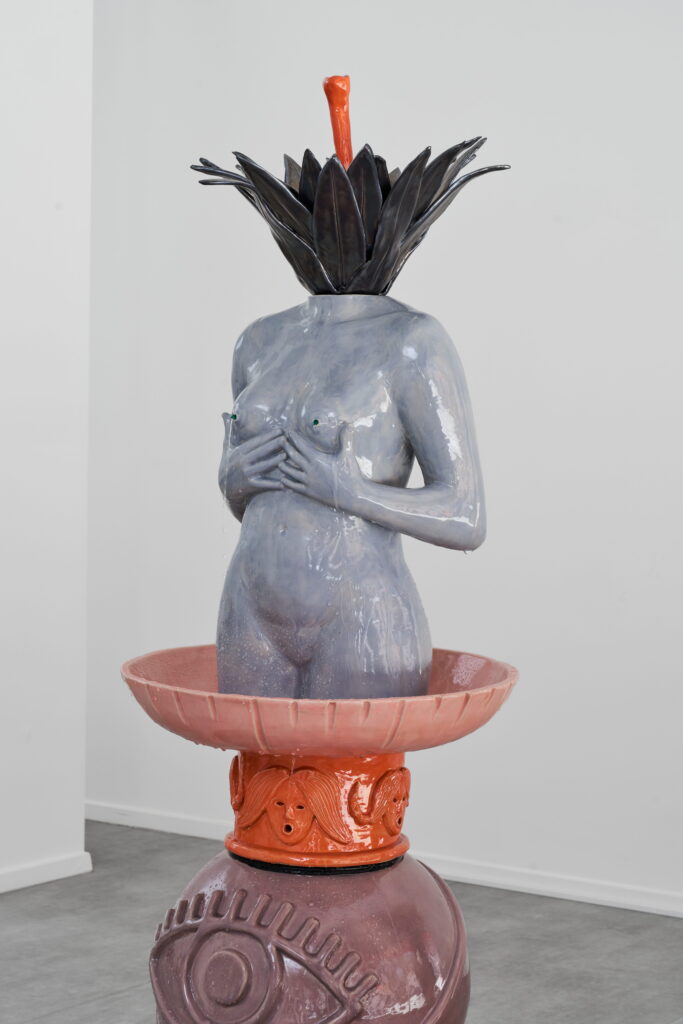
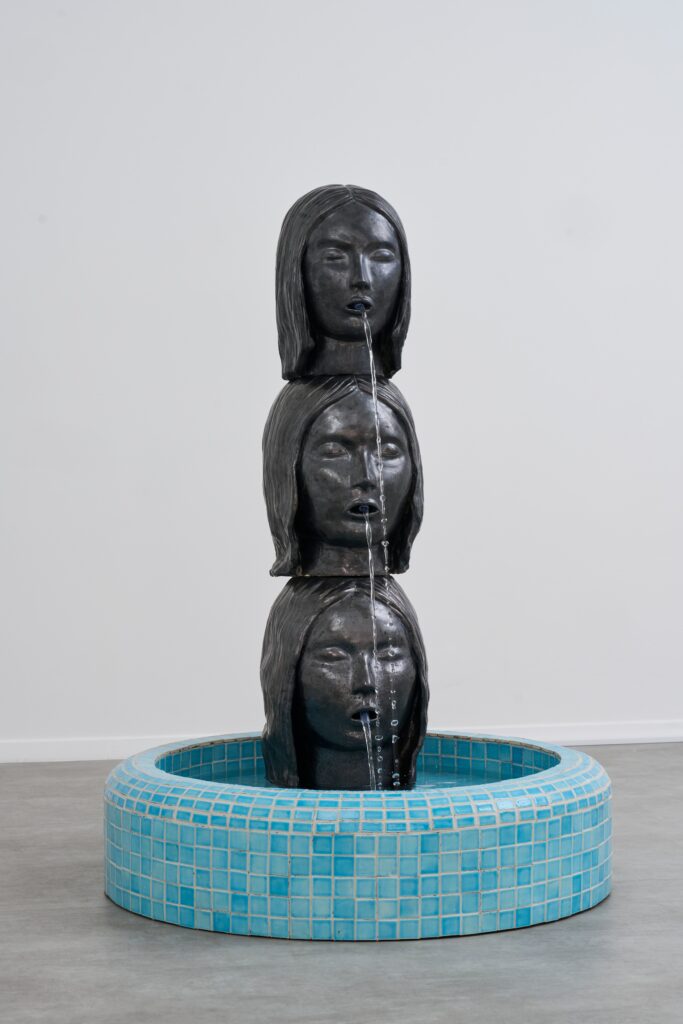
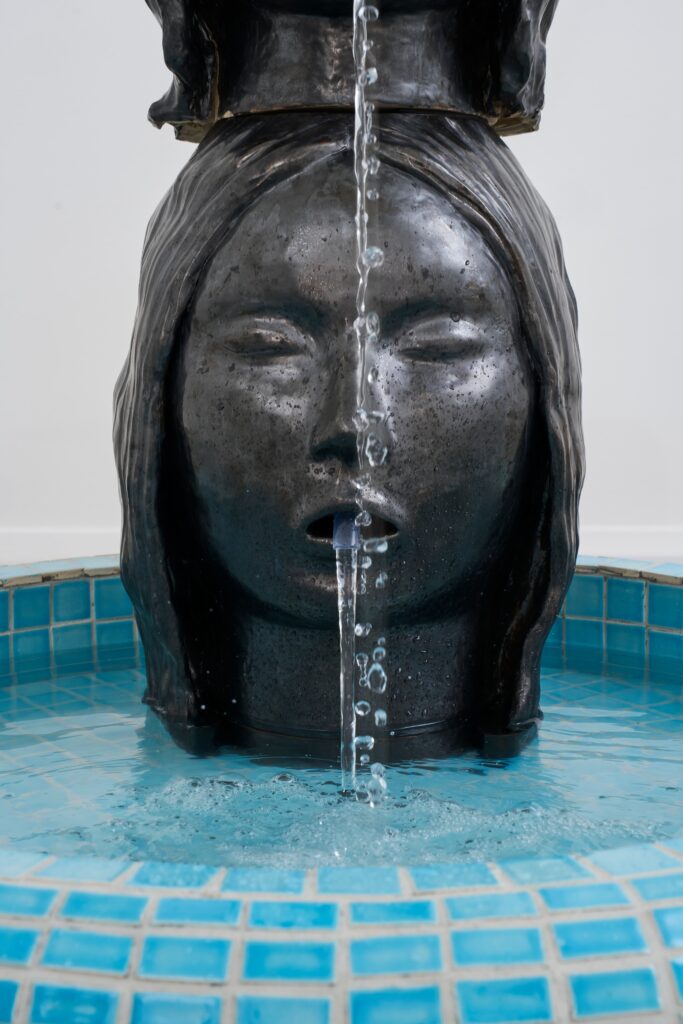
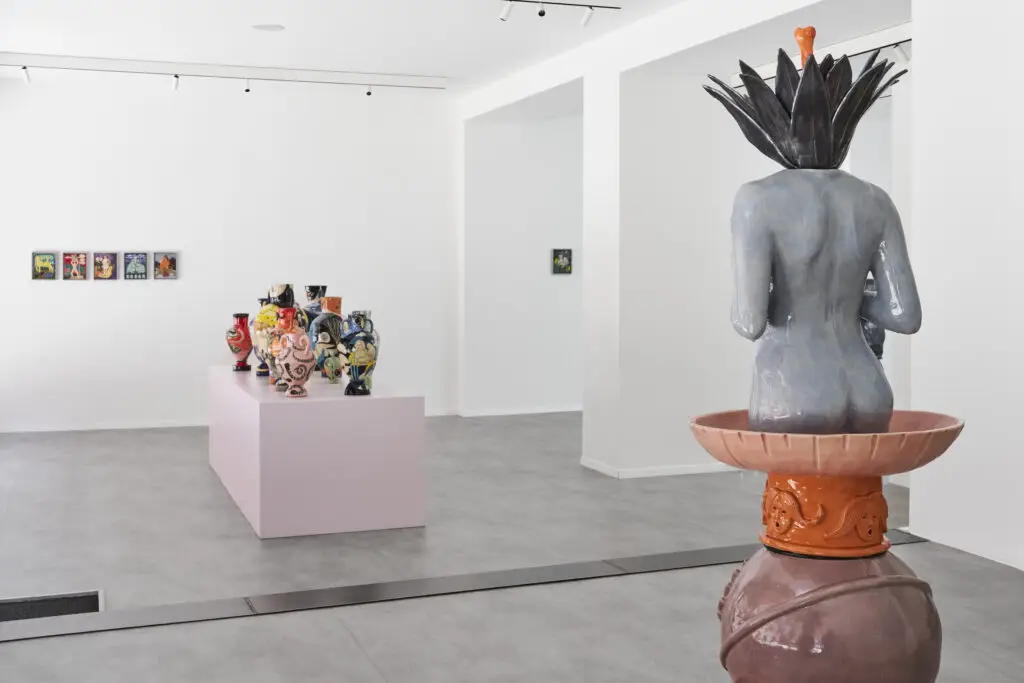
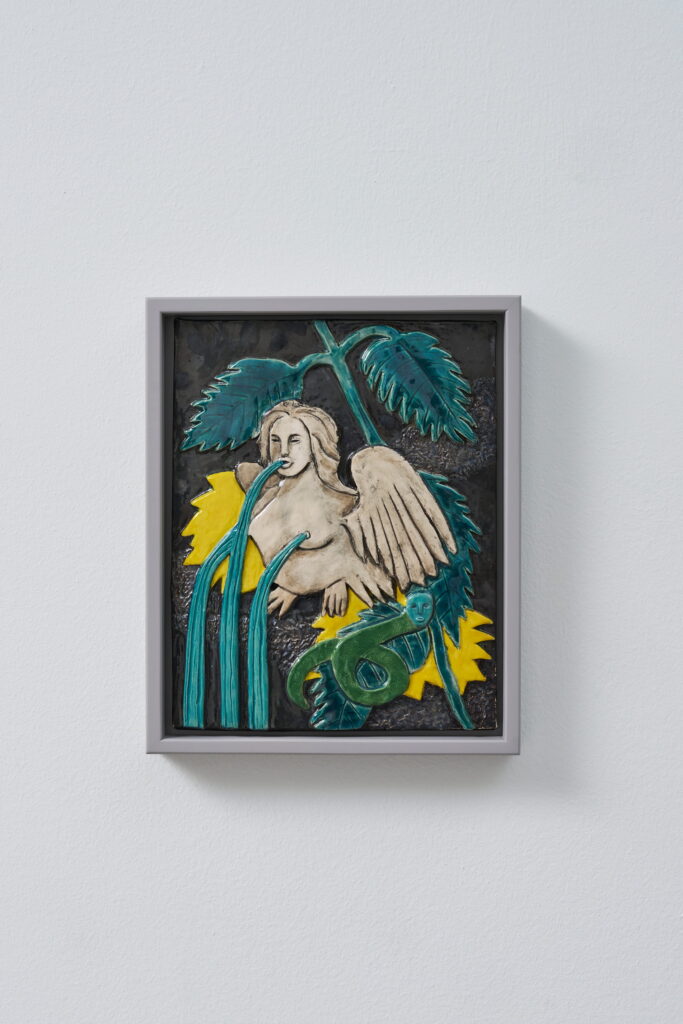
Water operates as a central element within the exhibition, taking its most explicit form in two fountains, Spring of Phantoms and Spring of Abundance. They extend an earlier series of works centred on motherhood, approached as a process of reconfiguration.
Their development was accompanied by an investigation into historical fountains, particularly the lactating fountains of Italy, which inform their framework. In sixteenth-century Mannerist visual culture, lactating nereids, sirens, and goddesses figure as emblematic forms through which Nature is rendered as a generative body associated with protection and fertility.
Spring of Abundance looks also to the compositional structure of The Garden of Earthly Delights by Bosch, where the fountain appears as a site of excess and cyclical life. In Spring of Phantoms, the vertical sequence of female heads articulates a form of inheritance that is both material and affective. The “phantom” designates inherited emotional traces and unresolved experiences that persist across generations. Read in relation to Marianne Hirsch’s concept of postmemory, the fountains frame inheritance as a process through which experience is transformed and, at times, distorted.
In works such as Girl with Lilies, where transmission precedes articulation, a similar condition emerges. The figure occupies a threshold in which subjectivity is already structured by inherited roles. The lily introduces a codified iconographic field tied to purity and an idealised femininity, functioning as a sign imposed in advance of choice, one that positions the subject within a system of representation before it can be negotiated. In Stronger Than Bone #3 (Blue Vase with Braid), where this structure is no longer only internalised but acted upon, the gesture of cutting the braid marks a position within a system that continues to impose form.
Akrap’s practice unfolds in dialogue with a broader constellation of practices. Stronger Than Bone draws on forms of embodied strength that traverse historical and contemporary subjectivities across generations and geographies. Origin appears only as construction.